
EFCC
Rotary Applauds EFCC on Impact and Effectiveness


The Rotary Club of Karu, Federal Capital Territory (FCT), District 9127, has commended the Economic and Financial Crimes Commission (EFCC) for its impact in tackling economic and financial crimes, as well as other acts of corruption across the country.
The commendation was given by the incoming District Governor of Rotary District 9127, Rotarian Ife James Utodio, during a courtesy visit to the EFCC Academy. According to him, the EFCC has become a national agency of redemption to the extent that its logo is now regarded as a national symbol.
“The EFCC logo is a national symbol, and we need to display it and educate our youths and children on the need to identify and respect it, alongside other national symbols,” he said.
He explained that Rotary shares the same ideology with the EFCC in fighting corruption. “Even the Four-Way Test was created many years ago, in 1932, to guide us in our dealings and to work against corruption in the workplace, personal life, and business,” he noted.
Utodio further elaborated that Rotary has consistently advocated for molding its members and communities to be straightforward, honest, and truthful. He stated that the visit to the EFCC Academy was to intimate the institution of Rotary’s desire to impact its immediate community in collaboration with the Commission.
He outlined the club’s plans for the year, which include initiatives in community health, education, ethics, civil responsibility, and other areas of community development. He expressed hope that the EFCC Academy would be able to educate the community at its gatherings on cybercrime and cyber protection, targeting both youths and adults. He also revealed plans to organize essay competitions in secondary schools in Karu on financial crimes.
Utodio stressed that Rotary would continue to create awareness about the celebration of Nigerian national symbols, usually observed on September 30 every year.
“Many people do not know this is done because the awareness is not there. We want to create that awareness and celebrate our symbols — the national flag, national anthem, and military logo. The EFCC logo is a national symbol. We need to display it and educate our youths and school children to identify and respect these symbols because they represent the country,” he said.
He assured that with Rotary’s global reach, the organization would help amplify the EFCC’s message to over 1.4 million people worldwide.
In his response, the Acting Commandant of the EFCC Academy, Assistant Commander of the EFCC (ACE I) Joseph Ogwiji, welcomed the delegation and commended the club’s desire to localize its impact and collaborate with the Commission. He explained that while the EFCC focuses on broader national issues, Rotary approaches societal challenges at the community level.
“The EFCC thrives on integrity, truthfulness, accountability, and transparency — values that align with those mentioned by Rotary,” he said.
He added that prevention remains a cardinal element of the EFCC’s mandate, noting that it is a key focus of the international community. According to him, countries are increasingly prioritizing the growth and development of their people rather than the self-mobilization and aggrandizement of wealth, which he described as a major challenge facing the country.






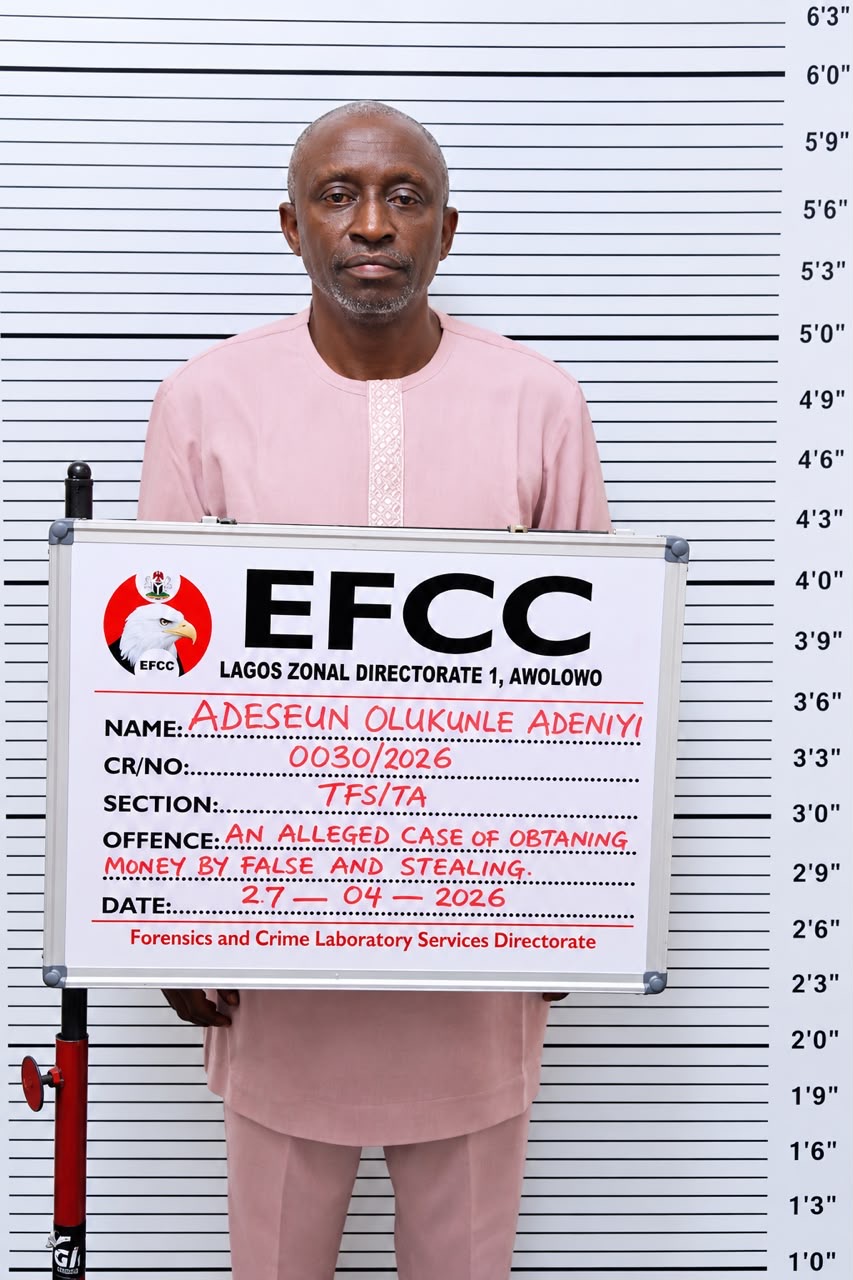
The Lagos Zonal Directorate 1 of the Economic and Financial Crimes Commission (EFCC) on Monday, November 2, 2026, arraigned Adeseun Adeniyi Olukunle before Justice A. O. Okunuga of the Lagos State High Court sitting in Ikeja, Lagos, over an alleged ₦238.35 million fraud.
Olukunle was arraigned on a 10-count charge bordering on obtaining money under false pretences, stealing and retention of stolen property.
The alleged offences are contrary to Sections 280 and 287 of the Criminal Law of Lagos State, 2011, and Section 328 of the same law.
One of the counts reads: “That you, Adeseun Adeniyi Olukunle, Chanaiyah International Limited and Omotosho Abraham Aremu (at large), sometime in 2025 in Lagos, within the jurisdiction, converted the sum of ₦11,000,000.00 (Eleven Million Naira) to the use of Faniran Olusoji John, property of Temitope Bolarinde Samuel, aka Boteam Nigeria Limited.”
Another count reads: “That you, Adeseun Adeniyi Olukunle, Chanaiyah International Limited and Omotosho Abraham Aremu (at large), sometime in 2025, in Lagos, within the jurisdiction, converted the sum of ₦19,000,000.00 (Nineteen Million Naira) to the use of Omotayo Faniran, property of Temitope Bolarinde Samuel, aka Boteam Nigeria Limited.”
He pleaded not guilty to the charges when they were read to him.
Following his plea, prosecuting counsel, Bilikisu Buhari, urged the court to fix a trial date and remand the defendant in a correctional centre pending trial.
She informed the court that the second defendant, Chanaiyah International Limited, was controlled by Omotosho Abraham Aremu, who is currently at large. She consequently urged the court to enter a plea of not guilty on behalf of the company, a request that was granted.
However, defence counsel, Yusuf T. Nurudeen, informed the court that he had filed a bail application on behalf of his client and urged the court to grant the defendant bail on liberal terms.
In his ruling, Justice Okunuga granted Olukunle bail in the sum of ₦300 million, with two sureties in like sum.
The judge directed that one of the sureties must own landed property within the court’s jurisdiction, subject to verification by the court registrar. The sureties were also required to provide evidence of tax payment.
The case was adjourned until January 18, 19 and 20, 2027, for the commencement of trial.
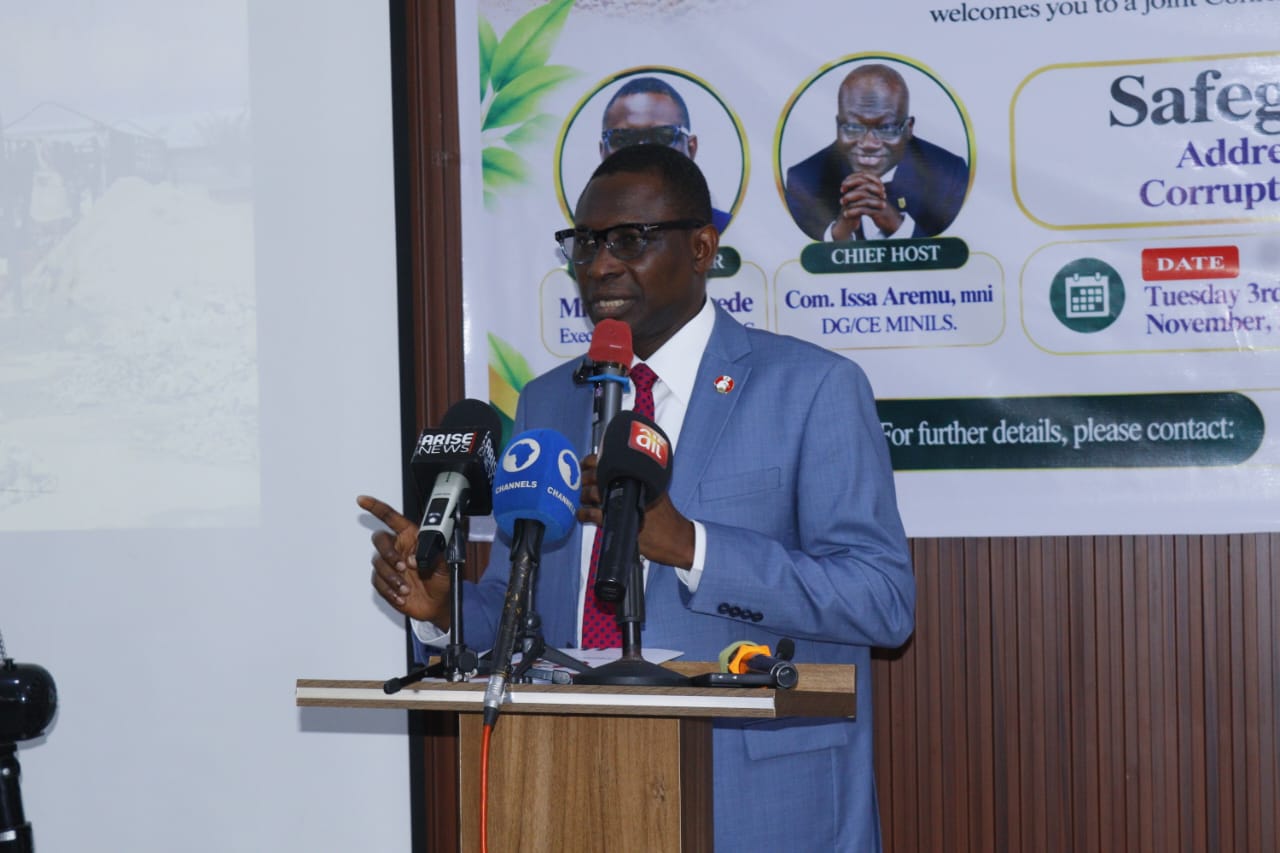
The Executive Chairman of the Economic and Financial Crimes Commission (EFCC), Mr Ola Olukoyede, has vowed to intensify the crackdown on illegal mining by targeting financiers, mineral buyers, compromised public officials and other collaborators who profit from the illicit exploitation of Nigeria’s mineral resources.
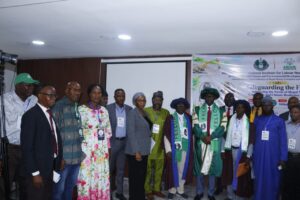
Olukoyede made this known in Ilorin, Kwara State, on Tuesday, November 3, 2026, while delivering a keynote address at a joint conference on illegal mining, corruption and climate implications, organised by the Michael Imoudu National Institute for Labour Studies (MINILS), Ilorin, in partnership with the Human and Environmental Development Agenda (HEDA). The EFCC chairman was also conferred with a Fellowship Award by the institute.
Speaking on the theme, “Uprooting the Roots of Resource Theft: A Zero-Tolerance Approach to Mining Corruption and Increasing Insecurity in Nigeria,” the anti-corruption czar observed that despite Nigeria’s abundant mineral resources, including gold, lithium, tin, lead and zinc, the country had yet to maximise their economic benefits due to corruption, illegal exploitation and insecurity.
He stressed that mineral wealth could only become a national blessing if properly managed and protected from criminal exploitation.
He explained that illegal mining was not merely the work of individuals operating mining pits but involved sophisticated networks of local and international financiers, buyers, compromised officials, transporters and beneficiaries of illicit proceeds.
He therefore advocated an enforcement strategy that goes beyond arresting miners to identifying and dismantling the financial networks behind the criminal enterprise.
“A serious enforcement strategy must move from the pit to the purse,” he declared, adding that the EFCC would continue to follow the money, investigate financiers and facilitators, trace illicit proceeds and prosecute offenders based on evidence.
Giving an account of the Commission’s efforts, Olukoyede disclosed that between October 2023 and July 2026, the EFCC recorded 52 illegal mining cases within its specialised enforcement portfolio, resulting in investigations, prosecutions and convictions.
He also revealed that the Commission had secured the forfeiture of 102 tonnes of solid minerals.
He emphasised that illegal mining was not just an economic crime but could fuel extortion, smuggling, violence and other forms of criminality, thereby worsening insecurity in affected communities.
The EFCC chairman further called for stronger collaboration among mining regulators, law enforcement agencies, financial intelligence institutions, customs authorities, revenue agencies and host communities.
He maintained that effective information-sharing, joint intelligence and coordinated operations were essential to identifying the financiers and ultimate beneficiaries of illegal mining.
He also urged organised labour, traditional institutions, civil society organisations and the media to support efforts to promote transparency, decent work and accountability in the extractive sector.
Earlier, the Director-General of MINILS and chief host, Comrade Issa Aremu, commended the EFCC under Olukoyede’s leadership for its efforts to curb illegal activities and promote accountability in the country.
He also underscored the importance of the conference in advancing labour education and addressing contemporary challenges confronting workers and the environment.
In his remarks, the Chairman of HEDA Resource Centre, Mr Olanrewaju Suraju, described illegal mining, corruption and environmental degradation as interconnected challenges requiring collective action.
He stressed that organised labour must play a central role in Nigeria’s transition to clean energy to ensure that workers are not left behind.
He explained that the three-day engagement was designed to equip labour leaders with advocacy, skills development and collective bargaining tools while promoting a joint action plan for monitoring suspicious mining activities and a Green Accountability Campaign.
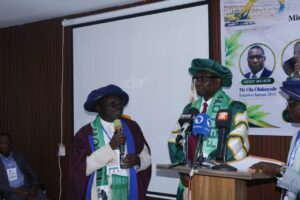
The highlight of the event was the conferment of a Fellowship Award on the EFCC chairman by MINILS in recognition of his contributions to the fight against corruption and related economic crimes.
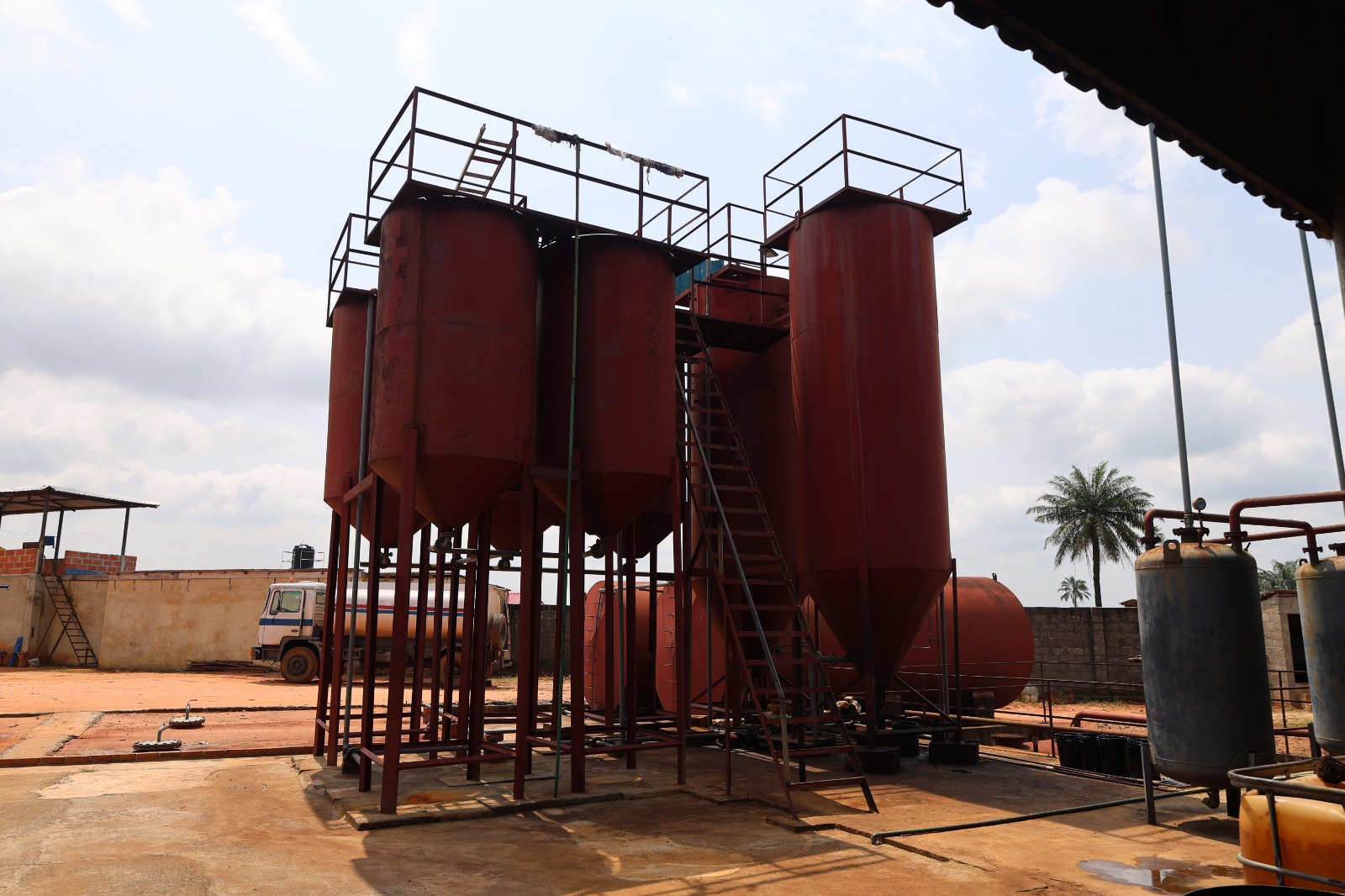
The Economic and Financial Crimes Commission (EFCC) has uncovered an illegal oil refinery allegedly operated by Chinese nationals in the Ogere area of Ogun State.
The operation, conducted on Saturday, October 31, 2026, by operatives of the EFCC’s Lagos Zonal Directorate 2, followed credible intelligence and surveillance by the Commission into the activities of illegal sludge oil refiners.
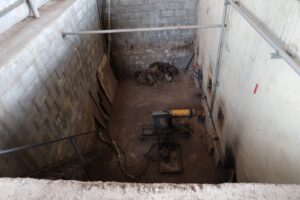
The refinery was deserted when EFCC operatives stormed the premises, following the Commission’s earlier clampdown on four illegal lithium processing plants in the area.
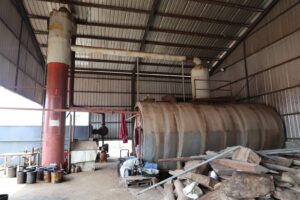
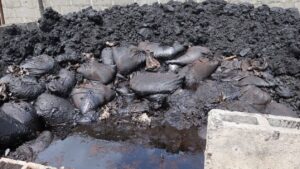
However, waste products from the refining process were discovered at the site.
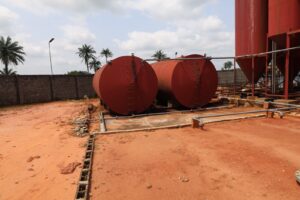
During the raid, operatives also discovered underground tanks believed to have been used for heating and processing sludge oil.
Two of the tanks inspected contained substances suspected to be Automotive Gas Oil (AGO), commonly known as diesel.
Preliminary investigations revealed that the operators sourced sludge oil, also known as black sludge, from Warri, Delta State, and Port Harcourt, Rivers State, and transported it to the illegal facility in Ogere for processing.
Further investigations indicated that the operators subjected the sludge oil to intense heat, allowing lighter petroleum components to pass through a series of chambers and filters in a process believed to produce Automotive Gas Oil (AGO) for sale in the Nigerian market.
Security personnel at the facility reportedly told EFCC operatives that the Chinese operators had neither disclosed their identities nor identified the company behind the facility.
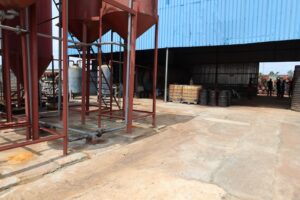
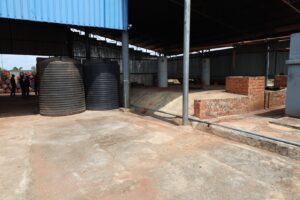
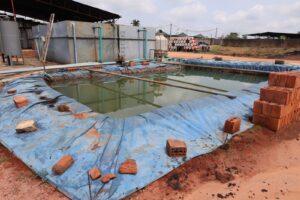
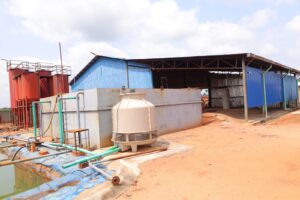
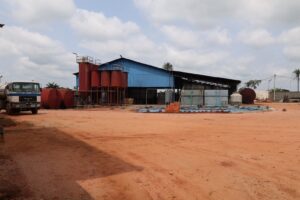
Consequently, operatives of the EFCC’s Lagos Zonal Directorate 2 have taken over the premises as investigations continue to establish the identities of the operators, determine ownership of the facility and ascertain the full extent of the suspected illegal activities and economic sabotage.



Court Admits Statements, Video Recordings Against Alleged Coup Plotters, Fixes December 7 for Trial

NJC Suspends Three Judges for One Year Without Pay, Cautions Six Others

Kekere-Ekun to Chair Presentation of Pinheiro’s Six Legal Publications

Alleged ₦1.06bn Fraud: EFCC Secures Court Order to Freeze Suspect’s Account

Alleged ₦1.4bn Oil Fraud: EFCC Re-Arraigns Nadabo Energy Boss, Ali Peters, Firm in Lagos

Again, Dangote Refinery Hikes Petrol To ₦1,175/Litre, Diesel To ₦1,620/Litre — Report
-
 EFCC2 weeks ago
Alleged ₦1.06bn Fraud: EFCC Secures Court Order to Freeze Suspect’s Account
-
 EFCC7 months ago
Alleged ₦1.4bn Oil Fraud: EFCC Re-Arraigns Nadabo Energy Boss, Ali Peters, Firm in Lagos
-
 News8 months ago
Again, Dangote Refinery Hikes Petrol To ₦1,175/Litre, Diesel To ₦1,620/Litre — Report
-
EFCC1 month ago
EFCC Hands Over Recovered ₦107m to Property Fraud Victim in Lagos
-
 News9 months ago
Senate Retains Two-Year Jail Term for PVC Trading, Raises Fine to ₦5m
-

 EFCC8 months ago
Lagos Court Jails Man 18 Months for Defrauding Sterling Bank of ₦30m
-

 Economy8 months ago
Naira Rebounds To ₦1,363.5/$
-

 Economy9 months ago
Naira Closes in the Red at ₦1,341.35/$