
EFCC
Court Jails Former Acting Accountant General, Nwabuoku, to 72 Years for ₦868.4m Fraud

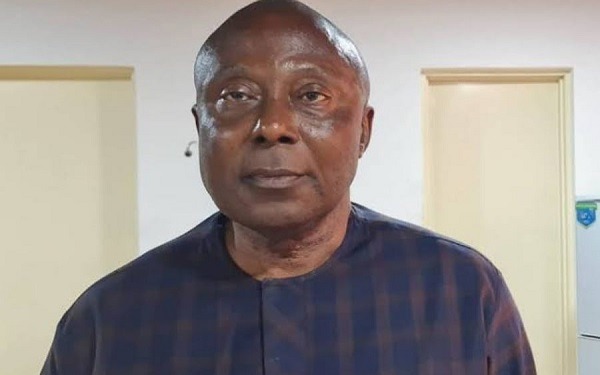
Justice James Omotosho of the Federal High Court, Maitama, Abuja, on Monday, March 23, 2026, convicted and sentenced a former Acting Accountant General of the Federation, Chukwunyere Anamekwe Nwabuoku, to 72 years imprisonment for money laundering to the tune of ₦868,465,000 (Eight Hundred and Sixty-Eight Million, Four Hundred and Sixty-Five Thousand Naira).
The Economic and Financial Crimes Commission (EFCC) prosecuted the former AGF on a nine-count charge bordering on money laundering.
Count One
That you, CHUKWUNYERE ANAMEKWE NWABUOKU, TEMEEO SYNERGY CONCEPT LIMITED (at large), TURGE GLOBAL INVESTMENT LIMITED (at large), LAPTEV BRIDGE LIMITED (at large), ARAFURA TRANSNATIONAL AFRO LIMITED (at large), and other persons (at large), between September 2019 and October 2020 in Abuja, within the jurisdiction of this Honourable Court, conspired to convert funds which are proceeds of unlawful activities, and you thereby committed an offence contrary to Section 18 of the Money Laundering (Prohibition) Act, 2011 (as amended by Act No. 1 of 2012), and punishable under Section 15(2)(b) and (3) of the same Act.
Count Two
That you, CHUKWUNYERE ANAMEKWE NWABUOKU, and TEMEEO SYNERGY CONCEPT LIMITED (at large), between September 2019 and October 2020 in Abuja, within the jurisdiction of this Honourable Court, indirectly converted the sum of ₦262,602,897.27 (Two Hundred and Sixty-Two Million, Six Hundred and Two Thousand, Eight Hundred and Ninety-Seven Naira, Twenty-Seven Kobo) paid into the Zenith Bank Plc account of TEMEEO SYNERGY CONCEPT LIMITED, with account number 1016901286, knowing that the funds constituted proceeds of unlawful activity, thereby committing an offence contrary to Section 15(2)(b) and punishable under Section 15(3) of the Money Laundering (Prohibition) Act, 2011 (as amended).
Count Three
That you, CHUKWUNYERE ANAMEKWE NWABUOKU, and TURGE GLOBAL INVESTMENT LIMITED (at large), between September 2019 and October 2020 in Abuja, within the jurisdiction of this Honourable Court, indirectly converted the sum of ₦202,824,009.97 (Two Hundred and Two Million, Eight Hundred and Twenty-Four Thousand, Nine Naira, Ninety-Seven Kobo) paid into the Zenith Bank Plc account of TURGE GLOBAL INVESTMENT LIMITED, with account number 1016901279, knowing that the funds were proceeds of unlawful activity, thereby committing an offence contrary to Section 15(2)(b) and punishable under Section 15(3) of the same Act.
Count Four
That you, CHUKWUNYERE ANAMEKWE NWABUOKU, and LAPTEV BRIDGE LIMITED (at large), between September 2019 and October 2020 in Abuja, within the jurisdiction of this Honourable Court, indirectly converted the sum of ₦281,106,469.41 (Two Hundred and Eighty-One Million, One Hundred and Six Thousand, Four Hundred and Sixty-Nine Naira, Forty-One Kobo) paid into the Zenith Bank Plc account of LAPTEV BRIDGE LIMITED, with account number 1016727695, knowing that the funds were proceeds of unlawful activity, thereby committing an offence contrary to Section 15(2)(b) and punishable under Section 15(3) of the same Act.
While delivering judgment, Justice Omotosho held that the prosecution proved its case beyond reasonable doubt, stressing that concrete evidence was presented to support the charges.
According to the judge, funds meant for the operation of the Ministry of Defence were diverted for personal use. He further noted that the corporate accounts used to receive the proceeds of unlawful activities did not bear the name of the defendant, as he attempted to shield himself from criminal liability.
“The evidence is clear that funds meant for the Ministry of Defence were converted to personal use when they were transferred into corporate accounts for the benefit of the defendant. The defendant, being a civil servant at the material time, claimed he had several investments; however, the evidence before the court did not establish any legitimate business activities to justify the volume of funds under his control.”
The court also noted that the defendant could not explain how he acquired a property worth ₦64 million or shares valued at ₦200 million.
Justice Omotosho further observed that a prosecution witness (PW9) testified that the defendant refunded ₦220 million to the EFCC recovery account, which was not challenged.
“The implication is that the defendant admitted to the offence of money laundering. If he did not have a guilty mind, he would not have refunded the money. I hereby convict the defendant on Counts 2 to 5.”
On Count One, the court held that conspiracy was established, as evidence from PW1 and PW2 showed that the defendant masterminded the opening and operation of corporate accounts (including Coiglobal, Nabyec, Arafura, and Kemo) used to receive illicit funds.
On Count Six, relating to the concealment of ₦355 million paid into the account of Mdavies Ltd:
“There was no explanation for the transaction. No business relationship existed to justify such a large sum. The court therefore concludes that the defendant is guilty of concealing the origin of ₦355 million.”
The court also found the defendant guilty on Counts 7, 8, and 9.
Justice Omotosho further noted that prior to 2019, the defendant’s account balance was about ₦3 million, but from August 2019, it began receiving large inflows of millions.
“The timeline is quite curious, as it coincides with the period of the alleged offences,” he said.

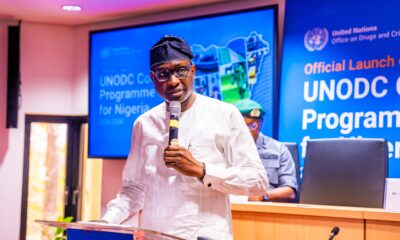



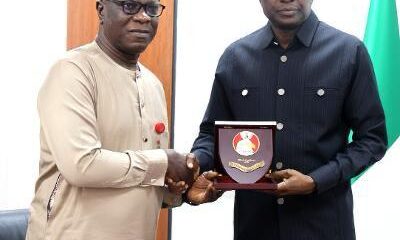



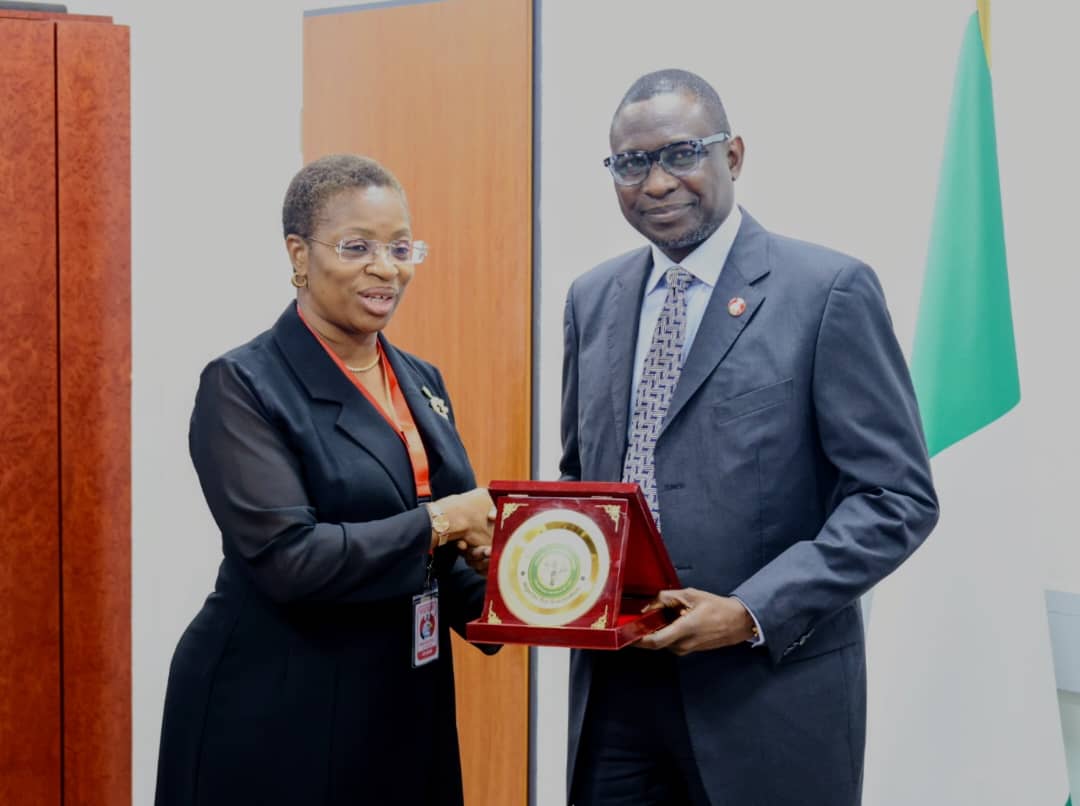
The President of the Nigerian Bar Association, NBA, Mrs. Oyinkansola Badejo-Okusanya, SAN, has commended the Executive Chairman of the Economic and Financial Crimes Commission, EFCC, Mr. Ola Olukoyede, for his leadership and efforts in strengthening the fight against economic and financial crimes.
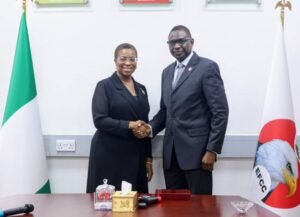
She gave the commendation in Abuja on Wednesday, September 16, 2026, when she led a delegation of the Association on a courtesy visit to the EFCC’s Corporate Headquarters.
Badejo-Okusanya praised the Commission’s efforts in the investigation and prosecution of economic and financial crimes, as well as the recovery of proceeds of crime.
She said, “When we see things that are done and done properly, we appreciate them. We followed carefully what is being done at EFCC, especially the statistics in recoveries and convictions. We can see, feel, and hear the impact of his works.”
The NBA President also commended the EFCC and other stakeholders for Nigeria’s removal from the Financial Action Task Force, FATF’s, grey list, saying the development had improved the country’s business environment.
According to her, the development would boost confidence in the country’s financial system and facilitate business transactions.
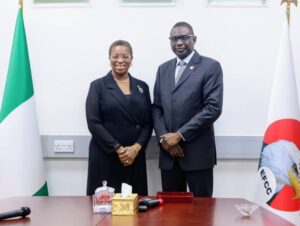
“For us as lawyers, we are grateful for the removal of the country from the FATF grey list. This brings out increased inflows. Our clients are able to do business. Cross-border transactions are now seamless and less expensive. We are grateful to the Commission and we hope for more of such positive impact. We believe the efforts of the Commission will not regress,” she said.
Badejo-Okusanya reiterated the NBA’s commitment to deepening its partnership with the EFCC in promoting a lawful and orderly society.
She stressed the importance of a strong legal system to economic development, noting that without a lawful society, “we cannot gain in terms of economic activities, have a strong society and a better quality of life.
“We are all part of the elimination of criminal activities and towards gaining a lawful and orderly society.”
She also called for closer collaboration between the Association and the EFCC, particularly in knowledge sharing and the provision of professional expertise.
She pledged the NBA’s expertise and services to the Commission, stressing the need for both institutions to work together to strengthen the rule of law and combat economic and financial crimes.
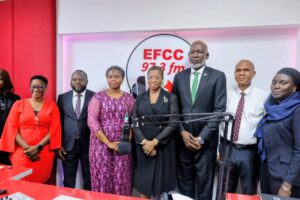
Responding, Olukoyede said the country’s removal from the FATF grey list was achieved through the collaboration of the EFCC and other sister agencies, while appreciating the NBA for its support.
He said, “Most of the works that led to Nigeria’s removal from the list were done by EFCC and in collaboration with all our sister agencies. Nigeria is now on a better footing in the world financial ecosystem. We appreciate the support of the NBA because without your support, it would have been very difficult for us to achieve such a feat.”
The EFCC Chairman also said the Commission conducts its investigations within the confines of the law, noting that it remains accountable to the public.
He said, “One promise I made to Nigerians is to use the instrumentality of this law to stipulate the economy and pledge to work within the confines of law. We are responsible to the public.”
He reiterated his commitment to preventive frameworks in tackling corruption, stressing that the EFCC will no longer wait until funds are stolen before taking action.
“We are committed to this and this is why a whole Department, Fraud Risk Assessment and Control, FRAC, was established,” he said.
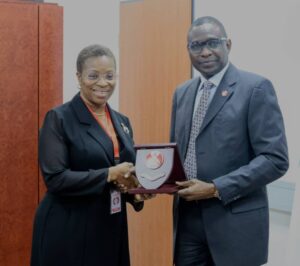
Olukoyede further pledged to work with the NBA, particularly in sanitising the legal profession and strengthening collaboration between both institutions.

The Small and Medium Enterprises Development Agency of Nigeria, SMEDAN, has sought the support of the Economic and Financial Crimes Commission, EFCC, in promoting made-in-Nigeria products and expanding opportunities for young Nigerians through skills development and entrepreneurship.
The Chief Executive Officer, CEO/Director General of SMEDAN, Charles Odii, made the request in Abuja on Wednesday when he led a delegation of the Agency on a courtesy visit to the Executive Chairman of the EFCC, Mr. Ola Olukoyede, at the Commission’s corporate headquarters.
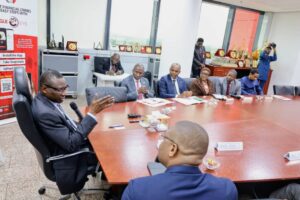
Odii commended the EFCC Chairman for what he described as efforts that have contributed to rebuilding confidence in Nigeria, particularly internationally. “Executive Chairman, I want to thank you. I want to start with gratitude. I want to thank you for the work that you have done in the last 34 months. You have tried to change the face of Nigeria outside Nigeria. So, with that, I want to thank you, and thank you for instituting confidence and trust again in Nigeria,” he said.
The SMEDAN DG said the Agency was implementing initiatives designed to equip young Nigerians with practical skills and transform them into entrepreneurs.
He disclosed that SMEDAN had secured approval from the Ministry of Education to establish the Inspire, Create, Start, and Scale (ICSS) Institute, which offers National Diploma programmes to young people while integrating entrepreneurship into their training. The aim, he said, is to work with relevant stakeholders to make sure that solid entrepreneurs are produced for the Nigerian ecosystem.
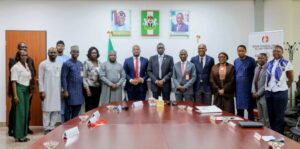
“When we go into prisons, people that have six months to be released into society, we train them, and we give them skills. This project has been life-changing. We are at the point of sending the national MSME policy to Mr. President. That policy covers the ecosystem for five years.
“We have put in that policy that anyone who has gone to prison, who is apologetic, and lacks skills, small businesses in Nigeria should employ them. And so, in our policy, we’re putting in that if these people are wrong, apologetic, they’ve learned their skills, we should be able to rehabilitate them to society,” he said.
He also proposed collaboration between SMEDAN and the EFCC’s Cybersecurity Research and Training Centre, saying the Agency could provide relevant curriculum and technical expertise.
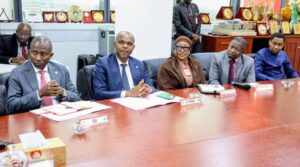
“I also know that you have started the Cybersecurity Research Center. We want to introduce this curriculum to you, so that our curriculum can be embedded into the research center,” he said.
Odii further sought collaboration on the rehabilitation of inmates and young people involved in cybercrime through skills acquisition and entrepreneurship programmes designed to support their reintegration into society.
Responding, Olukoyede welcomed the proposal and expressed the EFCC’s readiness to collaborate with SMEDAN on the promotion of Nigeria-made goods, youth empowerment, skills development and cybercrime prevention.
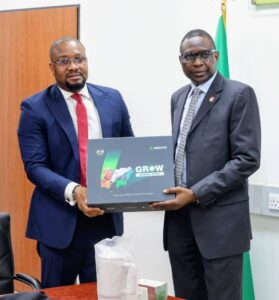
“I have been following your activities. And I’m very proud of you. You are one of the young men that we look up to,” he said.
The EFCC Chairman said the development of legitimate skills and economic opportunities for young people was important to tackling cybercrime.
“I’m interested in anything that will help to develop skills for young men. Because that is one of the challenges I have,” he said.
Olukoyede commended the initiative and urged Nigerians, including members of the EFCC community, to patronise locally produced goods.
“Congrats for pushing all these. So, those of you buying things in my office, henceforth, patronize this. We need to support them, you know. Support these young people. It is when these businesses grow that’s when we can grow our own nation, too. And develop our own, you know, system. As long as we can patronize what we do,” he said.
He also suggested that the government should make a national policy on Nigeria-made goods to encourage local production and grow the economy.
Olukoyede stressed the seriousness of cybercrime and its consequential effects on Nigeria’s economy and international reputation.
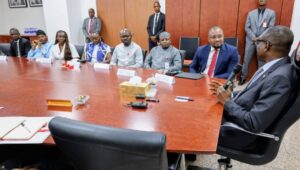
“The evil these guys are doing to the image of Nigeria, to our economy is unquantifiable. Some of these guys, at the press of a button, they can bring the entire financial ecosystem down,” he stated.
The EFCC Chairman disclosed that the Commission’s Cybersecurity Research and Training Centre was expected to train an average of 500 intakes at a time, adding that the government was supporting the project.
“That was what necessitated our, you know, putting in place the Cybersecurity Research and Training Center, which we’re expecting to train an average of 500, you know, intakes per time,” he said.
He invited SMEDAN to participate in the project from its conception to operationalisation.
“So, I want to bring you on board so that you can be part of that project from the conception to operationalization because the nature of your mandate requires that we bring you into it,” he said.
The EFCC Chairman also pledged support for SMEDAN’s ICSS initiative and other programmes aimed at developing young Nigerians.
“So, I’m with you. We’re going to support you. Your ICSS project, too. Let me know if there’s any area where we can support you,” he said.
A major highlight of the visit was the presentation of locally produced goods by the SMEDAN delegation. The items included hibiscus tea, coffee, wax candles, cassava biscuits and native fabric produced under the Agency’s Guidance, Resources, Opportunity, and Workforce (G-R-O-W) support initiative.
Olukoyede said the EFCC would work with relevant institutions to identify practical solutions to youth involvement in crime.
“So, let us look for practical solutions that will take these young people out of that menace. Let’s compare notes. Let’s put this together to help Mr. President to succeed in his venture,” he said.

The Economic and Financial Crimes Commission, EFCC, has called on legal practitioners across the country to desist from the illegal and unethical practice of charging clients in foreign currencies.
The call was made on Friday, September 11, 2026, in Lagos by the Acting Zonal Director of the Lagos Zonal Directorate 2 of the EFCC, Ikoyi, Assistant Commander of the EFCC, ACE I Bawa Usman Kaltungo, when he received a delegation of the Nigerian Bar Association, NBA’s Lagos Task Force on Illegal Practice of Law, led by its Head, Moshood Abiola, on a courtesy visit to his office.
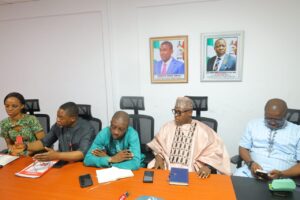
Speaking during the interactive session, Kaltungo expressed concern over the activities of lawyers who engage in illegal and unethical practices, stressing that the Commission would not hesitate to prosecute anyone found culpable.
According to him, the Directorate is currently handling two cases involving lawyers who allegedly charged their clients in foreign currencies.
He said: “We are also worried about the activities of lawyers who are involved in illegal and unethical practices.
“We have two cases of lawyers who were found to have charged fees in dollars. This is unethical and illegal, as the Naira is the country’s legal tender.
“We usually don’t want to have issues with members of the NBA. However, some lawyers are pushing us. Any lawyer we find culpable of charging clients in foreign currencies will be prosecuted.”
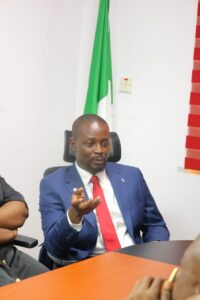
The Acting Zonal Director also cautioned lawyers against invoking the name of the EFCC to impose excessive charges on clients.
He said although lawyers had the right to determine their professional fees, they should not misrepresent the Commission or falsely claim that the fees demanded from clients were required by the EFCC.
“Also, lawyers should stop name-dropping the EFCC to overcharge their clients.
“They have the right to charge their clients as much as they like, but they shouldn’t drag the EFCC into it. They should desist from all these unethical practices,” he said.
Earlier, Abiola commended the Commission for its recent prosecution and conviction of a fake lawyer, describing the process as “swift and reassuring.”
He said the NBA Task Force had several cases involving lawyers allegedly engaged in malpractice, hence the need for stronger collaboration with the EFCC to ensure that legal practitioners found culpable of criminal conduct were prosecuted.

He said: “We appreciate the EFCC for the recent prosecution of a fake lawyer. It was swift, and we are glad that the EFCC was able to get the court to convict him.
“However, recently, we have a case involving a lawyer who has been engaging in malpractice. We have several cases like that, and we would like to strengthen our collaboration with the EFCC so that these individuals can be prosecuted and made to face the law.”
Reacting to one of Abiola’s remarks, ACE I Orhieoghene Adewunmi of the Department of Legal and Prosecution, Lagos Zonal Directorate 2, urged the NBA to ensure that appropriate publications were made concerning lawyers found culpable of unethical practices.
She said such publicity would help members of the public identify practitioners who had been sanctioned for professional misconduct and avoid engaging their services.
In the same vein, ACE II Henry Anasoh, also of the Department of Legal and Prosecution, Lagos Zonal Directorate 2, raised concerns over practices by some legal practitioners who assist suspects in obstructing investigations or frustrating the administration of justice.
He said there had been instances of lawyers helping clients to forge documents for bail purposes, including cases where purported medical records were presented in support of bail applications.
Anasoh also expressed concern over cases in which lawyers approach courts to restrain the EFCC from investigating or prosecuting their clients, including through fundamental rights enforcement suits arising from invitations issued by the Commission.
He, therefore, urged the NBA to assist the EFCC in its efforts to rid the legal profession of “unscrupulous practitioners”, stressing that the conduct of a few lawyers should not undermine the integrity of the profession.



NBA Commends Olukoyede on Impact in Fight Against Corruption, Seeks Closer Collaboration

SMEDAN Seeks EFCC Support in Promoting Home-made Products

EFCC Warns Lawyers Against Charging Clients in Foreign Currencies
Nigerian nurses stage seven‑day warning strike over pay, staffing

Dangote Refinery to deploy 4,000 gas‑powered trucks for distribution

Nigeria approves plan to refinance ₦4tn power-sector debt
-
Health1 year ago
Nigerian nurses stage seven‑day warning strike over pay, staffing
-
Energy1 year ago
Dangote Refinery to deploy 4,000 gas‑powered trucks for distribution
-
Economy1 year ago
Nigeria approves plan to refinance ₦4tn power-sector debt
-
 Education1 year ago
JAMB sets 2025/26 university cut‑off at 150, bars under‑16
-
 Crime & Justice7 months ago
BREAKING: Two Chinese Directors Jailed 46 Years Each Over ₦3.4bn, $2.5m Crypto Fraud in Lagos
-
 Entertainment1 year ago
Sean Kingston sentenced to 3½ years in prison over $1 million fraud
-

 Business7 months ago
Nigeria Revenue Service Collects ₦28.3trn in 2025, Sets ₦40.7trn Target for 2026
-

 Crime & Justice7 months ago
Police Arrest 24-Year-Old Over ₦48.5m Romance Fraud in Lagos