
Judiciary
Anxiety Mounts Over Sudden Recall of Land Dispute Case File by Lagos CJ

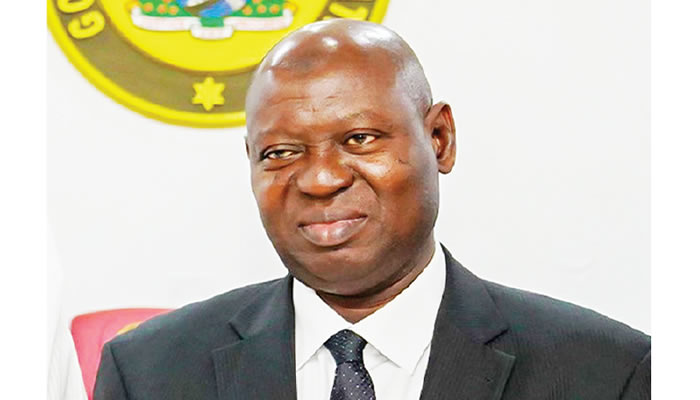
A sudden move by the Lagos State Chief Judge, Justice Kazeem Alogba, to withdraw and potentially transfer a land dispute case without notifying the claimants or their lawyers has sparked controversy and raised concerns about whether justice will be served.
The incident unfolded at the Ikeja High Court on Wednesday, April 15, during proceedings before Justice Akin Savage of the Lands Division. In an unusual development, the judge informed the court that the Chief Judge had requested the case file, offering no explanation for the action.
The case, between Nasco Town Limited (claimant) and Mr. Abiodun Ariori, the Chief Michael Mojisola Cole family, and others (defendants), was the first scheduled for hearing that day. It involved a Senior Advocate of Nigeria, Chief Anthony George-Ikoli, a former Attorney General of Bayelsa State. As the court prepared to begin, the registrar approached the bench and whispered to the judge. Justice Savage then announced that the file had been recalled by the Chief Judge and advised counsel to await further communication on whether it would be returned or reassigned.
A visibly puzzled Chief George-Ikoli sought clarification, prompting the following exchange:
Judge: Call the case of the learned silk.
Registrar: (approaches and whispers to the judge)
Judge: The Chief Judge has called for the file, and it is with him.
Lawyer: May we know the reason the Chief Judge called for the file?
Judge: I do not know, as no reason was given. When or if the file comes back, we shall inform you.
Lawyer: Sir, in the spirit of fairness, when a file is called back from a court by the Chief Judge, the parties ought to be informed and told the reasons.
Judge: The Chief Judge has the power to call for any file at any time. I do not have the authority to question or query his actions. When the file comes back, we shall inform you. There is no file to work with.
(The judge then directed the registrar to call the next case.)
Disturbed by the development, Chief George-Ikoli subsequently petitioned the Chief Judge, seeking clarification. The petition, signed by Ms. Ayotunde Shabi of his chambers, noted that the case—filed in 2020—has yet to progress significantly beyond the pre-trial stage. It expressed concern that the sudden withdrawal of the file, without explanation, had heightened the anxiety of the claimants and raised questions about the transparency and impartiality of the judicial process.
The petition also referenced an affidavit deposed to by Chief George-Ikoli on April 16, detailing the events in court the previous day. Counsel urged the Chief Judge to clarify the purpose of the request, stressing that such information is necessary to properly advise and reassure their clients, especially given the indefinite adjournment of the case.
Separately, Nasco Town Limited also petitioned the Chief Judge, alleging possible undue external influence.
In a letter signed by its Executive Coordinator, Dr. Mustapha Sulaiman, the company expressed concern that while the defendants appeared to have prior knowledge of the file’s withdrawal, Nasco, the claimant, was neither notified nor given an opportunity to respond to any complaint or petition that may have prompted the action.
Nasco outlined its long-standing possession of the land, stating that it has been in peaceful and uninterrupted possession since 1978 under a lease granted by the Federal Government. The company said it had carried out extensive development on the property, including land reclamation, construction, and the granting of a sublease to Michelin Tyres Limited in 1981. It added that the land was later designated a Free Trade Zone following its application, and that development of its industrial section was underway before the dispute arose.
According to the company, this possession was disrupted in 2018 when Mr. Ariori, along with members of the family of the late Chief Cole, allegedly invaded the land with armed policemen and thugs, claiming to enforce a 1997 consent judgment in favour of the Chief Cole family, to which Nasco was not a party.
Nasco further stated that investigations showed the consent judgment had already been executed on a different parcel of land before the Chief’s demise—a position it said was supported by official records and even acknowledged by one of the families involved. It also noted that the late Chief Cole neither claimed nor visited the disputed land during his lifetime.
The company said its initial legal action in 2018 was handled by Justice Olaide Olayinka but was delayed due to difficulties in serving the defendants, who allegedly evaded service, until the judge retired. In the current suit, filed in 2020, the defendants allegedly continued to evade service until the court granted an order for substituted service four years later. Despite this, the matter has been plagued by repeated adjournments and procedural delays allegedly caused by the defendants.
Against this backdrop, Nasco described the sudden withdrawal of the case file as deeply troubling, particularly given what it perceived as unequal access to information between the parties. It warned that the situation could suggest external interference, citing claims by Mr. Ariori of connections to the current Attorney General of Lagos State.
The disputed land is registered as No. 25 at Page 25, Volume 81 of the land registry, as delineated in Survey Plan No. JLS/23/78. Despite being in court for several years, the case has made little substantive progress.
Both petitions now place the burden squarely on the Chief Judge to explain the rationale behind his intervention—an explanation that may determine not just the fate of this case, but also broader public confidence in the administration of justice in Lagos.
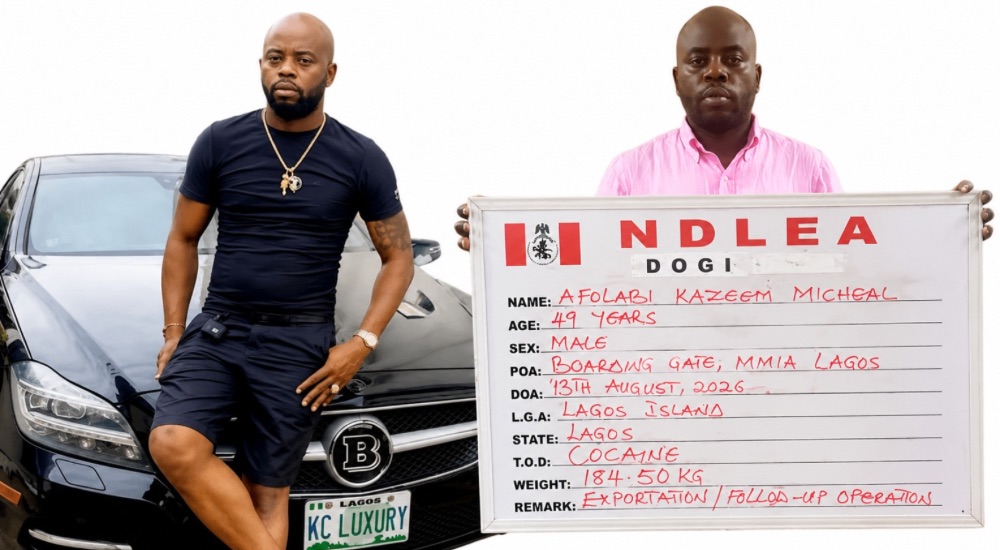
A Federal High Court in Lagos has dismissed an application by Afolabi Michael Kazeem seeking to overturn an order extending his detention for 30 days over his alleged involvement in the trafficking of 184.5 kilogrammes of cocaine.
The court held that the detention extension order granted on August 20, 2026, was properly issued and backed by the Constitution and relevant drug-control laws.
Kazeem, popularly known as KC Luxury, through his lawyer, Abdulakeem Labi-Lawal, SAN, had asked the court to set aside or strike out the order, arguing that the court lacked jurisdiction to extend his detention.
The lawyer contended that only a Magistrate Court could issue a remand order under Sections 293 to 299 of the Administration of Criminal Justice Act, 2015, describing the detention extension as an unlawful interference with the suspect’s constitutional right to personal liberty.
However, the National Drug Law Enforcement Agency (NDLEA), through its lawyer, Abu Ibrahim, dismissed the argument as a misconception of the nature of the order granted by the court.
Abu maintained that the August 20 order was not a remand order under the ACJA but an extension of detention granted to enable the relevant agency to conduct detailed investigations into the alleged drug-trafficking offence.
According to the ruling, Kazeem was arrested on August 13, 2026, at the departure hall of the Murtala Muhammed International Airport, Lagos, while allegedly attempting to travel to Paris, France.
The NDLEA had told the court that the suspect’s arrest followed the seizure of 184.5kg of cocaine at DHL in Ikeja, Lagos, with the agency alleging that Kazeem, popularly known as KC Luxury, was connected to the shipment.
Delivering judgment on the application on Thursday, Justice Aluko held that Sections 293 to 299 of the ACJA, which deal with remand proceedings, were not applicable to the case before the court.
The judge also held that the court has “exclusive” jurisdiction over drug-related matters by virtue of Section 251(1)(m) of the Constitution and Section 26(1) of the NDLEA Act.
The judge further held that the evidence presented by the NDLEA established reasonable suspicion of a drug-related offence, justifying the temporary deprivation of liberty under Section 35 of the Constitution.
Justice Aluko consequently dismissed KC Luxury’s application, holding that it constituted an abuse of court process and lacked merit.
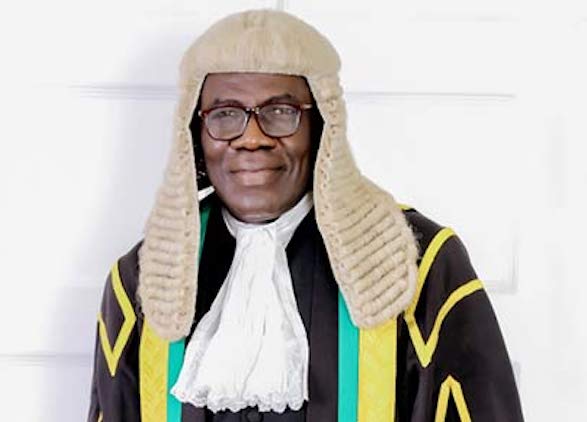
I am a lawyer. I studied law and have remained in the practice of law in memory of my late mother, who paid for me to study law at Holborn Law Tutors in the UK. I eventually continued my legal education at the University of Ibadan and graduated from there. She paid almost £7,000 upfront for one year, which was the total tuition fee for one year at that private law school. I will be eternally grateful to her. May her soul continue to rest in perfect peace. We all know what the exchange rate would be today.
In her memory, I decided to remain in the practice of law throughout my legal practice and thereafter, even until now. I tried my hand at property marketing at one time, but I had to drop it, even though I made some money from it. I stopped because it was affecting my legal practice.
There is nothing you do, from my point of view, outside your profession that will not affect your profession. Politics is one of them. Politics itself is an art and a profession, but I must add that, if it is truly for the people and the betterment of the people, it is a good one.
One of the most respected politicians in this country was Chief Obafemi Awolowo, of blessed memory. He practised law and politics successfully, but he was more of a politician. He used his knowledge of law to better the lot of so many people during his lifetime, and, till today, his name remains a reference point in using politics to serve humanity.
Mahatma Gandhi was first a lawyer before he became a politician to serve his people. His name is known more in politics than in law.
Chief F.R.A. Williams was a politician until he dropped politics to devote his entire life to law. He was not a crossbreed. His pathological devotion to law can be seen and read in the political history of Nigeria. In legal practice, to which he committed his entire life after publicly renouncing politics, his invaluable impact is evident in law books, legal records and law reports. He was an enigma and an icon who will forever be remembered, like others too numerous to name, who stayed in the service of law.
The lawyer is meant to be the beacon of society. The lawyer’s creed is to ensure that society is governed according to the law. Chief Gani Fawehinmi was the people’s lawyer. He used the law to better the lot of society. His foray into politics was disastrous because the perception of the lawyer in practice and the lawyer in politics are not symbiotic. They are strange bedfellows.
The people may hail the lawyer in law, but not the lawyer in politics. The ingredients you add to the soup that make a lawyer are different from the ingredients you add to the soup that make a politician. Femi Falana, SAN, my dear friend, was in the same boat as the late Chief Gani Fawehinmi. I feel him more in law now than when he did both.
A lawyer is known to keep to his or her word. Robert Traver, in his book The Anatomy of Murder, stated thus:
“That’s what makes the practice of law, like prostitution, one of the last of the unpredictable professions—both employ the seductive arts, both try to display their wares to best advantage and both must pretend enthusiastically to woo total strangers.”
Joseph Story lived from 1779 to 1845. He was an American lawyer, politician and jurist who served as an Associate Justice of the United States Supreme Court from 1812 until his death in 1845. He stated thus:
“I will not say….that ‘The law will admit of no rival’, but I will say that it is a jealous mistress, and requires a long and constant courtship. It is not to be won by trifling favours…”
Henry David Thoreau (1817–1862) was not a lawyer. He was an American essayist, poet and philosopher. He said:
“The lawyer’s truth is not Truth, but consistency, or a consistent expediency. Truth is always in harmony with herself, and is not concerned chiefly to reveal the justice that may consist with wrongdoing.”
I have gone through the lawyer’s creed, which is to uphold the rule of law, personal dignity and independence; to offer faithfulness, competence, diligence and good judgment while providing vigorous and honest representation without sacrificing professional ethics; to practise with fairness, integrity and civility, avoiding malicious tactics, unnecessary delays or abusive discovery; to show profound respect, candour and courtesy, ensuring that the search for truth and justice remains uncompromised; to the court or tribunal; to make justice accessible to the poor; and to protect the legal profession as a noble calling rather than a mere business.
I have gone this far in order to buttress the topic for discussion. The practice of law and politics can never converge. You cannot be a master of both. You can be successful in both, no doubt, but along the way, there are sacrifices that will most likely be at cross-purposes with the law.
Very few lawyers, like Chief F.R.A. Williams, of blessed memory, have sacrificed politics for law. The political lawyer will criticise anything, even when the law is clear that, without evidence, you are not expected to speculate.
Nowadays, many lawyers in politics take to the airwaves and the print media, especially in this era of social media, to generalise when making statements. How can a lawyer, trained in the practice of law, make general statements on any topic, especially these days when the judiciary, even in retirement, has become a topic for discussion without any evidence? How can people make general statements about Senior Advocates of Nigeria or lawyers generally?
It is pathetic that those who ought to know, by virtue of their level of education, professional qualifications and recognition in the legal community, are more guilty of this. How can a lawyer remain silent even when injustice happens in front of him and behind him, too, but he keeps quiet?
Many keep quiet these days because they want to satisfy their paymasters, even when it is glaring that the legal profession is suffering from their silence and/or complicity and complacency. These days, many voice personal opinions without let or hindrance for personal and political reasons. Some attack their professional colleagues, even the judiciary, when they cannot get what they want, but they must vent their anger on someone. Some are paid to attack or bring down their fellow colleagues, whether at the Bar or on the Bench.
I like the Yoruba language a lot. I am sorry I will not be able to interpret the idioms I will use:
“Tó bá máa jẹ Oshakala, jẹ Oshakala; tó bá máa jẹ Oshokolo, jẹ Oshokolo. Oshakala, Oshokolo kò yẹ ọmọ ènìyàn.”
“Arítení mo ń wí, àfi àpáàdì bó tiẹ̀ mọ́lẹ̀.”
“Kò sí ẹni tí a máa sí idi ẹ̀, tí a kò ní bá ẹ̀ẹ̀pà níbẹ̀.”
Apologies to those who will read this who are not Yoruba, or those who are Yoruba but do not understand these idioms.
To those who criticise, not out of holiness per se, not out of being a “straight” lawyer or simply out of a desire to be fair, but generalise in order to look good or elicit unmerited applause, look in the mirror and think back to whether you have not done anything you accuse others of doing.
In writing or criticising generally, come out, but most importantly, PRACTISE WHAT YOU PREACH BEFORE YOU CRITICISE.



COPSUN Applauds EFCC on NELFUND

Alleged 184.5kg Cocaine: Court Dismisses KC Luxury’s Suit Challenging Detention Order

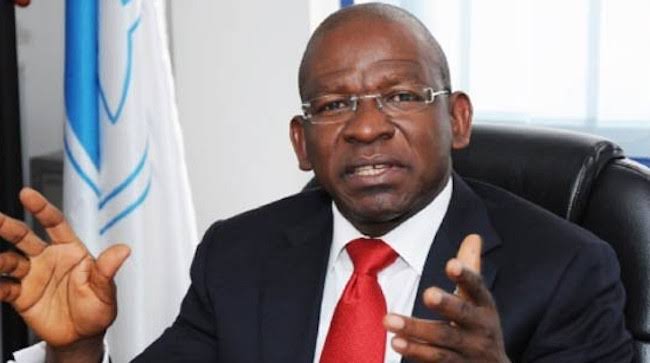
NBA Commends Olukoyede on Impact in Fight Against Corruption, Seeks Closer Collaboration
Nigerian nurses stage seven‑day warning strike over pay, staffing

Dangote Refinery to deploy 4,000 gas‑powered trucks for distribution

Nigeria approves plan to refinance ₦4tn power-sector debt
-
Health1 year ago
Nigerian nurses stage seven‑day warning strike over pay, staffing
-
Energy1 year ago
Dangote Refinery to deploy 4,000 gas‑powered trucks for distribution
-
Economy1 year ago
Nigeria approves plan to refinance ₦4tn power-sector debt
-
 Education1 year ago
JAMB sets 2025/26 university cut‑off at 150, bars under‑16
-
 Entertainment1 year ago
Sean Kingston sentenced to 3½ years in prison over $1 million fraud
-
 Crime & Justice7 months ago
BREAKING: Two Chinese Directors Jailed 46 Years Each Over ₦3.4bn, $2.5m Crypto Fraud in Lagos
-

 Business7 months ago
Nigeria Revenue Service Collects ₦28.3trn in 2025, Sets ₦40.7trn Target for 2026
-

 Crime & Justice8 months ago
Police Arrest 24-Year-Old Over ₦48.5m Romance Fraud in Lagos