
Health
Cross River reports COVID-19 case

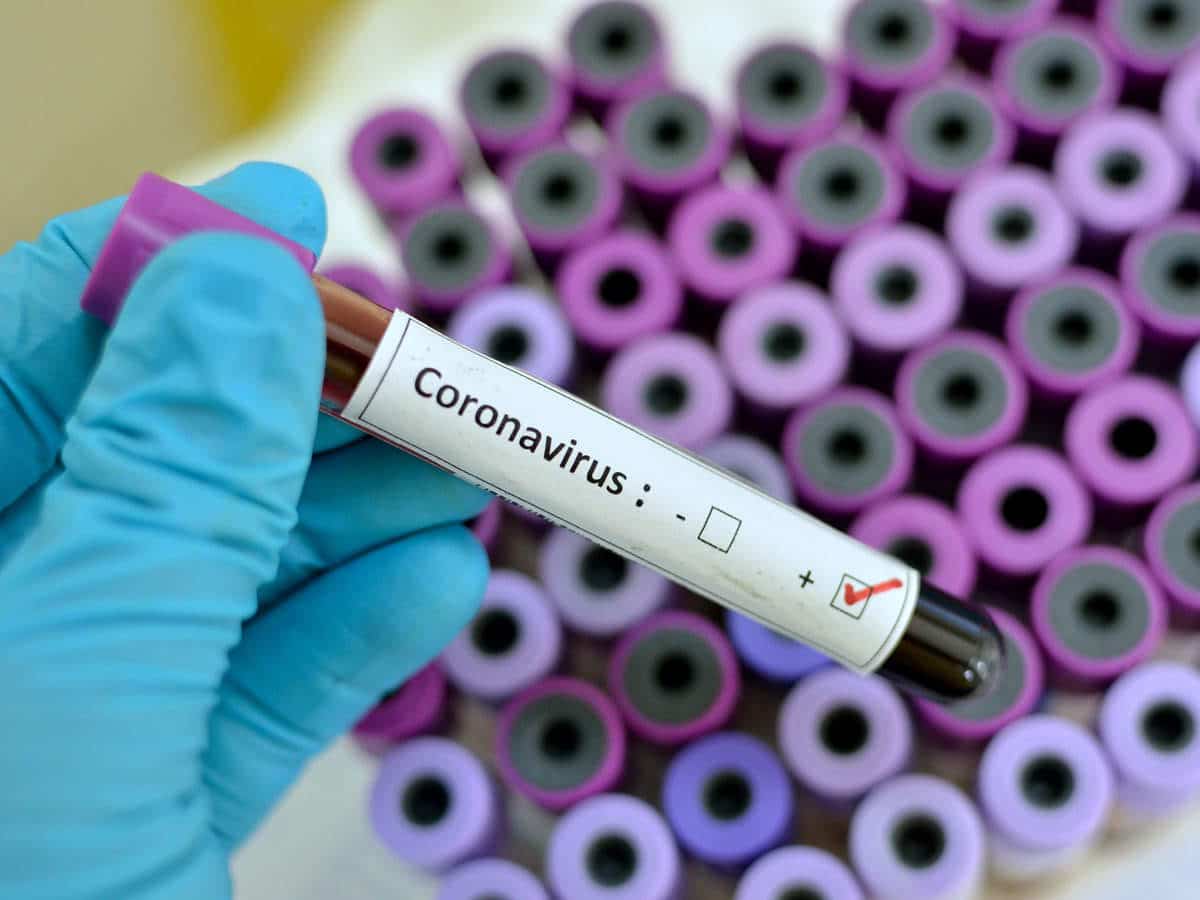
The Government of Cross River State has reported an occurrence of COVID-19 in the state.
The state Commissioner for Health, Dr Henry Ayuk, made the announcement at a news conference on Tuesday in Calabar, the state capital.
According to him, the first reported case of the outbreak involved a Chinese national who worked with Lafarge and flew into the country on March 17 before falling ill.
The commissioner stated that the Chinese’s condition became worse at the medical facility under his office and had to be taken to the University of Calabar Teaching Hospital.
He explained that at the UCTH, samples were taken and all protocols followed; it was subsequently confirmed that he had symptoms of COVID-19.
“We are, however, happy to report that he is doing well,” the commissioner said.
Ayuk said the Ministry of Health had been repositioned by the current administration to handle and manage any situation, including diseases or epidemic outbreaks.
According to him, there had been silent infections and clear cases from time to time.
“But we are determined that for every ailment, every disease or outbreak, if it is identified here in the state, there should be no alarm.
“The state will do well in terms of surveillance or containment of an outbreak. Whatever it is, we will do our best to contain it. So, there is no alarm.
“When this case was reported about three or four days ago, we decided to be careful to confirm and ensure that the processes involved in identifying and confirming every case of COVID-19 are duly followed.
“The protocols have been followed and confirmed that a 53-year-old Chinese who works in Akamkpa Local Government Area of the state has COVID-19,” he said.
On her part, State Epidemiologist, Dr Inyang Ekpenyong, announced that in response to the case, the state emergency response unit had been activated.
She noted that contact tracing and line listing of persons the Chinese may have come in contact with were ongoing.
While noting that the last confirmed case of COVID-19 in Cross River was in 2022, the epidemiologist said the Chinese may have contracted the virus in Nigeria.
“The incubation period for this virus is usually between two and 14 days, but the Chinese flew into Nigeria from China on March 17 and started developing symptoms on April 10.
“This is well beyond the 14-day incubation period. Like I said, we are doing the line listing of those he may have come in contact with, as part of our containment efforts.
“We have also activated the emergency response centre and deployed rapid response teams to Akamkpa, where the victim works.
“There is no way we can stop this disease, but we can stop the disease outbreak.
“It will be wrong not to contain or manage it by ensuring that people do not die,” she stated.
Similarly, the World Health Organisation Coordinator in Cross River, Dr Yewande Olatunde, stated that the disease was still around.
Health workers under the umbrella of the Joint Health Sector Unions (JOHESU) and the Assembly of Healthcare Professional Associations have staged a protest at the Unity Fountain in Abuja, voicing strong opposition to the proposed Health Sector Regulatory Bill currently before the National Assembly of Nigeria.
The demonstrators argue that the bill, if passed into law, would place all health professions under the authority of the Medical and Dental Council of Nigeria (MDCN), effectively stripping other professional bodies of their regulatory independence.
According to the protesting workers, various healthcare professions already operate under established regulatory councils, and the proposed legislation could reduce non-medical practitioners to subordinate roles within the sector.
The protesters described the move as unjust and discriminatory, warning that it could undermine the structure and balance of Nigeria’s healthcare system.
The unions also revealed plans to proceed to the National Assembly complex, where they intend to formally present their concerns to lawmakers.
More details are expected as the situation unfolds.

The National Agency for Food and Drug Administration and Control (NAFDAC) on Sunday said it uncovered a warehouse stocked with banned, substandard, and unregistered cosmetic products in Lagos.
In a statement posted on its X (formerly Twitter) page, NAFDAC disclosed that the products, valued at over ₦3 billion, were discovered at the APT Trade Fair Complex.
The agency said the facility was concealed within an uncompleted building.
“NAFDAC has uncovered a warehouse stocked with banned, fake, and unregistered cosmetic products valued at over ₦3 billion at the APT Trade Fair Complex in Lagos State.
“Items recovered include 728 cartons of Crusader soap, 718 cartons of E45 soap, and Extract Gold whitening soaps, which are products banned by the Federal Government,” the statement read.
The agency further stated that additional items, including assorted perfumes, body oils, and cooking oils, were also found and placed on hold for further regulatory assessment.
It added that all seized products had been evacuated to prevent distribution, while the warehouse manager has been invited for further investigation as enforcement actions continue.
NAFDAC warned that the sale and use of such products pose serious health risks.
“Members of the public are advised to remain vigilant and report suspicious activities to the nearest NAFDAC office,” the agency added.
Thirty-one people have died from Lassa fever within five weeks, according to the latest data released by the Nigeria Centre for Disease Control (NCDC).
In its situation report released on Monday, the agency disclosed that over 754 suspected cases were recorded, out of which 165 were confirmed.
Among those affected were nine health workers.
“Cumulatively, as of Week Five, 2026, 31 deaths have been reported, with a Case Fatality Rate (CFR) of 18.8 per cent, which is lower than the CFR for the same period in 2025 (19.6 per cent).
“In total for 2026, nine states have recorded at least one confirmed case across 33 local government areas,” the report stated.
“Ninety-two per cent of all confirmed Lassa fever cases were reported from five states — Bauchi, Ondo, Taraba, Edo, and Plateau — while eight per cent were reported from four other states with confirmed cases.
“Of the 92 per cent of confirmed cases, Bauchi accounted for 47 per cent, Ondo 18 per cent, Taraba 14 per cent, Edo eight per cent, and Plateau five per cent.
“The predominant age group affected is 21–30 years (range: 1 to 74 years; median age: 28 years). The male-to-female ratio for confirmed cases is 1:0.8.
“The number of suspected and confirmed cases decreased compared to that reported for the same period in 2025,” it added.
According to the agency, 135 cases are currently being managed at treatment centres, with at least 110 suspected cases undergoing contact tracing and follow-up.
The NCDC also highlighted its response efforts, stating that it had conducted a high-level field mission to Bauchi State; activated the Incident Management System of the National Lassa Fever Emergency Operations Centre; analysed samples across its laboratory network to guide prompt diagnosis and treatment; and advocated for a dedicated budget line to support field activities for Lassa fever prevention and control.
Lassa fever is an acute viral haemorrhagic illness caused by the Lassa virus, a member of the arenavirus family.
It is an animal-borne acute viral illness spread by the common African rat, also known as the Mastomys rat species.
The disease is endemic in Nigeria and other parts of West Africa.
Humans typically become infected through exposure to food or household items contaminated with the urine or faeces of infected Mastomys rats.



BREAKING: Court Jails Chinese Nationals, Sentences Them to 50 Years for Illegal Export of Nigeria’s Lithium, Copper Minerals

Court Jails Yahoo Boys’ Middleman, Four Men for Money Laundering, Illegal Forex Trading

Agidingbi Land Row: Family Accuses OORBDA of Defying Supreme Court Judgment

Dangote Refinery to deploy 4,000 gas‑powered trucks for distribution
Nigerian nurses stage seven‑day warning strike over pay, staffing

Sean Kingston sentenced to 3½ years in prison over $1 million fraud
-
Health1 year ago
Nigerian nurses stage seven‑day warning strike over pay, staffing
-
Energy12 months ago
Dangote Refinery to deploy 4,000 gas‑powered trucks for distribution
-
Entertainment12 months ago
Sean Kingston sentenced to 3½ years in prison over $1 million fraud
-
 Education1 year ago
JAMB sets 2025/26 university cut‑off at 150, bars under‑16
-
 Economy12 months ago
Nigeria approves plan to refinance ₦4tn power-sector debt
-

 Crime & Justice6 months ago
BREAKING: Two Chinese Directors Jailed 46 Years Each Over ₦3.4bn, $2.5m Crypto Fraud in Lagos
-

 Business6 months ago
Nigeria Revenue Service Collects ₦28.3trn in 2025, Sets ₦40.7trn Target for 2026
-

 Crime & Justice6 months ago
Police Arrest 24-Year-Old Over ₦48.5m Romance Fraud in Lagos