Connect with us

Judiciary

NJC Recommends 12 New Justices for Court of Appeal, Adopts Policy on Retired Public Servants’ Eligibility for Judicial Appointment

Published

on

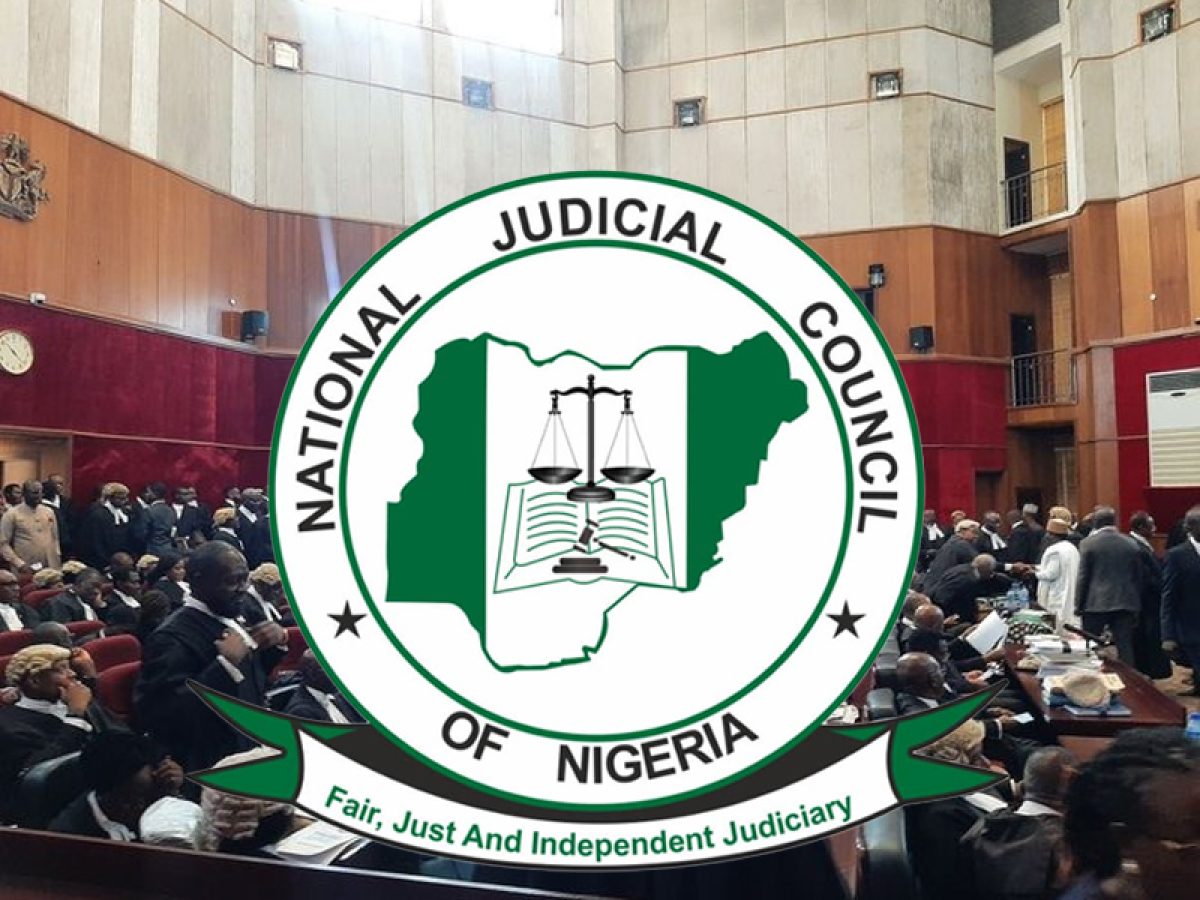
The National Judicial Council (NJC) has recommended the appointment of 12 new Justices of the Court of Appeal to the President of the Federal Republic of Nigeria.

Rising from its 111th meeting held on May 13, 2026, under the chairmanship of the Chief Justice of Nigeria (CJN), Justice Kudirat Kekere-Ekun, the Council also recommended one candidate for appointment as Judge of the High Court of Benue State and two candidates for appointment as Kadis of the Sharia Court of Appeal, Katsina State.

A statement issued late Thursday by the Deputy Director of Information of the NJC, Mrs. Kemi Babalola-Ogedengbe, said the recommendations were intended to fill vacancies arising from the elevation and retirement of judicial officers across various levels of the judiciary and to strengthen the capacity of courts for effective justice delivery.

According to the statement, the judges recommended for elevation to the Court of Appeal bench are Justices Yakubu Abdulhammeed Mohammed, Abodunde Monisola Oluwatoyin, Ajuwa Raphael, Abua Elias Ojie, Ijohor Mbalamen Jennifer and Shuaibu Sabiu Bala.

Others are Justices Omotosho James Kolawole, Nwite Emeka, Buba Dauda Njane, Kado Sanusi Ademola, Enikuomehin and Dadom Julcit Veronica.

Justice Christine T. Clement Ende was recommended for appointment as a Judge of the Benue State High Court, while Ibrahim Abdullahi Yakubu and Bala Salisu Daura were recommended for appointment to the Sharia Court of Appeal, Katsina State.

The NJC spokesperson stated that the consideration of Messrs. Yakubu and Daura had earlier been stepped down in January 2026 following a petition by Tanimu Yusuf questioning their eligibility on account of prior retirement from public service. After due examination of the issues raised, the Council concluded its deliberations and approved their recommendation.

The NJC stated that all recommendations followed a rigorous selection process involving public scrutiny, evaluation of complaints received from stakeholders, and interviews conducted by a nine-member Interview Committee, in accordance with the 2023 Revised NJC Guidelines and Procedural Rules for the Appointment of Judicial Officers.

The Council also reaffirmed that the Constitution of the Federal Republic of Nigeria, 1999 (as amended), does not prohibit retired public servants from judicial appointment.

The decision was further guided by judicial precedent, particularly Ayoola v. Baruwa (1999), where the Court of Appeal affirmed that no constitutional provision precludes a retired legal practitioner from appointment to the bench.

The statement read: “Under the newly adopted policy, a retired public servant must have a minimum of 10 years remaining in service before attaining the mandatory judicial retirement age; prospective candidates must disclose any criminal conviction; provide full employment history and reasons for leaving previous employment; declare existing employment obligations; and disclose financial status, including any circumstance of financial embarrassment.

“The Council noted that public service retirement may occur through voluntary retirement, compulsory retirement, or advised resignation, and observed that some officers retire upon attaining 50 years of age after completing 35 years of service. The requirement of a minimum remaining service period was introduced to ensure optimal institutional investment in judicial training and to promote continuity, stability and efficiency within the judiciary.”

The Council extended the acting appointment of Justice Ijeoma O. Agugua as Acting Chief Judge of Imo State for a further period of three months, from March 26, 2026, to June 26, 2026, to allow for the completion of the process for appointing a substantive Chief Judge.

The NJC commended Justice Ononeze-Madu for declining to be sworn in contrary to established constitutional procedure, describing the action as a demonstration of institutional integrity and respect for the rule of law.

It reiterated its call on the Imo State Judicial Service Commission to expedite the process of appointing a substantive Chief Judge in order to ensure stability, safeguard judicial independence and enhance the effective administration of justice in the state.

On disciplinary matters, the Council rejected appeals filed by eight judges of the Imo State judiciary seeking a reversal of their compulsory retirement from service over age falsification, having found that the affected judges failed to present fresh evidence capable of justifying a reversal of the sanctions imposed on them.

The judges include Justices B.C. Iheka, K.A. Leaweanya, Okereke Chinyere Ngozi, Innocent Chidi Ibeawuchi, Ofoha Uchenna, Everyman Eleanya, Rosemond Ibe and T.N. Nzeukwu.

However, the Council reinstated Justice T.I. Nze of the Customary Court of Appeal after His Lordship presented new evidence to the review committee, which the committee found to be authentic.

The affected judges were among 10 judicial officers recommended for compulsory retirement at the Council’s 109th meeting held on June 25, 2025.

The statement said nine of them were found to have altered their dates of birth in official records to unlawfully extend their years in service, while Justice T.N. Nzeukwu was found to have made himself available to be sworn in as Acting Chief Judge despite being fourth in the hierarchy of judges, contrary to Section 271(4) of the Constitution.

The Council also considered 13 investigation reports on petitions filed against judicial officers across the country over the handling of cases before them.

Following deliberations, the NJC dismissed eight petitions for lack of merit, want of diligent prosecution or for being statute-barred, while sanctions, including one-year suspension without pay, were imposed in two cases where misconduct was established.

Specifically, the Council suspended Justice Ibrahim D. Shekarau of the High Court of Nasarawa State for one year without pay for judicial misconduct involving the grant of an ex parte order in breach of Rules 3.1, 3.3 and 3.5 of the Revised Code of Conduct for Judicial Officers of the Federal Republic of Nigeria, 2016.

The suspension followed a petition by Oluwafunke Obale Ozozoma over proceedings in Suit No. NSD/MG56M/2025.

The petitioner alleged that Justice Shekarau granted an ex parte order directing the transfer of ₦7 million from her bank account to a third party as a purported reversal of funds.

She contended that the ex parte application was filed, heard and granted on the same day without any substantive suit pending before the court, and that the order wrongly implied her involvement in fraud despite her not being charged or made a party to the proceedings.

She further alleged that the judge failed to verify the alleged erroneous transfer before making the order, thereby amounting to judicial misconduct.

The committee found that the judge acted in bad faith, failed to observe due process and demonstrated a lack of professional competence.

Similarly, the Council suspended Justice Edward A.E. Okpe of the High Court of the Federal Capital Territory for one year without pay over allegations of breach of fair hearing in a matrimonial case.

The decision followed a petition filed by Mr. Sunday Emmanuel Oso, who accused the judge of bias and denial of fair hearing in Suit No. FCT/HC/PET/529/2024 between Lateefat Adeola Oso and Sunday Emmanuel Oso.

In the petition, Oso alleged that although he was served hearing notices fixing the matter for September 19, 2024, the court heard and granted an ex parte application on September 17, 2024, without notice to him.

He further alleged that when the matter later came up, the judge declined to hear the Motion on Notice and instead entertained committal proceedings against him based on alleged disobedience of the earlier ex parte order.

The committee found that Justice Okpe granted an ex parte application that led to committal proceedings against the petitioner without affording him the opportunity to be heard, contrary to Rule 3.3 of the Revised Code of Conduct for Judicial Officers.

In another case, the Council dismissed a petition filed against Justice Charles N. Wali of the Rivers State High Court over allegations of misconduct linked to the Rivers State House of Assembly crisis.

The NJC found that the allegations were unsubstantiated and recommended that the petitioner, Daniel Chibuzor Amadi Esq., be referred to the Legal Practitioners Disciplinary Committee for disciplinary action over allegations described as reckless and unsupported by evidence.

The Council also deliberated on the report of 98 petitions submitted by its Preliminary Complaints Assessment Committees. Out of the petitions considered, 68 were dismissed for lack of merit, four judges were cautioned, one judge received a final warning, while 11 petitions were recommended for further investigation.

The Council further adopted reports suspending proceedings in some petitions on the grounds that the matters were sub judice.

Council also resolved to refer one Mbadiwe Ossai to the Inspector-General of Police (IGP) for investigation and prosecution for alleged perjury, while Adeboye Williams Adewale Esq., Dr. Peter N. Ekemezie Esq., Dr. Martin Odika Esq., and Muhammad Hamza Ahmad-Gana Esq. were referred to the Legal Practitioners Disciplinary Committee for writing frivolous and unsubstantiated petitions calculated to harass and intimidate judicial officers.

In a related development, one Yusuf Isa, described as a serial petitioner, was barred from further presenting petitions to the Council.

On judicial performance evaluation, the NJC commended nine judges for exemplary performance during the 2024 and 2025 legal years.

Two judges are to receive letters of commendation for delivering more than 21 considered judgments within the review period, while seven others will receive appreciation letters for commendable performance.

The Council also approved the issuance of 256 letters to judicial officers for various performance-related issues and approved the retirement of Justice Hamma Akawu Barka of the Court of Appeal, Abuja Division, who retired on April 17, 2026; Justice Amina Audi Wambai of the Court of Appeal, Makurdi Division, who will retire on July 6, 2026; and Justice Bello Mohammed Shinkafi of the High Court of Zamfara State, who will voluntarily retire on July 31, 2026.

The NJC expressed profound appreciation for their dedicated and meritorious service to the judiciary and the nation.

The Council also expressed regret over the deaths of three judicial officers between December 12, 2025, and April 1, 2026. They are Justice Godswill Vidal Obomanu of the High Court, Rivers State; Justice Bamidele Folarinle Adeyeye of the High Court, Ondo State; and Justice Yahaya Adamu of the High Court, Kogi State.

Continue Reading
Click to comment

Leave a Reply

Your email address will not be published. Required fields are marked *

EFCC

Alleged $6bn Mambilla Project Fraud: Witness Clarifies Certification of FEC Meeting Extracts

Published

on

The Fifth Prosecution Witness (PW5) in the trial of former Minister of Power, Olu Agunloye, on Wednesday, June 10, 2026, clarified issues surrounding the certification of the extract of the minutes of the Federal Executive Council (FEC) meeting of May 21, 2003, before Justice Jude Onwuegbuzie of the Federal Capital Territory (FCT) High Court, Apo, Abuja, following a formal request by the Economic and Financial Crimes Commission (EFCC) for certified extracts of the meeting.

The former minister is facing prosecution on an amended seven-count charge bordering on alleged official corruption and the fraudulent award of the Mambilla Power Project contract worth $6 billion to Sunrise Power Transmission Company Limited.

The witness, Iliya John Iyakwari, an Assistant Director of Legal in the Federal Ministry of Justice, currently serving in the Federal Ministry of Power as an Assistant Legal Adviser since August 2014, stated during cross-examination by defence counsel, Adeola Adedipe, SAN, that the request for a certified copy of the extract of the FEC meeting of May 21, 2003, was received from the EFCC in July 2023.

He explained that the certification was eventually done in 2024 because, upon receipt of the request letter from the User Department, the Legal Department forwarded a memo to the EFCC dated July 27, 2023, but the initial copy sent to the Commission was not certified, prompting the EFCC to return it.

“It was after it was received by the EFCC in July 2023 that they realised the extract was not certified. So, in January 2024, a staff of the EFCC brought back Exhibit Three K to my Legal Adviser, and the name of the EFCC staff is Babangida.

“He brought it personally and reminded my director that it was not certified. My director then gave me the document to certify. That is why my lord will see on the face of the document that the date it was certified, January 26, 2024, is different from the date it was forwarded. It was in the process of certification that I mistakenly stamped the original forwarding letter dated June 27, 2023. After stamping the document, I gave it back to my director, who I believe handed it over to Babangida because I left them afterwards,” he said.

When asked whether his earlier testimony suggesting certification in June 2023 was contradictory, prosecution counsel, Abba Mohammed, SAN, defended the witness’ position, insisting that the testimony was not contradictory and that court records spoke for themselves.

“My lord, I object to this particular question anchored on Exhibit PW5A, which was just tendered in court. What I see in our record, and what I believe is reflected in the records of the court, is that in his explanation, he summarised that all these activities were done in June 2023; he never said the certification was done in 2023.

“This objection is founded on Section 36 of the 1999 Constitution of the Federal Republic of Nigeria, which is superior to the Evidence Act. We will rely on the record of the court, particularly line 16,” he said.

The witness was also asked whether the document tendered in court by Babangida during his testimony was a different extract of the FEC meeting from the one he certified.

The prosecution counsel again objected, arguing that the witness, in line with court procedure, was absent from the courtroom during Babangida’s testimony and therefore could not be cross-examined on a document that was not tendered through him. He cited the case of Buhari v. INEC & Others (2008).

Justice Onwuegbuzie adjourned the matter until June 18 and July 2, 2026, for the continuation of trial.

Continue Reading

Judiciary

Alleged ₦2bn Nigeria Air Fraud: How Sirika Allegedly Used Ethiopian Airlines as Fake Nigeria Air – Witness

Published

on

The 12th Prosecution Witness (PW12), Christopher Odofin, in the trial of former Minister of Aviation, Hadi Abubakar Sirika, on Wednesday, June 10, 2026, told Justice S.C. Oriji of the Federal Capital Territory (FCT) High Court, Abuja, how Sirika allegedly passed off an aircraft belonging to Ethiopian Airlines as the promised Nigeria Air by the government of the late President Muhammadu Buhari.

The decoy aircraft, adorned with the livery of the proposed Nigeria Air, landed on the tarmac of the Nnamdi Azikiwe International Airport, Abuja, on May 27, 2023, three days before the expiration of the Buhari administration, and was flown back to Addis Ababa on the morning of May 29, 2023, the handover date to the succeeding government.

Hadi Sirika is being prosecuted by the Economic and Financial Crimes Commission (EFCC) on an amended six-count charge bordering on alleged abuse of office and misappropriation of public funds amounting to over ₦2 billion, alongside his daughter, Fatima Hadi Sirika; son-in-law, Hamma Jalal Sule; and Al Buraq Global Investment Limited.

The contract for the establishment of Nigeria Air was awarded to Tianaero Nigeria Limited, a company belonging to Gabriel Tilmann, described as a close associate and friend of the former minister.

Reading from a portion of the contract agreement with Ethiopian Airlines, the witness, an investigator with the EFCC, stated: “The aircraft will depart from Addis Ababa (ADD) late evening of May 26, 2023, for it to be positioned early morning of May 27, 2023, at the Abuja (ABV) airport. The aircraft will stay at ABV airport for the static display of Nigeria Air livery until May 28, 2023. The aircraft will leave ABV airport early morning on May 29, 2023. The chartered flight will be operated by Ethiopian Airlines crew in Ethiopian Airlines uniforms. The Federal Government of Nigeria and Nigeria Air may put together local models who will be in Nigeria Air uniforms to pose for ceremonial pictures. The models may come to Addis Ababa so they may fly with the chartered flight to ABV.”

The witness told the court that the display of the aircraft at the Abuja International Airport was deliberately planned to coincide with the end of the first defendant’s tenure as Nigeria’s Minister of Aviation and Aerospace Development on May 29, 2023, and to present the aircraft as evidence of the actualisation of his promise to revive Nigeria Air.

He further stated that after the less-than-72-hour display, the Nigeria Air logo was removed from the aircraft and it was returned to Ethiopian Airlines in Addis Ababa.

According to the witness, the investigating team also established that Ethiopian Airlines entered into a charter arrangement for the static display of the Nigeria Air livery for only three days, from May 27 to May 29, 2023. This was based on documents and information received from the airline in a letter dated June 12, 2023, sent in response to the EFCC’s request for information regarding Nigeria Air.

He added that although the contract was purportedly for the establishment of Nigeria Air, the charter agreement with Ethiopian Airlines was entered into on May 24, 2023—just five days before the expiration of Sirika’s tenure—and was solely for a static display of the Nigeria Air logo on an aircraft.

All documents tendered in evidence by the prosecution were shown to have been duly signed, authorised, and accompanied by certificates of identification. None of the counsel representing the four defendants objected to their admissibility.

Among the exhibits was a compact disc containing a voice note from the first defendant, Hadi Sirika, marked as Exhibit 37, which prosecution counsel applied to be played in court at the next adjourned date.

Further in his testimony, the witness disclosed that although the contract for the start-up of Nigeria Air was initially awarded to Tianaero Nigeria Limited for over ₦299 million on April 4, 2022, the company later received a contract extension on October 17, 2022, increasing the sum to over ₦599 million. He alleged that the extension was granted on the instructions and directives of the first defendant due to his relationship with the company’s alter ego.

According to him: “The investigating team arrived at this position when the phone of one Enitan Muyiwa Abel, who was a Permanent Secretary in the first defendant’s ministry, was analysed, revealing a voice note sent to the Permanent Secretary while the first defendant was in Spain, instructing him to ensure that the contract was awarded to Tianaero Nigeria Limited.”

Justice Oriji adjourned the matter until June 17, 2026, for the continuation of the trial.

Continue Reading

EFCC

EFCC Arraigns Three Over Alleged ₦10bn Fidelity Bank Fraud in Lagos

Published

on

The Economic and Financial Crimes Commission (EFCC) has arraigned three men and another suspect currently at large before the Lagos State High Court sitting in Ikeja over an alleged ₦10 billion fraud involving Fidelity Bank Plc.

The defendants, identified as Ibeh Emmanuel, Chidiebere Ihekoronye, Akubuo Chimuanya, and Austen Peaks Aniekan, who is currently at large, were brought before Justice Olubusola A. Okunuga on Wednesday on a five-count charge bordering on conspiracy, obtaining by false pretence, possession of fraudulent documents, and forgery.

According to the EFCC, the defendants allegedly conspired to fraudulently obtain ₦10 billion from Fidelity Bank Plc through forged documents and false representations.

One of the charges alleged that on or about April 16, 2026, the defendants, with intent to defraud, conspired among themselves to obtain the sum of ₦10 billion from Fidelity Bank Plc by falsely claiming that Maton Engineering Limited, which maintains account number 4011468821 with the bank, had issued an irrevocable standing order directing the reservation, blocking, and transfer of the funds in favour of Prospera Finance Limited, domiciled with Wema Bank Plc.

The anti-graft agency stated that the representation was false and that the defendants were fully aware of its falsity at the time it was made.

The commission further alleged that the defendants attempted to obtain the said amount based on the same purported instruction and false representation.

According to the charge, the alleged offences contravene Sections 1(1)(a), 8(a), and 1(3) of the Advance Fee Fraud and Other Fraud Related Offences Act, 2006.

The EFCC also accused Emmanuel of being in possession of a document purportedly issued by Fidelity Bank Plc confirming the existence of blocked funds amounting to ₦10 billion in favour of Prospera Finance Limited, which he allegedly knew to be false.

In addition, the defendants were accused of forging a document titled, “Confirmation of Ten Billion Naira (₦10,000,000,000.00) Blocked Funds in Favour of Prospera Finance Limited,” purportedly emanating from Fidelity Bank Plc.

The commission alleged that the document was knowingly fabricated without lawful authority, contrary to Section 365(1) of the Criminal Law of Lagos State, 2015.

When the charges were read to them, the defendants pleaded not guilty.

Following their plea, prosecution counsel, A.A. Usman, urged the court to fix a date for trial and requested that the defendants be remanded in a correctional facility pending the determination of their bail applications.

Justice Okunuga subsequently ordered that the defendants be remanded at the Ikoyi Correctional Centre and adjourned the matter until June 18, 2026, for the hearing of their bail applications and the commencement of trial.

The EFCC stated that investigations into the alleged fraud are ongoing, while efforts are being intensified to apprehend the fourth defendant, Aniekan, who remains at large.

Continue Reading

Trending

Copyright © 2025 JaraJournal.