
Judiciary
NDIC Drags Wema Bank to Court Over Alleged ₦125.38 Billion Banana Island Assets, ₦401 Million Disputed Payment

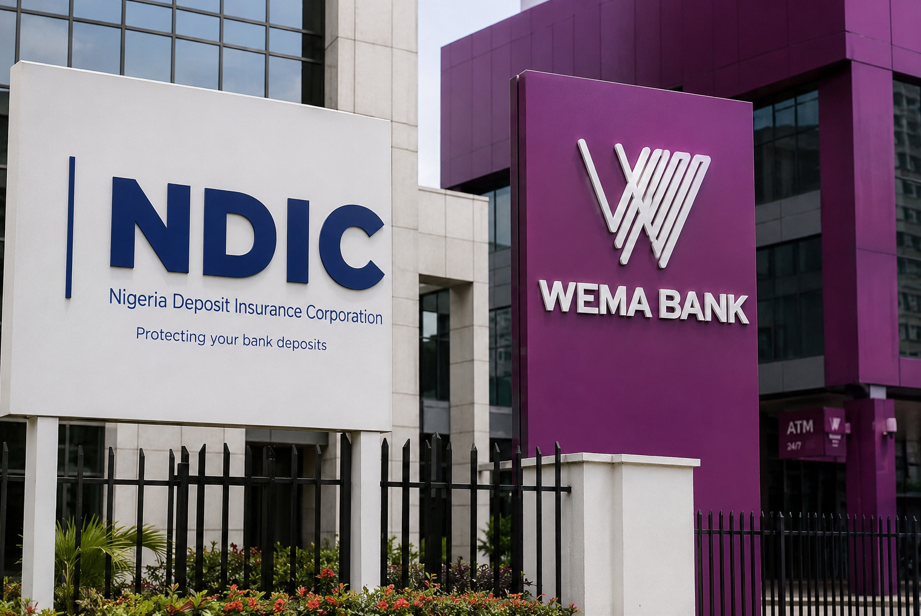
The Nigeria Deposit Insurance Corporation (NDIC), acting as liquidator of the defunct Gulf Bank Plc, has instituted two separate actions at the Federal High Court in Lagos against Wema Bank Plc. The combined claims amount to approximately ₦125,384,535,500.00 (One Hundred and Twenty-Five Billion, Three Hundred and Eighty-Four Million, Five Hundred and Thirty-Five Thousand, Five Hundred Naira), arising from two distinct sets of disputed high-value properties in Banana Island, Lagos, alongside an alleged improper cash transaction of ₦401 million.
Both suits were filed under the Failed Banks (Recovery of Debts and Financial Malpractices in Banks) Act and form part of NDIC’s long-running efforts to recover and liquidate outstanding assets of the defunct Gulf Bank Plc nearly two decades after its collapse.
The two actions, though related, concern distinct sets of six properties each, acquired through different shell companies allegedly used by the defunct bank.
The first suit concerns six properties in Banana Island purchased in the name of Euston Wenberg Engineering Company Limited, described in the pleadings as a shell company used by Gulf Bank Plc. These plots, situated in Zones J, K, L and P, have a combined area of approximately 13,794.145 square metres. At the prevailing market rate of ₦4,500,000.00 per square metre, NDIC values the properties at ₦62,073,652,500.00 (Sixty-Two Billion, Seventy-Three Million, Six Hundred and Fifty-Two Thousand, Five Hundred Naira).
The second suit concerns another set of six properties in Banana Island acquired through Bacad Finance and Investment Limited (later renamed Supra Commercials Limited), another entity in which the defunct bank allegedly held over 80 per cent shareholding. These plots have a combined area of approximately 13,979.974 square metres, valued at ₦62,909,883,000.00 (Sixty-Two Billion, Nine Hundred and Nine Million, Eight Hundred and Eighty-Three Thousand Naira) at the same per-square-metre rate.
In addition, the second suit seeks recovery of ₦401,000,000.00 (Four Hundred and One Million Naira) allegedly collected by Wema Bank from NDIC’s agent bank, United Bank for Africa (UBA), in September 2009.
The Governor of the Central Bank of Nigeria revoked Gulf Bank Plc’s banking licence by notice published in the Official Gazette of the Federal Republic of Nigeria (Volume 93, Number 3, Government Notice No. 7) dated January 16, 2006. The Federal High Court, Lagos Division, subsequently made a winding-up order on November 27, 2006, appointing NDIC as liquidator.
On the basis of those instruments, the corporation maintains that it is legally mandated to trace, recover and liquidate all outstanding assets of the defunct bank for the benefit of depositors and creditors.
In the first suit, NDIC alleges that Gulf Bank acquired six Banana Island plots between 1998 and 2003 using Euston Wenberg Engineering Company Limited as a vehicle. The internal records of the defunct bank reportedly treated the acquisition as a loan account, an arrangement NDIC contends shows that the assets remained beneficially owned by Gulf Bank Plc.
NDIC further alleges that Wema Bank took custody of the properties purportedly to secure an interbank deposit of ₦771.79 million, but that a joint CBN/NDIC special examination conducted in September 2005 found no record in Gulf Bank’s books confirming that any such deposit existed.
The examination report, dated September 30, 2005, reportedly found the defunct bank’s explanations unsatisfactory, while no supporting documentation was subsequently produced.
According to NDIC, Wema Bank later presented two managers’ cheques from Access Bank and Intercontinental Bank, both dated September 2005, totalling ₦250 million in favour of Euston Wenberg Engineering Limited, which NDIC described as instruments for a purchase rather than recovery of a deposit.
NDIC contends that the purported sale at ₦250 million was commercially implausible, given that a single property in Banana Island at the time was worth more than ₦500 million.
In the second suit, NDIC alleges that Gulf Bank injected ₦20 million into Bacad Finance and Investment Limited in 2001 to increase its share capital and later invested an additional ₦60 million in the company in 2003.
The defunct bank allegedly held over 80 per cent of Bacad Finance’s shares and used the entity to acquire another set of six Banana Island plots. The pleadings state that the bank intended to develop the properties into a luxury residential estate comprising 72 flats, to be known as Bacad Estate, in partnership with Shelter Afrique.
NDIC alleges that Wema Bank, without any valid mortgage, court order or proprietary interest, took custody of the properties and later claimed to have sold them for ₦524 million through managers’ cheques dated 2006 and 2007.
NDIC described the claimed sale price as grossly implausible, arguing that each property was worth over ₦4 billion by that period.
Separately, NDIC stated that in June 2009 it wrote to Wema Bank approving payment of ₦1,635,616.44 as the full outstanding deposit due to the bank as of January 16, 2006, the date Gulf Bank went into liquidation.
Notwithstanding that communication, NDIC alleges that in September 2009 Wema Bank collected ₦401 million from UBA, NDIC’s agent bank, without lawful justification, adding that the corporation has no record showing Wema Bank was owed any sum beyond the approved ₦1.635 million.
Both suits are supported by investigations conducted by senior legal practitioners and retired security operatives, including Dada Awosika SAN of D.A. Awosika & Partners LLP, Pekun Sowole Esq., retired Deputy Inspector-General of Police Abiodun Alabi, and J.I. Okolonji Esq., a retired Deputy Director who headed NDIC’s Criminal Investigation Unit.
NDIC has also filed a petition with the Economic and Financial Crimes Commission (EFCC) for investigation and possible prosecution.
In both actions, NDIC invoked the special jurisdiction conferred by the Failed Banks Act, which the pleadings described as excluding the application of limitation laws, permitting the lifting of the corporate veil and authorising summary remedies, including committal to prison for non-compliance.
NDIC is seeking declarations in both suits that any purported sale of the properties was illegal, null and void; that Wema Bank had no valid interest in the properties; and that NDIC, as liquidator, is entitled to their current full value.
The primary relief sought in each suit is payment of the assessed value of the properties within 30 days of judgment. In the alternative, NDIC seeks the return of all original certificates of occupancy.
In the second suit, NDIC is also seeking repayment of the ₦401 million. Both suits include applications for committal of the bank’s Managing Director and Executive Directors in the event of non-compliance.
Wema Bank, through its counsel, Dr. Oladapo Olanipekun SAN, Mr. Kehinde Ogunwunmiju SAN and Mr. Tunde Afe-Babalola SAN, has filed a preliminary objection challenging the court’s jurisdiction.
The bank relies on the Failed Banks Act, the Companies and Allied Matters Act (CAMA) 2020, the Limitation Law of Lagos State, and Sections 6(6) and 251(1) of the 1999 Constitution.
Wema Bank argues that NDIC’s claims do not arise from any loan, credit facility, guarantee or banking transaction between the parties, as required under the Failed Banks Act, and that the bank was never a customer of Gulf Bank Plc in respect of any credit facility.
The bank further contends that the suits disclose no debtor-creditor relationship and that NDIC lacks locus standi because the disputed properties were allegedly owned by Bacad Finance and Investment Limited (now Supra Commercials Limited), a separate legal entity.
According to Wema Bank, the matter is fundamentally one of property ownership rather than banking debt recovery, placing it outside the Federal High Court’s jurisdiction under Section 251(1) of the Constitution.
The bank also argues that any cause of action, if it existed at all, arose between 2006 and 2007 and is now statute-barred under the Limitation Law of Lagos State. It accused NDIC of abusing court process by attempting to circumvent limitation laws with stale claims.
Wema Bank is asking the court to strike out or dismiss both suits.
The Federal High Court is expected to determine, among other issues, whether Wema Bank had any legal or equitable interest in either set of Banana Island properties; whether any valid mortgage or court order existed to justify disposal of the assets; whether the Failed Banks Act excludes limitation periods and, if so, whether it applies in the circumstances; whether NDIC can lawfully recover assets approximately 20 years after Gulf Bank’s collapse; and whether the alleged ₦401 million collection from UBA was properly authorised under banking law.
The matters have been adjourned until June 25, 2026, for further proceedings.
Judiciary
BREAKING: Court Jails Chinese Nationals, Sentences Them to 50 Years for Illegal Export of Nigeria’s Lithium, Copper Minerals

Justice Akintayo Aluko of the Federal High Court, Lagos, has convicted and sentenced two Chinese nationals, Zhang Hong Lin and Gao Pei Hai, to 25 years’ imprisonment each for conspiring to illegally export Nigeria’s mineral resources.
The judge convicted the two defendants on all five counts preferred against them and sentenced each of them to 25 years’ imprisonment on Counts 1 to 5, with an option of a ₦10 million fine on each count.
Counsel to the Economic and Financial Crimes Commission (EFCC), H. U. Kofarnaisa, had arraigned the two defendants on Friday on a five-count charge.
Justice Aluko further ordered that the sentences should commence from the date of their arrest.
He also ordered the forfeiture of all the mineral resources involved in the case to the Federal Government.
The two convicts were arraigned alongside Gao Pei Yu, who remains at large, on a five-count charge bordering on conspiracy, unlawful possession, and the attempted exportation of strategic mineral resources without lawful authority.
According to the charge filed before the Federal High Court on May 28, 2025, the defendants conspired in Lagos to defraud the Federal Government of revenue accruing from the country’s solid mineral resources by attempting to export mica products, copper-bearing minerals, and lithium-bearing minerals without the approval of the appropriate authorities.
The prosecution alleged that the offences contravened Section 1(8)(a) of the Miscellaneous Offences Act, 1983.
The remaining counts alleged that, on May 9, 2025, the defendants unlawfully possessed various mineral resources intended for export without lawful authority, contrary to Section 8(b) of the Miscellaneous Offences Act, 1983.
The minerals listed in the charge included muscovite and lepidolite, both mica minerals; spodumene and petalite, which are lithium-bearing ores; as well as anhydrite, quartz, magnesite, bornite, and cuprite, which are associated with copper-bearing mineral resources.
After reviewing the evidence, Justice Aluko found that the prosecution had proved its case beyond reasonable doubt against the first and second defendants.
He consequently convicted them on all five counts, imposed the custodial sentences and fine options, and ordered the forfeiture of the seized mineral resources to the Federal Government.
Justice Akintayo Aluko of the Federal High Court, sitting in Ikoyi, Lagos, on Thursday, July 30, 2026, convicted and sentenced Sunmonu Olasunkanmi Thaoban to four years’ imprisonment for money laundering.
Sunmonu was arraigned by the Lagos Zonal Directorate 1 of the EFCC on a two-count charge bordering on money laundering.
One of the counts reads: “That you, Sunmonu Thaoban Olasunkanmi, sometime in 2023, in Lagos and within the jurisdiction of this Honourable Court, whilst acting as a middleman, indirectly disguised the origin of the sum of ₦16,000,000 (Sixteen Million Naira), being illicit gains accrued from your unlawful act, by converting same to a black G-Wagon Jeep, 2018 model, with chassis number 1C4HJWEGJL893461, which vehicle forms part of the proceeds of your unlawful activity, and you thereby committed an offence contrary to Section 18(2)(a) and punishable under Section 18(3) of the Money Laundering (Prevention and Prohibition) Act, 2022.”
The defendant pleaded guilty to both counts.
Following his guilty plea, the prosecution counsel, H. U. Kofarnaisa, reviewed the facts of the case and urged the court to convict and sentence him accordingly.
Justice Aluko found Sunmonu guilty and sentenced him to four years’ imprisonment, with an option of a ₦1.8 million fine.
The court also ordered the forfeiture of the convict’s black G-Wagon Jeep and mobile device to the Federal Government of Nigeria.
In a related development, the court also convicted and sentenced four Bureau de Change (BDC) operators to 12 months’ imprisonment each for engaging in illegal foreign exchange transactions.
The convicts—Umar Muhammad Lamido, Yusuf Musa Yusuf, Abdulmuhimin Mahmud, and Muhammed Musa—were prosecuted by the Lagos Zonal Directorate 1 of the Economic and Financial Crimes Commission (EFCC), Ikoyi, on separate one-count charges bordering on illegal foreign exchange operations.
One of the charges against Abdulmuhimin Mahmud reads: “That you, Abdulmumin Mahmud, on the 23rd of July, 2026, in Lagos within the jurisdiction of this Honourable Court, engaged in a foreign exchange transaction other than through the official foreign exchange market and you thereby committed an offence contrary to Section 11(1)(a) of the National Economic Intelligence Committee Establishment (Etc.) Act, 1994, and punishable under Section 11(2) of the same Act.”
The defendants pleaded guilty to their respective charges.
Following their guilty pleas, the prosecution counsel, H. U. Kofarnaisa, reviewed the facts of the cases and urged the court to convict and sentence them accordingly.
Justice Aluko convicted the four defendants and sentenced each of them to 12 months’ imprisonment, with an option of a ₦100,000 fine.
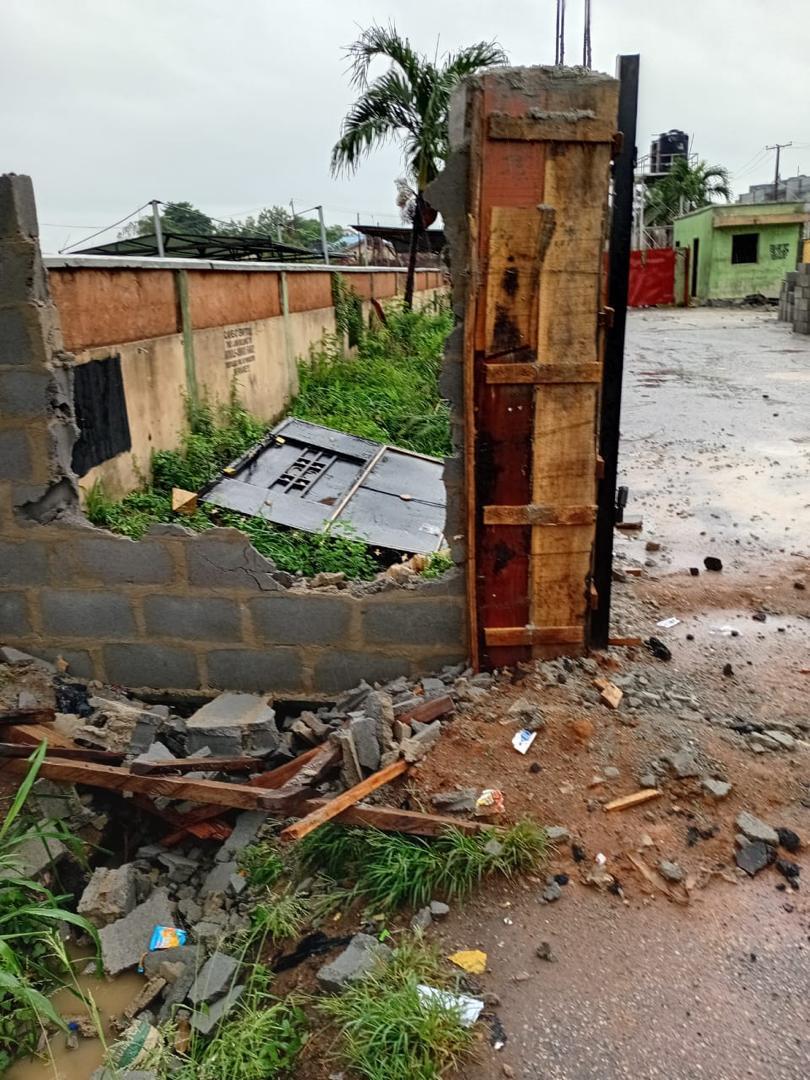
The Akinole-Oshiun Family has rejected the Ogun-Oshun River Basin Development Authority’s (OORBDA) claim to an 8,000-square-metre parcel of land along Lateef Jakande Road, Agidingbi, Ikeja, Lagos, insisting that the property has already been vested in the family by judgments of the High Court, the Court of Appeal, and the Supreme Court.
The family made the assertion in a rejoinder dated July 31, 2026, in response to OORBDA’s public disclaimer published on Page 12 of The Punch newspaper of July 29, 2026, in which the authority claimed ownership of the property known as “AY Homes Luxury Court.”
Signed by the Head of the Family, Chief Isiaka Lamina Akiti Akinole, and the Family Secretary, Hon. Fatai Abayomi Gbadebo Oshiun, the rejoinder described OORBDA’s publication as “erroneous” and “misleading,” saying it was issued to set the record straight and prevent what it described as falsehood from gaining public acceptance.
According to the family, the disputed property forms part of about 398 acres of land in and around Agidingbi, which it said had been conclusively declared its property through judgments of the High Court of Lagos State, the Court of Appeal, and the Supreme Court.
The family cited the decisions in Suit No. ID/216/77L, Appeal Nos. CA/L/517M/99, CA/L/649M/06, and CA/L/776/2014, as well as the Supreme Court judgment in SC/173/2009, which it said affirmed its legal and beneficial ownership of the land.
It further stated that, following the judgments, it obtained a writ of possession, which was executed by the Deputy Sheriff of the High Court of Lagos State in April 2019 in the presence of officers of the Nigeria Police Force, after which a Form “O” certifying the execution was issued.
The family also recalled that the execution of the writ prompted the Lagos State House of Assembly’s Committee on Rules and Business to conduct a public hearing on a petition over alleged illegal allocations of land covered by the Supreme Court judgment.
According to the rejoinder, officials of OORBDA participated in the hearing alongside other stakeholders, after which the Assembly resolved that the Lagos State Government should comply with the court judgments by recognising the family as the lawful owner of the 398-acre land and granting it unhindered access to the property.
The family further claimed that the Lagos State Government subsequently recognised its ownership by issuing land allocation documents, survey plans, building permits, and planning approvals covering plots within the Alausa Central Business District and along Lateef Jakande Road, including the disputed property.
It argued that OORBDA’s disclaimer was contemptuous of the subsisting judgments of superior courts and inconsistent with the state’s recognition of the family’s title.
The family also dismissed the Certificate of Occupancy displayed by OORBDA in its publication, contending that it could not supersede valid court judgments affirming the family’s ownership.
Urging members of the public, subscribers, consultants, agents, and other stakeholders to disregard OORBDA’s disclaimer, the family described the publication as self-serving, misleading, and capable of causing confusion and disrupting public peace in Agidingbi and its environs.
The rejoinder marks the latest development in the ownership dispute over the prime Agidingbi property. OORBDA had earlier warned the public against dealing with the land, maintaining that it belongs to the authority.
Efforts to obtain OORBDA’s response to the family’s rejoinder were unsuccessful as of the time this report was filed.



BREAKING: Court Jails Chinese Nationals, Sentences Them to 50 Years for Illegal Export of Nigeria’s Lithium, Copper Minerals

Court Jails Yahoo Boys’ Middleman, Four Men for Money Laundering, Illegal Forex Trading

Agidingbi Land Row: Family Accuses OORBDA of Defying Supreme Court Judgment
Nigerian nurses stage seven‑day warning strike over pay, staffing
Dangote Refinery to deploy 4,000 gas‑powered trucks for distribution

Sean Kingston sentenced to 3½ years in prison over $1 million fraud
-
Health1 year ago
Nigerian nurses stage seven‑day warning strike over pay, staffing
-
Energy12 months ago
Dangote Refinery to deploy 4,000 gas‑powered trucks for distribution
-
Entertainment12 months ago
Sean Kingston sentenced to 3½ years in prison over $1 million fraud
-
 Education1 year ago
JAMB sets 2025/26 university cut‑off at 150, bars under‑16
-
 Economy12 months ago
Nigeria approves plan to refinance ₦4tn power-sector debt
-

 Crime & Justice6 months ago
BREAKING: Two Chinese Directors Jailed 46 Years Each Over ₦3.4bn, $2.5m Crypto Fraud in Lagos
-

 Business6 months ago
Nigeria Revenue Service Collects ₦28.3trn in 2025, Sets ₦40.7trn Target for 2026
-

 Crime & Justice6 months ago
Police Arrest 24-Year-Old Over ₦48.5m Romance Fraud in Lagos