
EFCC
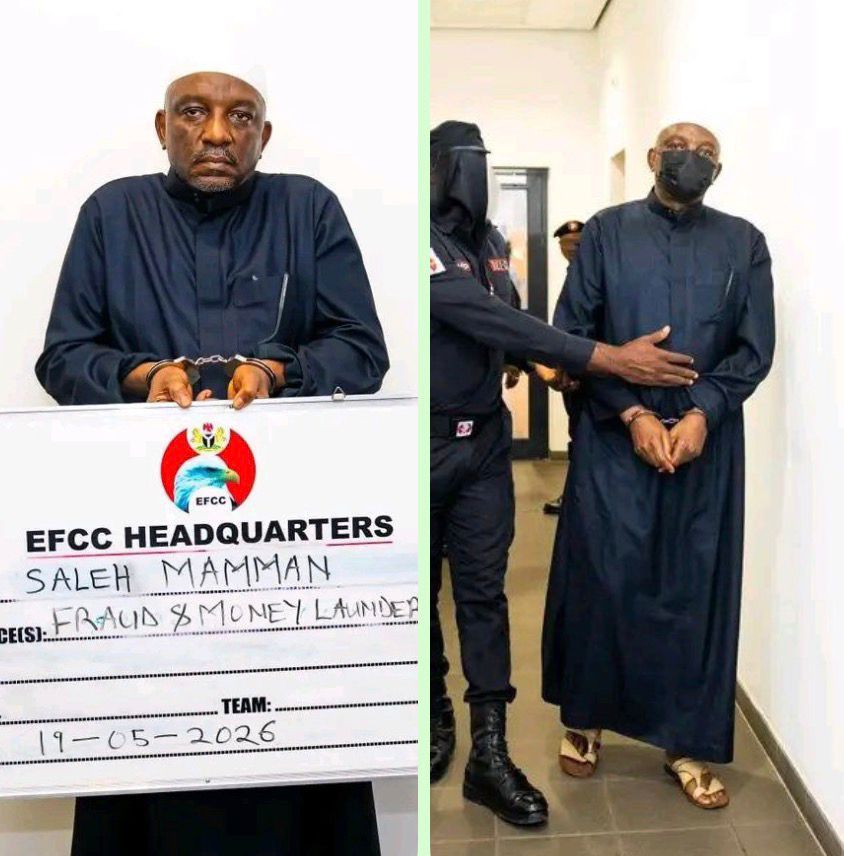
EFCC Transfers Saleh Mamman to Correctional Centre


The Economic and Financial Crimes Commission, EFCC, has called on legal practitioners across the country to desist from the illegal and unethical practice of charging clients in foreign currencies.
The call was made on Friday, September 11, 2026, in Lagos by the Acting Zonal Director of the Lagos Zonal Directorate 2 of the EFCC, Ikoyi, Assistant Commander of the EFCC, ACE I Bawa Usman Kaltungo, when he received a delegation of the Nigerian Bar Association, NBA’s Lagos Task Force on Illegal Practice of Law, led by its Head, Moshood Abiola, on a courtesy visit to his office.
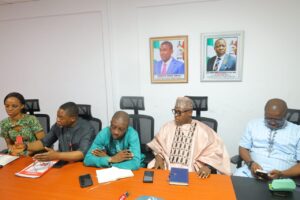
Speaking during the interactive session, Kaltungo expressed concern over the activities of lawyers who engage in illegal and unethical practices, stressing that the Commission would not hesitate to prosecute anyone found culpable.
According to him, the Directorate is currently handling two cases involving lawyers who allegedly charged their clients in foreign currencies.
He said: “We are also worried about the activities of lawyers who are involved in illegal and unethical practices.
“We have two cases of lawyers who were found to have charged fees in dollars. This is unethical and illegal, as the Naira is the country’s legal tender.
“We usually don’t want to have issues with members of the NBA. However, some lawyers are pushing us. Any lawyer we find culpable of charging clients in foreign currencies will be prosecuted.”
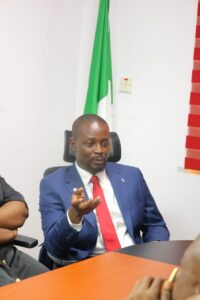
The Acting Zonal Director also cautioned lawyers against invoking the name of the EFCC to impose excessive charges on clients.
He said although lawyers had the right to determine their professional fees, they should not misrepresent the Commission or falsely claim that the fees demanded from clients were required by the EFCC.
“Also, lawyers should stop name-dropping the EFCC to overcharge their clients.
“They have the right to charge their clients as much as they like, but they shouldn’t drag the EFCC into it. They should desist from all these unethical practices,” he said.
Earlier, Abiola commended the Commission for its recent prosecution and conviction of a fake lawyer, describing the process as “swift and reassuring.”
He said the NBA Task Force had several cases involving lawyers allegedly engaged in malpractice, hence the need for stronger collaboration with the EFCC to ensure that legal practitioners found culpable of criminal conduct were prosecuted.

He said: “We appreciate the EFCC for the recent prosecution of a fake lawyer. It was swift, and we are glad that the EFCC was able to get the court to convict him.
“However, recently, we have a case involving a lawyer who has been engaging in malpractice. We have several cases like that, and we would like to strengthen our collaboration with the EFCC so that these individuals can be prosecuted and made to face the law.”
Reacting to one of Abiola’s remarks, ACE I Orhieoghene Adewunmi of the Department of Legal and Prosecution, Lagos Zonal Directorate 2, urged the NBA to ensure that appropriate publications were made concerning lawyers found culpable of unethical practices.
She said such publicity would help members of the public identify practitioners who had been sanctioned for professional misconduct and avoid engaging their services.
In the same vein, ACE II Henry Anasoh, also of the Department of Legal and Prosecution, Lagos Zonal Directorate 2, raised concerns over practices by some legal practitioners who assist suspects in obstructing investigations or frustrating the administration of justice.
He said there had been instances of lawyers helping clients to forge documents for bail purposes, including cases where purported medical records were presented in support of bail applications.
Anasoh also expressed concern over cases in which lawyers approach courts to restrain the EFCC from investigating or prosecuting their clients, including through fundamental rights enforcement suits arising from invitations issued by the Commission.
He, therefore, urged the NBA to assist the EFCC in its efforts to rid the legal profession of “unscrupulous practitioners”, stressing that the conduct of a few lawyers should not undermine the integrity of the profession.

The Nigeria Immigration Service (NIS), Zone A, on Thursday, September 10, 2026, applauded the Economic and Financial Crimes Commission (EFCC) for its doggedness in the fight against corruption and financial crimes.
The Zonal Coordinator, Zone A, ACG Mohammed Adamu, gave the commendation while receiving the Acting Director of the Lagos Zonal Directorate 1 of the Commission, Assistant Commander of the EFCC ACE I Adebayo Adeniyi, who led a delegation on a courtesy visit to the NIS Zonal Headquarters in Lagos.
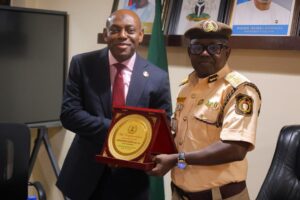
Adamu said the Commission had boosted Nigeria’s image, both locally and internationally, through its sustained efforts in combating corruption and financial crimes.
Describing the EFCC as one of Nigeria’s most prestigious and hardworking agencies, he pledged the NIS’s readiness to strengthen its partnership with the Commission through intelligence sharing and other forms of collaboration in the fight against economic and financial crimes.
“I am highly delighted to receive you and your entourage from the EFCC, one of the most prestigious and hardworking agencies in Nigeria. Thank you for a job well done. The EFCC has recorded significant achievements and secured convictions. These convictions serve as a deterrent to potential offenders, and Nigerians are proud of your work,” he said.
He added, “I will communicate this visit to the Headquarters so that they are aware of the strong working relationship we have with the EFCC.”
The NIS Zonal Coordinator also requested training opportunities for NIS officers, stressing that such capacity-building initiatives would enhance the effectiveness and professionalism of personnel in the discharge of their duties.
In his remarks, Adeniyi expressed appreciation for the long-standing synergy between the two agencies.
He called for sustained collaboration with the NIS in the fight against economic and financial crimes.
“We appreciate your office for the cooperation we have enjoyed over the years. We are here to express our gratitude and to sustain the existing relationship,” he said.
He added, “If there are any issues regarding our operations, please let us know. The Commission is committed to ensuring that everything is handled in line with due process. We look forward to continued cooperation.”
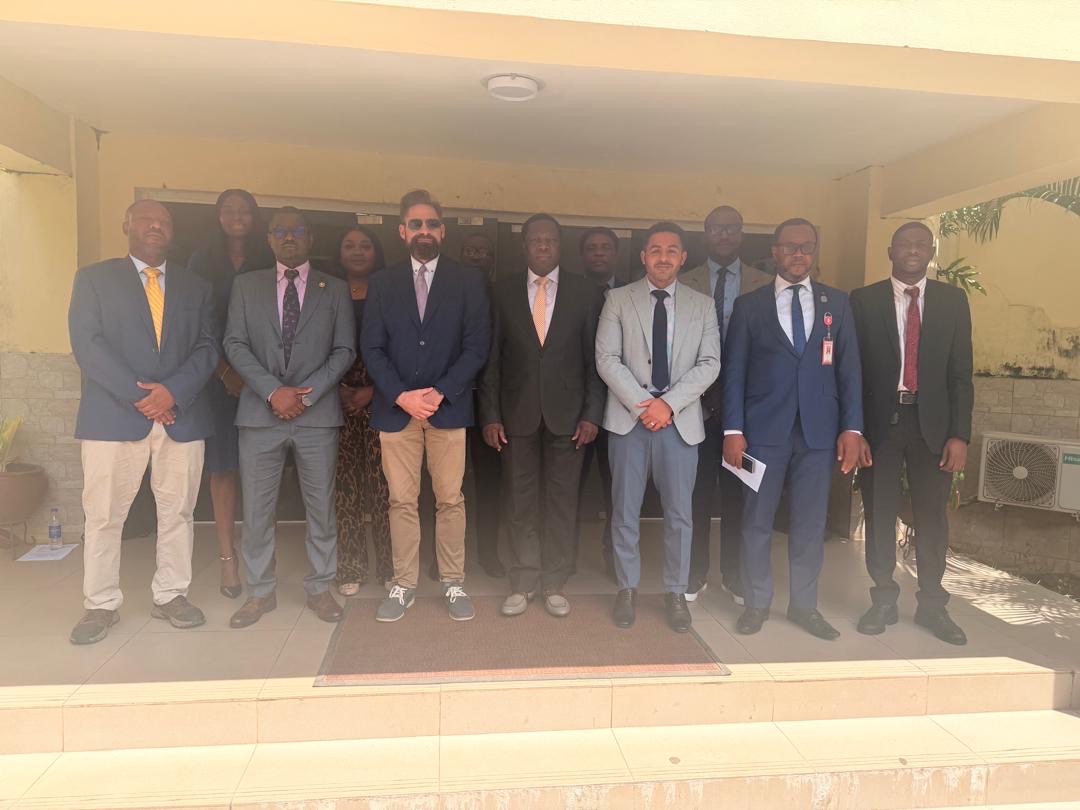
The Economic and Financial Crimes Commission (EFCC) and the Federal Bureau of Investigation (FBI) have reaffirmed their commitment to deepening strategic collaboration, intelligence sharing and operational synergy in investigating the alleged diversion and mismanagement of funds provided under United States government-supported programmes.
The resolve was made on Thursday, September 10, 2026, when Macus Maccain, Assistant Law Enforcement Attaché, FBI, led a delegation on a courtesy visit to the office of the Acting Zonal Director, Lagos Zonal Directorate 2 of the EFCC, Assistant Commander of the EFCC (ACE I), Bawa Usman Kaltungo.
Speaking during the interactive session, Maccain said the visit was aimed, among other things, at strengthening existing cooperation in investigating alleged financial irregularities involving organisations that had received funds under programmes supported by the United States Agency for International Development (USAID), particularly those connected with HIV and tuberculosis interventions.
He said the engagement became necessary following the shutdown of some USAID programmes by the United States government in 2025.
According to him, the development subsequently raised concerns over the management of funds that remained with some implementing organisations after the programmes were discontinued.
He said some organisations were suspected of mismanaging or allegedly diverting funds that had been provided to them before the affected programmes were shut down.
“We are seeking stronger engagement with the EFCC to establish how the funds were managed and identify possible financial misconduct arising from the termination of the programmes,” he said.
Also speaking, Jeremy Kennon, Special Agent, Office of Inspector General, Department of State, said the United States and Nigerian governments had previously entered into an agreement to support the fight against HIV and tuberculosis, with the Department of State and the Nigerian government providing funding to organisations implementing related programmes.
He said some of the organisations had established one-stop centres for HIV treatment.
He, however, said subsequent reviews had uncovered concerns over inflated budgets and other financial irregularities in Kano State and several other states.
Kennon stressed that the concerns were not limited to Kano or Nigeria, noting that similar issues had been identified in different parts of the world.
According to him, the FBI was interested in developing a long-term working relationship with the EFCC on the matter, including reciprocal information sharing.
“We’d like to work with the EFCC on this on a long-term basis, and we’ll be sharing information with you, not just getting information from you,” Kennon said.
Responding, Kaltungo welcomed the delegation on behalf of the EFCC Chairman, Ola Olukoyede, and described the relationship between Nigeria and the United States as “a long-standing one, particularly in the area of law enforcement cooperation.”
He assured the delegation that the EFCC would investigate allegations surrounding the diversion or mismanagement of USAID funds across Nigeria and trace the movement of the funds to their ultimate beneficiaries.
According to him, tracing the funds and identifying the beneficiaries would enable investigators to establish “how the money was spent; whether it was deployed for the purposes for which it was provided and whether any portion was mismanaged or diverted following the cancellation of the programmes.”
Kaltungo also assured the delegation that the investigation would be coordinated and would cover all states where the affected organisations and programmes operated.
He added that the Commission would work with the FBI to follow the financial trail and establish the facts surrounding the alleged diversion of the funds.



EFCC Warns Lawyers Against Charging Clients in Foreign Currencies

NIS Lauds EFCC on Fight Against Corruption, Pledges Sustained Partnership

50 Major Achievements of President Bola Ahmed Tinubu
Nigerian nurses stage seven‑day warning strike over pay, staffing

Dangote Refinery to deploy 4,000 gas‑powered trucks for distribution

Nigeria approves plan to refinance ₦4tn power-sector debt
-
Health1 year ago
Nigerian nurses stage seven‑day warning strike over pay, staffing
-
Energy1 year ago
Dangote Refinery to deploy 4,000 gas‑powered trucks for distribution
-
Economy1 year ago
Nigeria approves plan to refinance ₦4tn power-sector debt
-
 Education1 year ago
JAMB sets 2025/26 university cut‑off at 150, bars under‑16
-
 Crime & Justice7 months ago
BREAKING: Two Chinese Directors Jailed 46 Years Each Over ₦3.4bn, $2.5m Crypto Fraud in Lagos
-
 Entertainment1 year ago
Sean Kingston sentenced to 3½ years in prison over $1 million fraud
-

 Business7 months ago
Nigeria Revenue Service Collects ₦28.3trn in 2025, Sets ₦40.7trn Target for 2026
-

 Crime & Justice7 months ago
Police Arrest 24-Year-Old Over ₦48.5m Romance Fraud in Lagos