
News
Ozoro Festival: 16 Suspects Arrested So Far, No Official Rape Report Yet – Police


The Delta State Police Command has dismissed claims that the controversial Alue-Do festival in Ozoro was a “rape festival,” stating that no victim has officially reported rape in connection with the incident.
The Police Public Relations Officer in the state, Bright Edafe, made this known on Monday during an interview on The Morning Brief.
“It is important to state clearly that among the four girls interviewed yesterday, not one of them said they were raped. Up till this very moment, we have not had any official report that anybody was raped,” he said.
Edafe stressed that investigations are guided strictly by evidence and witness accounts, explaining that the festival, being a traditional rite, was not intended to promote sexual violence.
“It was not a rape festival. It was a festival organised by a chief priest to pray for barren women seeking the fruit of the womb. That was the intention.
“The law does not work on emotions; it works on available evidence and witness statements. For the fact that we have not had any witness who says, ‘I was raped,’ and the evidence does not show that anybody was raped, sexual assault is what we would be investigating,” Edafe said.
The PRO also revealed that 16 suspects have been arrested so far.
“After the initial arrests, the chief priest, who happens to be the head of the community, was arrested alongside four others. Following video analysis, additional individuals were identified and arrested, bringing the number to 11 more.
“This brings the total number of suspects currently in custody to 16. They have been transferred to the State Command Headquarters to be duly investigated by the Deputy Commissioner (DC), State CID,” Edafe said.
The spokesperson added that the police visited Ozoro and the Oramudu community to assess the situation and met with four victims.
He stated that the force assured them that the state government would cover their medical needs, compensate for lost property and money, and provide psychological support to aid their recovery from the trauma.
However, he noted that due process was not followed in organising the event, as key authorities were not informed.
“For reasons best known to them, the traditional ruler of the Ozoro Kingdom was not informed, the students’ union was not informed, and the school management was not informed.
“They also did not inform the police. That is why the chief priest is presently in our custody, because his negligence led to this incident and the sexual assault of these innocent girls,” he said.
According to the police spokesperson, the festival is said to occur “once every three or four years, and this is the first time such an incident has been recorded in Delta State.”
Edafe also urged parents and guardians to pay closer attention to their children, noting that safeguarding should not be limited to the girl child alone.
The controversy surrounding the festival sparked national outrage after viral videos showed mobs of men harassing and assaulting women in broad daylight, with some social media users describing the event as a “rape festival.”
Community leaders, however, maintain that the festival was hijacked by hoodlums who exploited the gathering to perpetrate criminal acts.
Authorities have since taken action, with the police confirming the arrests of suspects, including the community head and chief organiser.
The Delta State Government has also condemned the incident, stressing that cultural practices cannot excuse criminal behaviour. The Alue-Do festival has since been banned, while the case has been transferred to the State Criminal Investigation Department for further investigation.
Meanwhile, the Ozoro Kingdom Palace has condemned acts of violence, harassment, and intimidation against women linked to the festival.
The palace described the harassment of women during the event as “unacceptable” and “contrary to the kingdom’s values.”
It also distanced itself from claims circulating on social media that such actions were sanctioned, describing them as false and potentially harmful.
While acknowledging the cultural significance of the Alue-Do festival as a fertility rite, the palace emphasised that tradition must never be used to justify abuse or misconduct.
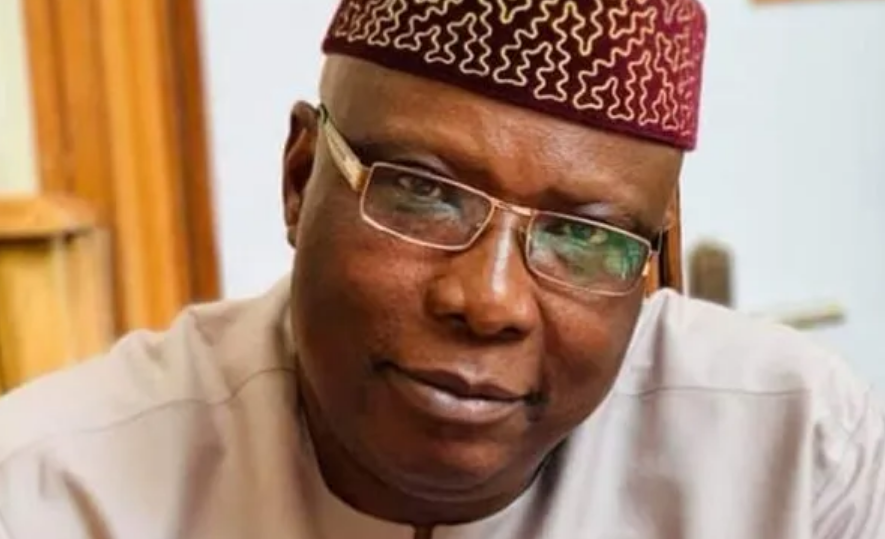
Former Ekiti Central Senator, Babafemi Ojudu, has raised concerns over the growing influence of internet fraud on Nigeria’s social and economic landscape, warning that the recent decline in business activities across Ado Ekiti following intensified operations by the Economic and Financial Crimes Commission (EFCC) has exposed the dangers of an economy built around illicit wealth.
In a commentary titled “When Crime Becomes an Economy: The Disturbing Lessons from Ado Ekiti’s Near-Empty Hotels,” Ojudu said the near-empty hotels, deserted lounges, quiet supermarkets, and struggling businesses reported across Ekiti State, particularly in the state capital, were linked to the flight of suspected internet fraudsters, popularly known as “Yahoo boys,” following the establishment of a stronger EFCC presence in the state.
According to the former lawmaker, the development has revealed the extent to which the proceeds of cybercrime have become woven into the fabric of the local economy.
Ojudu said he was initially skeptical about reports of declining commercial activities in Ado Ekiti until he personally visited some of the affected businesses.
“The stories were true,” he wrote, recounting how he visited the restaurant of a prominent hotel overlooking its swimming pool, where he spent almost an hour as the only customer.
He added that a visit to one of the city’s popular lounges revealed a similar situation, with empty spaces replacing the bustling atmosphere that once characterized such entertainment centers.
The former senator noted that hotel operators, lounge owners, traders, landlords, mechanics, and used-car dealers had all begun feeling the impact of the sudden disappearance of big spenders suspected to be involved in internet fraud.
He said many suspected cybercriminals had reportedly relocated from Ekiti to cities such as Akure, Osogbo, Ibadan, and Lagos following intensified EFCC operations.
Ojudu linked the crackdown to the leadership of EFCC Chairman Ola Olukoyede, an Ekiti indigene, who, he said, had strengthened the Commission’s operational presence in the state in response to concerns over the growing reputation of some communities as hubs for internet fraud.
He said EFCC operatives had embarked on regular raids, arresting suspects and recovering luxury vehicles, expensive mobile devices, and other alleged proceeds of crime.
The former Ekiti Central lawmaker also highlighted the reaction of some residents to the anti-fraud campaign, citing reports of protests in Ikere Ekiti by parents and sympathizers who directed their grievances at both the traditional ruler and the EFCC Chairman.
He said the development showed the extent to which some communities had become economically dependent on the activities of suspected fraudsters.
Beyond the economic consequences, Ojudu expressed concern over what he described as a deeper moral crisis facing Nigerian society, particularly among young people.
He lamented that the traditional pursuit of professions such as medicine, law, engineering, teaching, and other fields was gradually being replaced by an obsession with quick wealth.
According to him, some young Nigerians now see internet fraud as a desirable career path, with teenagers allegedly becoming involved at very young ages and acquiring luxury lifestyles that project the proceeds of crime as symbols of success.
He criticized what he described as society’s growing tolerance for unexplained wealth, arguing that some families and communities now celebrate sudden riches without questioning their sources.
Ojudu warned that universities and other social institutions were also being affected, as some young people increasingly prioritize material displays over academic achievement and personal development.
He argued that the danger was not only the financial harm caused by cybercrime but also the long-term damage to Nigeria’s values and institutions.
“These boys and girls will not remain boys and girls forever. They will become our business leaders, our bankers, our civil servants, our judges, our lawmakers, our commissioners, our governors, and perhaps even our presidents,” he warned.
The former senator cautioned that a society that rewards criminality risks producing future leaders shaped by dishonest practices.
He concluded that while empty hotels and struggling businesses could recover with time, rebuilding a generation’s understanding of integrity, hard work, and responsible success would be a far greater challenge.
“Civilizations do not collapse only because their economies fail. They collapse when they lose the ability to distinguish honour from disgrace, industry from theft, and success from plunder,” Ojudu stated.


President Bola Tinubu has congratulated Mrs Oyinkansola Badejo-Okusanya, SAN, on her historic election as the first elected and second female President of the Nigerian Bar Association (NBA).
In a statement issued by his Special Adviser on Information and Strategy, Bayo Onanuga, the President described her emergence as a watershed moment for the legal profession and a triumph of merit, excellence, and gender inclusion.
Tinubu noted that Badejo-Okusanya’s distinguished career, marked by integrity, professionalism, and a steadfast commitment to justice, earned her the confidence and support of legal practitioners across the country.
According to the President, her election reflects the growing recognition of the invaluable contributions of women to nation-building and the administration of justice. He expressed confidence that her leadership would further strengthen the legal profession through the promotion of the rule of law and reforms aimed at improving access to justice for all Nigerians.
Tinubu urged the incoming NBA President to work closely with stakeholders to advance judicial reforms, protect the sanctity of the Constitution, and sustain the legal profession’s role as a critical pillar of democratic governance.
He also assured her of his administration’s commitment to continued collaboration with the NBA in deepening democracy, promoting justice, and building a more prosperous and united nation.
“I extend my hearty congratulations to the President-elect of the NBA for her victory. As the first elected female president of the Association of Lawyers in Nigeria, Mrs Badejo-Okusanya has made history. She has once again shown that our women can attain any heights in pursuit of excellence in their careers and ambitions, both in the private sector and in public service.
“I urge you to reach out to the other contestants, unify the Bar and make efforts to correct issues that arose during your election.
“I wish you a successful tenure and service to the legal profession and our country at large,” the President said.
Badejo-Okusanya emerged winner of the NBA presidential election after polling the highest number of votes when voting officially ended on Sunday morning.
The only female among the three presidential candidates, she secured 12,317 votes, representing 47.18 per cent of the 26,106 ballots cast in the election, which was conducted electronically over a 24-hour period from 7:35 a.m. on Saturday to 7:34 a.m. on Sunday.
Her victory makes her the 33rd President of the NBA and the second woman to lead the association since its establishment in 1933.
Also elected was Afam Okeke, who emerged as General Secretary after polling 8,478 votes to defeat his opponents.
All elected officials will serve a two-year term spanning 2026 to 2028.



BREAKING: Court Jails Chinese Nationals, Sentences Them to 50 Years for Illegal Export of Nigeria’s Lithium, Copper Minerals

Court Jails Yahoo Boys’ Middleman, Four Men for Money Laundering, Illegal Forex Trading

Agidingbi Land Row: Family Accuses OORBDA of Defying Supreme Court Judgment
Nigerian nurses stage seven‑day warning strike over pay, staffing

Dangote Refinery to deploy 4,000 gas‑powered trucks for distribution

Sean Kingston sentenced to 3½ years in prison over $1 million fraud
-
Energy12 months ago
Dangote Refinery to deploy 4,000 gas‑powered trucks for distribution
-
Health1 year ago
Nigerian nurses stage seven‑day warning strike over pay, staffing
-
Entertainment12 months ago
Sean Kingston sentenced to 3½ years in prison over $1 million fraud
-
 Education1 year ago
JAMB sets 2025/26 university cut‑off at 150, bars under‑16
-
 Economy12 months ago
Nigeria approves plan to refinance ₦4tn power-sector debt
-
 Crime & Justice6 months ago
BREAKING: Two Chinese Directors Jailed 46 Years Each Over ₦3.4bn, $2.5m Crypto Fraud in Lagos
-

 Business6 months ago
Nigeria Revenue Service Collects ₦28.3trn in 2025, Sets ₦40.7trn Target for 2026
-

 Crime & Justice6 months ago
Police Arrest 24-Year-Old Over ₦48.5m Romance Fraud in Lagos