
EFCC
EFCC, NJI Seek Legal Reforms to Tackle Delays in Corruption Trials


The Economic and Financial Crimes Commission (EFCC) and the National Judicial Institute (NJI) have called for legal and procedural reforms to curb delays and abuse of court processes in the trial of corruption and other economic and financial crimes cases.
The call is contained in a communiqué issued by participants at the end of the 8th Capacity Building Workshop for Justices and Judges, held in Abuja from October 13 to 15, 2026.
The workshop was organised by the EFCC in collaboration with the NJI under the theme, “Investigation and Prosecution of Economic and Financial Crimes in a Digital Age.” It brought together justices and judges from across the country, as well as EFCC investigators and prosecutors.
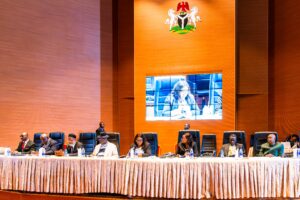
At the end of three days of lectures, extensive discussions and a workshop survey, participants arrived at several resolutions that formed the basis of the communiqué.
In the communiqué, participants resolved that delays in the resolution of corruption cases “will be greatly reduced by designating specialised judges and court staff to handle such cases, as well as equipping such judges and courts with the necessary skills through training to ensure efficient, certain and consistent application of existing laws in the administration of justice.”
They also called for a balance in the criminal justice system, stating that it “must strike the proper balance between fairness, efficiency and legal certainty in the protection of individual rights on one hand and the speedy administration of justice, on the other hand.”
To achieve this, they recommended that relevant provisions of the Administration of Criminal Justice Act (ACJA) be reviewed where necessary.
Participants urged that investigation standards, including digital management protocols, “should be enhanced across investigative and prosecutorial agencies to ensure that prosecution of cases is based on credible, reliable and admissible evidence.”
The communiqué further stated that adopting “a more inclusive, coordinated approach in obtaining confessional statements will safeguard the rights of suspects and the integrity of investigations through institutionalising the use of video recording and other necessary measures.”
Participants described non-conviction-based asset forfeiture proceedings as “an effective tool for recovery of stolen assets” but stressed that their use “must follow extant legal protocols, adherence to human rights standards and strong institutional oversight.”
They also said procedural reforms were necessary to allow for extensions of time for freezing suspected proceeds of financial crimes.
The communiqué recommended that ministries, departments and agencies (MDAs) in the anti-corruption sector, working with the National Assembly and the Judiciary, “should develop governance protocols as well as policy guidelines to guide the adoption and deployment of Artificial Intelligence in the administration of justice.”
Participants called on stakeholders to familiarise themselves with existing laws necessary for the effective investigation, prosecution and adjudication of financial crime cases involving virtual assets. These include the Investment and Securities Act (2025), the Executive Order on Virtual Assets Coordination (2026), the Rules on Digital and Virtual Assets Operations (2026) and the Proceeds of Crime Act (2022).
They also highlighted the need for greater investment in digital forensic laboratories, technology infrastructure and specialised training for investigators, prosecutors and members of the Bench.
Participants stressed the need for continuous and specialised training for judicial officers and staff of anti-corruption agencies to enhance their knowledge and skills in line with the evolving nature of economic and financial crimes and global best practices.
“Investigators, prosecutors and judicial officers should be trained to treat open-source intelligence primarily as a source of investigative leads and corroboration, while subjecting material relied upon in court to the applicable evidential rules,” the participants said in the communiqué.
Subject to the need for legislative review, they recommended that the NJI, working with the National Judicial Council (NJC), “should develop accredited certification courses at certificate and diploma levels to equip judges and relevant stakeholders with the necessary skills required to improve their efficiency in justice delivery.”
The communiqué also called for “continued and sustained synergy and coordination among all stakeholders in the administration of criminal justice in Nigeria,” particularly in sharing information on emerging trends in the investigation and prosecution of economic and financial crimes in the digital age.
It further urged heads of court to “leverage information from this workshop to develop policies that clarify practice around various technical subjects raised.”
Participants expressed appreciation to President Bola Ahmed Tinubu, who was represented by Vice-President Senator Kashim Shettima, as well as other stakeholders and organisers who contributed to the success of the workshop.
Presentations, technical sessions and deliberations at the workshop covered several areas, including the admissibility of confessional statements in criminal trials, reforming garnishee proceedings, delay tactics and abuse of court processes, non-conviction-based forfeiture proceedings, the role of artificial intelligence in investigation and prosecution, the recovery, management and disposal of virtual assets, and the use of digital forensics in the investigation and prosecution of economic and financial crimes.
Justices of the Supreme Court and the Court of Appeal, alongside judges of the Federal High Court, state high courts and the High Court of the Federal Capital Territory, as well as other stakeholders in the judiciary and anti-corruption sector, attended the workshop.
A total of nine sessions were held, all of them interactive.
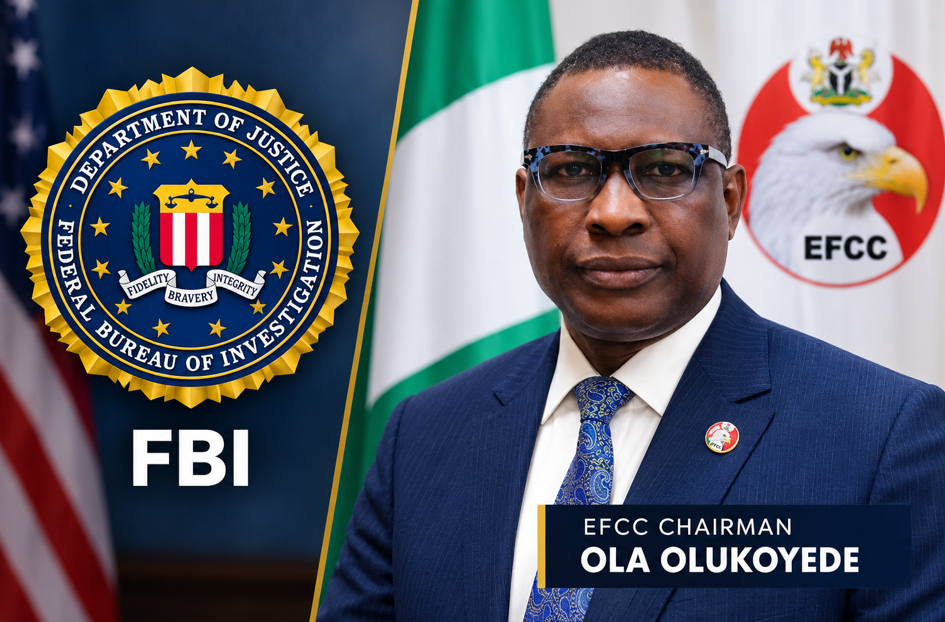
The Federal Bureau of Investigation (FBI) has commended the Executive Chairman of the Economic and Financial Crimes Commission (EFCC), Ola Olukoyede, and the Commission for their efforts and vital role in Operation Artemis, a joint international effort to disrupt financially motivated sextortion networks targeting minors.
The commendation was conveyed in a letter signed by FBI Director Kash Patel, who praised the Commission for its collaboration with the Bureau in the arrest and extradition of suspects facing federal charges in the United States.
In the letter addressed to Olukoyede, Patel acknowledged the Commission’s contribution to the operation, stating that “the Economic and Financial Crimes Commission, EFCC, has played a vital role in Operation Artemis, a joint effort focused on disrupting financially motivated sextortion rings targeting juveniles.”
He said that, under Olukoyede’s leadership, the EFCC designated personnel to support the investigations and facilitate the transfer of suspects from Nigeria to face prosecution in the United States.
Specifically, the FBI Director commended the EFCC for apprehending Adebola Festus Adekunle and Mudashiru Afeez Olawale, who were indicted in the United States in 2023 over allegations relating to the sexual exploitation and extortion of minors.
The two suspects were extradited to the United States in August 2026, with the EFCC facilitating the process following investigations and extradition proceedings. They are facing federal charges relating to sexual exploitation in cases involving the deaths of minors.
Patel noted that the successful outcome of the cases would not have been possible without the EFCC’s assistance and commitment to international law enforcement cooperation.
“The successful outcome of these cases would not have been possible without your assistance and dedication to international law enforcement collaboration,” he said.
The FBI Director further expressed appreciation to Olukoyede and the Commission for their commitment to justice and continued cooperation, while expressing optimism about strengthening the partnership between both agencies.
“Please accept my sincere appreciation for your commitment to justice and steadfast cooperation. I look forward to the continued partnership with the EFCC,” he stated in the letter.
The extradition of Adekunle and Olawale followed FBI investigations into separate sextortion schemes targeting male minors in the United States. The investigations linked the alleged activities to two teenage victims who died by suicide after being subjected to online sexual exploitation and extortion.

The Japanese Ambassador-Designate to Nigeria, His Excellency, Hideo Suzuki Paid a Courtesy Visit to the Executive Chairman of the Economic and Financial Crimes Commission, EFCC, Mr. Ola Olukoyede in his office today, October 28, 2026. He was accompanied on the visit by First Secretary, Security, Yuji Murakami and Senior Information Analyst, Dogara Ankut.



Justice O. O. Abike-Fadipe of the Special Offences Court sitting in Ikeja, Lagos, on Tuesday, October 27, 2026, sentenced a former banker, Christopher Jackson Edeh, to a total of 39 years’ imprisonment for his involvement in a ₦2.7 billion fraud prosecuted by the Lagos Zonal Directorate 1 of the Economic and Financial Crimes Commission (EFCC).
Edeh, who was arraigned on February 28, 2024, faced nine counts bordering on fraudulent false accounting and unauthorised access to a computer system.
The charges alleged that he altered the bank account details of several customers and government-related entities, including the Kano State Government Power Intervention Fund, NNPC Trading Limited, Stallion Vision Ltd, the Lagos State Government Blue Line, the State Contributory Pension Account and Chukwuemeka Odumegwu Ojukwu University, with intent to defraud.
During the trial, prosecuting counsel, Z. B. Atiku, called three witnesses and tendered several documents in evidence to establish the case against the defendant. The defence, in turn, called one witness.
In her judgment, Justice Abike-Fadipe held that the prosecution had proved its case beyond reasonable doubt and consequently convicted Edeh on all nine counts.
The court sentenced him to five years’ imprisonment without an option of fine on each of counts one to seven, bordering on fraudulent false accounting, and two years’ imprisonment without an option of fine on each of counts eight and nine, relating to unauthorised access to a computer system with intent to facilitate the commission of crimes.
The court ordered that all the sentences run concurrently.



FBI Commends Olukoyede, EFCC for Support in Tackling Sextortion, Cybercrime

EFCC Photo News

Alleged ₦76bn, $31.5m Fraud: Witness Says Kuru Approved Arik Air Receivership Without Prior AMCON Board Approval

Alleged ₦1.4bn Oil Fraud: EFCC Re-Arraigns Nadabo Energy Boss, Ali Peters, Firm in Lagos

Alleged ₦1.06bn Fraud: EFCC Secures Court Order to Freeze Suspect’s Account

Again, Dangote Refinery Hikes Petrol To ₦1,175/Litre, Diesel To ₦1,620/Litre — Report
-
 EFCC7 months ago
Alleged ₦1.4bn Oil Fraud: EFCC Re-Arraigns Nadabo Energy Boss, Ali Peters, Firm in Lagos
-
 EFCC1 week ago
Alleged ₦1.06bn Fraud: EFCC Secures Court Order to Freeze Suspect’s Account
-
 News8 months ago
Again, Dangote Refinery Hikes Petrol To ₦1,175/Litre, Diesel To ₦1,620/Litre — Report
-
 News9 months ago
Senate Retains Two-Year Jail Term for PVC Trading, Raises Fine to ₦5m
-

 EFCC8 months ago
Lagos Court Jails Man 18 Months for Defrauding Sterling Bank of ₦30m
-
EFCC4 weeks ago
EFCC Hands Over Recovered ₦107m to Property Fraud Victim in Lagos
-

 Economy8 months ago
Naira Rebounds To ₦1,363.5/$
-

 Economy8 months ago
Naira Closes in the Red at ₦1,341.35/$