
EFCC
EFCC, Malami Await Court Verdict as Abuja High Court Fixes July 10 for Judgment in 57-Property Forfeiture Case


The Federal High Court in Abuja has fixed July 10, 2026, to deliver judgment in the suit filed by the Economic and Financial Crimes Commission (EFCC) seeking the final forfeiture of 57 properties allegedly linked to former Attorney-General of the Federation and Minister of Justice, Abubakar Malami.
The case, which came up on Monday before Justice Joyce Abdulmalik, was originally slated for judgment after both parties adopted their final written addresses and concluded their arguments on May 26. However, the court deferred its decision and adjourned the matter until July 10.
The EFCC is asking the court to permanently forfeit the 57 properties to the Federal Government, arguing that they are reasonably suspected to be proceeds of unlawful activities.
During the earlier proceedings, counsel to the anti-graft agency, Jibrin Okutepa, SAN, urged the court to grant the Commission’s application. He relied on a 47-paragraph affidavit and 46 documentary exhibits filed in support of the motion, maintaining that the evidence before the court justified the permanent forfeiture of the assets.
Okutepa argued that Malami and the other respondents had failed to provide satisfactory explanations regarding the legitimate sources of the properties. He therefore urged the court to uphold the EFCC’s application and order that the assets be permanently forfeited to the Federal Government.
Opposing the application, Malami’s counsel, Adedayo Adedeji, urged the court to dismiss the suit and set aside the interim forfeiture order that had earlier been granted.
Relying on a counter-affidavit sworn to by Malami, Adedeji argued that the EFCC’s case was based largely on suspicion rather than concrete evidence.
“The court deals with evidence, not suspicion,” he submitted.
The defence further argued that the anti-graft agency relied heavily on extra-judicial statements that should ordinarily be tested through cross-examination during a criminal trial. Counsel noted that the court had previously declined to hear oral evidence in the proceedings, making it inappropriate to rely on such statements as the basis for a final forfeiture order.
Adedeji also maintained that several of the disputed properties were acquired before Malami’s appointment as Attorney-General of the Federation, insisting that such assets could not reasonably be classified as proceeds of crime.
Lawyers representing the other respondents and companies listed in the suit also aligned with Malami’s position, urging the court to reject the EFCC’s application for permanent forfeiture.
Justice Abdulmalik subsequently adjourned the matter until July 10, 2026, when the court is expected to determine whether the disputed properties should be permanently forfeited to the Federal Government or returned to the respondents.
Meanwhile, Malami is also facing two separate criminal cases before another judge of the Federal High Court in Abuja. One charge relates to alleged money laundering, while the other concerns the alleged unlawful possession of firearms. Both cases remain pending before the court.
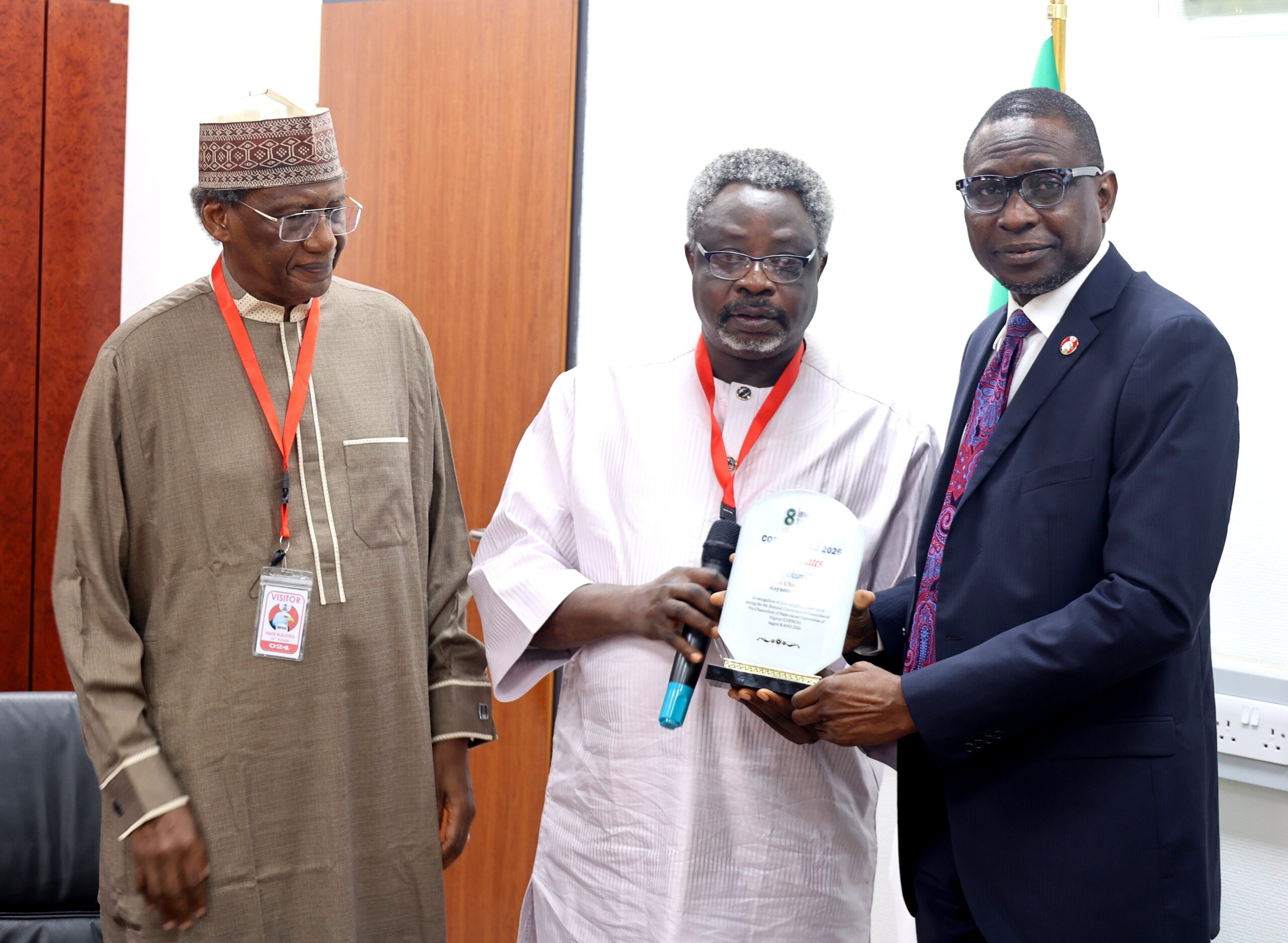
The Committee of Pro-Chancellors of State-Owned Universities in Nigeria (COPSUN) has commended the Executive Chairman of the Economic and Financial Crimes Commission (EFCC), Mr Ola Olukoyede, for his support for the Nigerian Education Loan Fund (NELFUND) and efforts to boost the education sector.
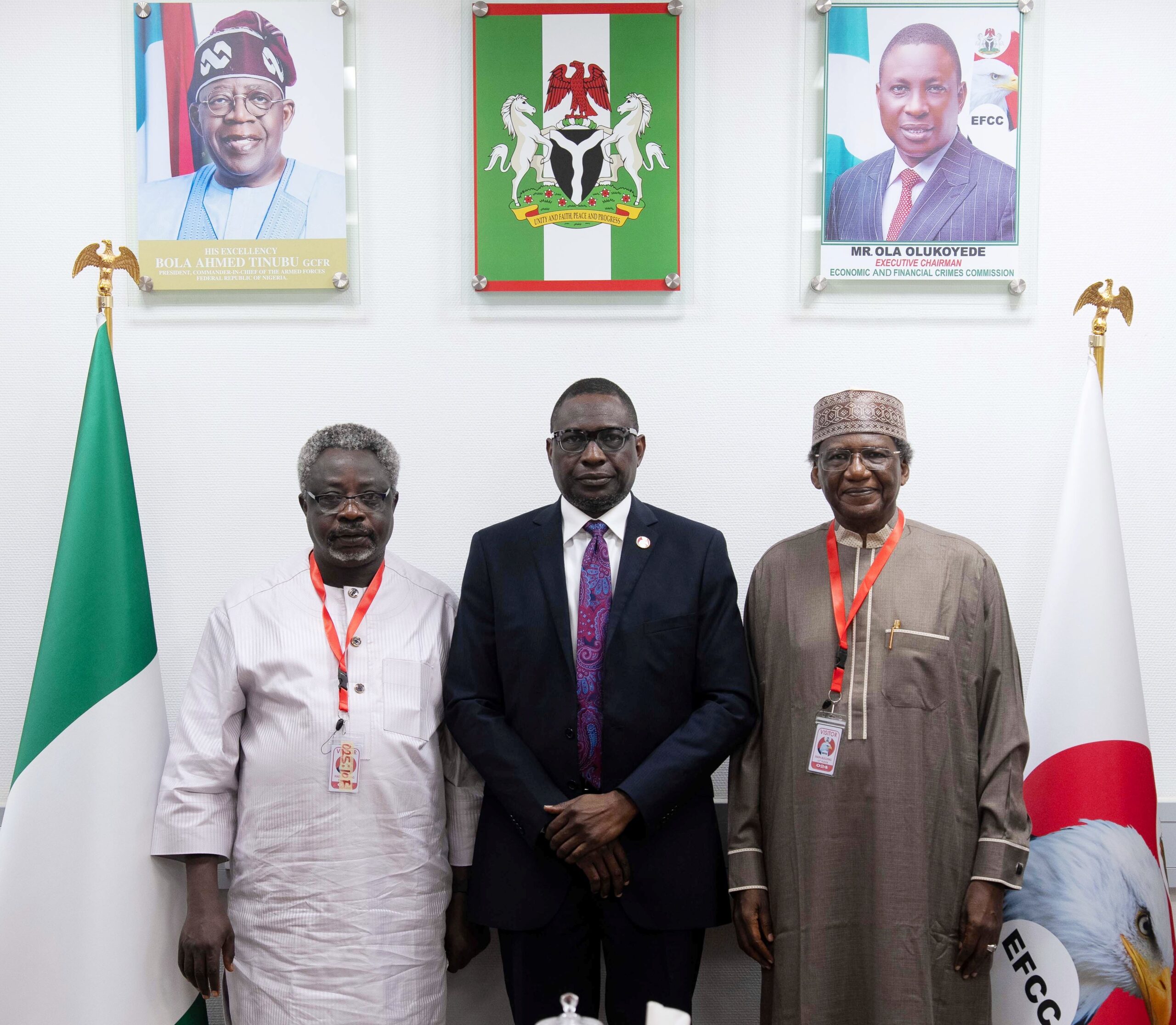
The Chairman of COPSUN, Prof. Ayodeji Omole, gave the commendation in Abuja on Thursday, September 17, 2026, when he led a delegation of the committee on a courtesy visit to the EFCC’s Corporate Headquarters.
Omole said the committee appreciated Olukoyede’s role in supporting NELFUND, noting that the scheme had helped prevent many students from dropping out of school.
He urged Olukoyede to sustain his support for the scheme while also calling for stronger collaboration between the EFCC and state-owned universities. 
The COPSUN Chairman said, “We appreciate the EFCC Chairman for the role he has played in NELFUND. As university policymakers, we know what NELFUND has done in the lives of some students who ordinarily would have dropped out of school as a result of financial constraints. We continue to encourage the Executive Chairman and his team to support the scheme.” 
He proposed that the Commission establish institutes in universities where some of its activities could be domiciled, stressing that such collaboration would promote knowledge-sharing and research.
Omole added that the EFCC could leverage the expertise of university lecturers in research and other areas, while the partnership could also provide an avenue to educate students on the dangers of corruption.
“We appeal to the Commission to collaborate with our universities. The Executive Chairman cannot fight corruption alone. The Commission needs the support of our lecturers and experts in the universities in areas such as research, among others. The opportunities will also be used to train our students on the dangers of corruption and cybercrime,” he said.
Olukoyede, in his response, thanked the lecturers for their dedication and commitment to upholding standards in state-owned universities.
He stressed the importance of education to national development, noting that depriving a country of a functional education system would undermine its progress and leadership.
Olukoyede said, “When you take the educational sector from a nation, it cannot be developed, and there will be no good leadership, as education gives knowledge.
“We need to discourage the younger ones from doing the wrong things and let them know the consequences. We need to encourage them to channel their skills to add value to themselves. That is what motivated us to develop a Cyber Research Academy. With time, we will incorporate the universities into this structure. The idea is to develop the skills of our younger ones in the areas of ICT and research.”
In August 2026, President Bola Tinubu directed that additional recovered funds from the Commission be diverted to NELFUND to sustain its growing funding obligations.
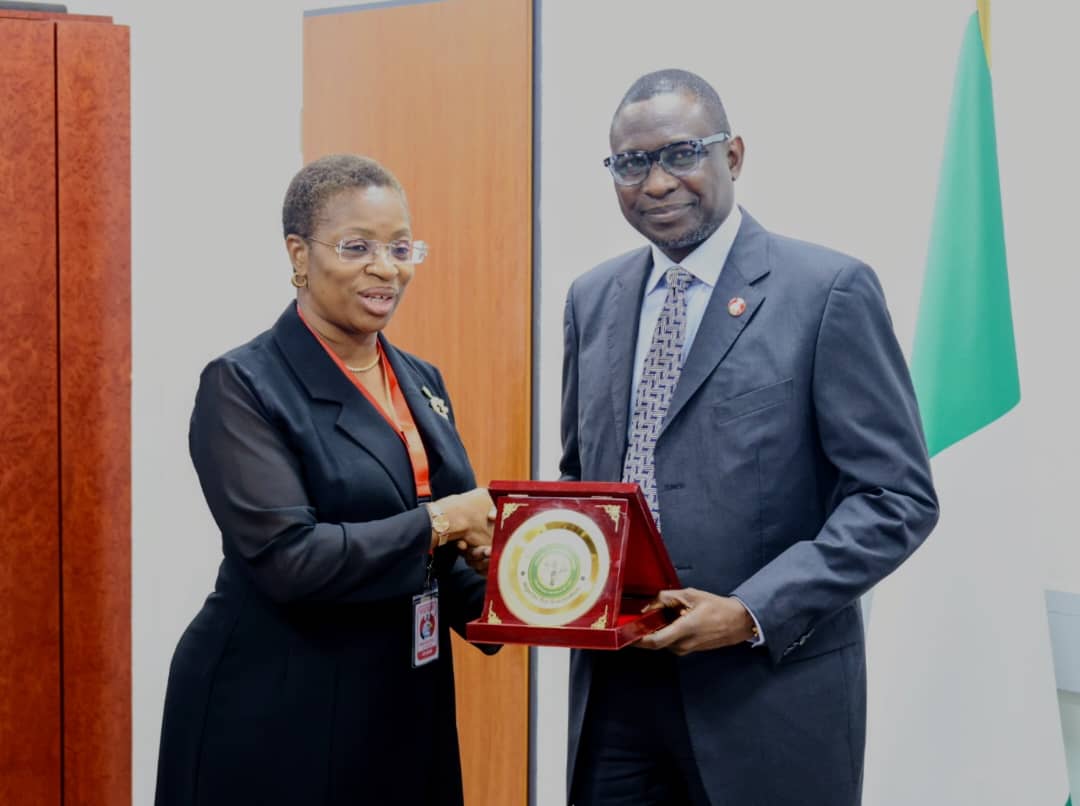
The President of the Nigerian Bar Association, NBA, Mrs. Oyinkansola Badejo-Okusanya, SAN, has commended the Executive Chairman of the Economic and Financial Crimes Commission, EFCC, Mr. Ola Olukoyede, for his leadership and efforts in strengthening the fight against economic and financial crimes.

She gave the commendation in Abuja on Wednesday, September 16, 2026, when she led a delegation of the Association on a courtesy visit to the EFCC’s Corporate Headquarters.
Badejo-Okusanya praised the Commission’s efforts in the investigation and prosecution of economic and financial crimes, as well as the recovery of proceeds of crime.
She said, “When we see things that are done and done properly, we appreciate them. We followed carefully what is being done at EFCC, especially the statistics in recoveries and convictions. We can see, feel, and hear the impact of his works.”
The NBA President also commended the EFCC and other stakeholders for Nigeria’s removal from the Financial Action Task Force, FATF’s, grey list, saying the development had improved the country’s business environment.
According to her, the development would boost confidence in the country’s financial system and facilitate business transactions.

“For us as lawyers, we are grateful for the removal of the country from the FATF grey list. This brings out increased inflows. Our clients are able to do business. Cross-border transactions are now seamless and less expensive. We are grateful to the Commission and we hope for more of such positive impact. We believe the efforts of the Commission will not regress,” she said.
Badejo-Okusanya reiterated the NBA’s commitment to deepening its partnership with the EFCC in promoting a lawful and orderly society.
She stressed the importance of a strong legal system to economic development, noting that without a lawful society, “we cannot gain in terms of economic activities, have a strong society and a better quality of life.
“We are all part of the elimination of criminal activities and towards gaining a lawful and orderly society.”
She also called for closer collaboration between the Association and the EFCC, particularly in knowledge sharing and the provision of professional expertise.
She pledged the NBA’s expertise and services to the Commission, stressing the need for both institutions to work together to strengthen the rule of law and combat economic and financial crimes.

Responding, Olukoyede said the country’s removal from the FATF grey list was achieved through the collaboration of the EFCC and other sister agencies, while appreciating the NBA for its support.
He said, “Most of the works that led to Nigeria’s removal from the list were done by EFCC and in collaboration with all our sister agencies. Nigeria is now on a better footing in the world financial ecosystem. We appreciate the support of the NBA because without your support, it would have been very difficult for us to achieve such a feat.”
The EFCC Chairman also said the Commission conducts its investigations within the confines of the law, noting that it remains accountable to the public.
He said, “One promise I made to Nigerians is to use the instrumentality of this law to stipulate the economy and pledge to work within the confines of law. We are responsible to the public.”
He reiterated his commitment to preventive frameworks in tackling corruption, stressing that the EFCC will no longer wait until funds are stolen before taking action.
“We are committed to this and this is why a whole Department, Fraud Risk Assessment and Control, FRAC, was established,” he said.
Olukoyede further pledged to work with the NBA, particularly in sanitising the legal profession and strengthening collaboration between both institutions.

The Small and Medium Enterprises Development Agency of Nigeria, SMEDAN, has sought the support of the Economic and Financial Crimes Commission, EFCC, in promoting made-in-Nigeria products and expanding opportunities for young Nigerians through skills development and entrepreneurship.
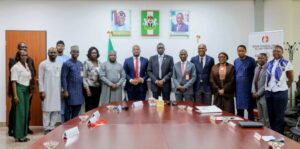
The Chief Executive Officer, CEO/Director General of SMEDAN, Charles Odii, made the request in Abuja on Wednesday when he led a delegation of the Agency on a courtesy visit to the Executive Chairman of the EFCC, Mr. Ola Olukoyede, at the Commission’s corporate headquarters.
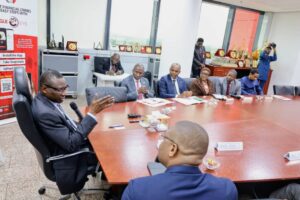
Odii commended the EFCC Chairman for what he described as efforts that have contributed to rebuilding confidence in Nigeria, particularly internationally. “Executive Chairman, I want to thank you. I want to start with gratitude. I want to thank you for the work that you have done in the last 34 months. You have tried to change the face of Nigeria outside Nigeria. So, with that, I want to thank you, and thank you for instituting confidence and trust again in Nigeria,” he said.
The SMEDAN DG said the Agency was implementing initiatives designed to equip young Nigerians with practical skills and transform them into entrepreneurs.
He disclosed that SMEDAN had secured approval from the Ministry of Education to establish the Inspire, Create, Start, and Scale (ICSS) Institute, which offers National Diploma programmes to young people while integrating entrepreneurship into their training. The aim, he said, is to work with relevant stakeholders to make sure that solid entrepreneurs are produced for the Nigerian ecosystem.
“When we go into prisons, people that have six months to be released into society, we train them, and we give them skills. This project has been life-changing. We are at the point of sending the national MSME policy to Mr. President. That policy covers the ecosystem for five years.
“We have put in that policy that anyone who has gone to prison, who is apologetic, and lacks skills, small businesses in Nigeria should employ them. And so, in our policy, we’re putting in that if these people are wrong, apologetic, they’ve learned their skills, we should be able to rehabilitate them to society,” he said.
He also proposed collaboration between SMEDAN and the EFCC’s Cybersecurity Research and Training Centre, saying the Agency could provide relevant curriculum and technical expertise.
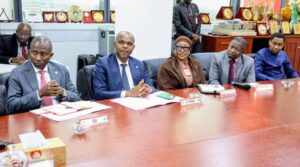
“I also know that you have started the Cybersecurity Research Center. We want to introduce this curriculum to you, so that our curriculum can be embedded into the research center,” he said.
Odii further sought collaboration on the rehabilitation of inmates and young people involved in cybercrime through skills acquisition and entrepreneurship programmes designed to support their reintegration into society.
Responding, Olukoyede welcomed the proposal and expressed the EFCC’s readiness to collaborate with SMEDAN on the promotion of Nigeria-made goods, youth empowerment, skills development and cybercrime prevention.

“I have been following your activities. And I’m very proud of you. You are one of the young men that we look up to,” he said.
The EFCC Chairman said the development of legitimate skills and economic opportunities for young people was important to tackling cybercrime.
“I’m interested in anything that will help to develop skills for young men. Because that is one of the challenges I have,” he said.
Olukoyede commended the initiative and urged Nigerians, including members of the EFCC community, to patronise locally produced goods.
“Congrats for pushing all these. So, those of you buying things in my office, henceforth, patronize this. We need to support them, you know. Support these young people. It is when these businesses grow that’s when we can grow our own nation, too. And develop our own, you know, system. As long as we can patronize what we do,” he said.
He also suggested that the government should make a national policy on Nigeria-made goods to encourage local production and grow the economy.
Olukoyede stressed the seriousness of cybercrime and its consequential effects on Nigeria’s economy and international reputation.
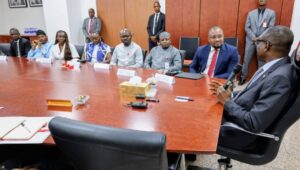
“The evil these guys are doing to the image of Nigeria, to our economy is unquantifiable. Some of these guys, at the press of a button, they can bring the entire financial ecosystem down,” he stated.
The EFCC Chairman disclosed that the Commission’s Cybersecurity Research and Training Centre was expected to train an average of 500 intakes at a time, adding that the government was supporting the project.
“That was what necessitated our, you know, putting in place the Cybersecurity Research and Training Center, which we’re expecting to train an average of 500, you know, intakes per time,” he said.
He invited SMEDAN to participate in the project from its conception to operationalisation.
“So, I want to bring you on board so that you can be part of that project from the conception to operationalization because the nature of your mandate requires that we bring you into it,” he said.
The EFCC Chairman also pledged support for SMEDAN’s ICSS initiative and other programmes aimed at developing young Nigerians.
“So, I’m with you. We’re going to support you. Your ICSS project, too. Let me know if there’s any area where we can support you,” he said.
A major highlight of the visit was the presentation of locally produced goods by the SMEDAN delegation. The items included hibiscus tea, coffee, wax candles, cassava biscuits and native fabric produced under the Agency’s Guidance, Resources, Opportunity, and Workforce (G-R-O-W) support initiative.
Olukoyede said the EFCC would work with relevant institutions to identify practical solutions to youth involvement in crime.
“So, let us look for practical solutions that will take these young people out of that menace. Let’s compare notes. Let’s put this together to help Mr. President to succeed in his venture,” he said.



COPSUN Applauds EFCC on NELFUND

Alleged 184.5kg Cocaine: Court Dismisses KC Luxury’s Suit Challenging Detention Order

NBA Commends Olukoyede on Impact in Fight Against Corruption, Seeks Closer Collaboration
Nigerian nurses stage seven‑day warning strike over pay, staffing

Dangote Refinery to deploy 4,000 gas‑powered trucks for distribution

Nigeria approves plan to refinance ₦4tn power-sector debt
-
Health1 year ago
Nigerian nurses stage seven‑day warning strike over pay, staffing
-
Energy1 year ago
Dangote Refinery to deploy 4,000 gas‑powered trucks for distribution
-
Economy1 year ago
Nigeria approves plan to refinance ₦4tn power-sector debt
-
 Education1 year ago
JAMB sets 2025/26 university cut‑off at 150, bars under‑16
-
 Entertainment1 year ago
Sean Kingston sentenced to 3½ years in prison over $1 million fraud
-
 Crime & Justice7 months ago
BREAKING: Two Chinese Directors Jailed 46 Years Each Over ₦3.4bn, $2.5m Crypto Fraud in Lagos
-

 Business7 months ago
Nigeria Revenue Service Collects ₦28.3trn in 2025, Sets ₦40.7trn Target for 2026
-

 Crime & Justice8 months ago
Police Arrest 24-Year-Old Over ₦48.5m Romance Fraud in Lagos