
News
EFCC, ICPC Laud NJC on Corruption Trials, Warn Against Court Delays

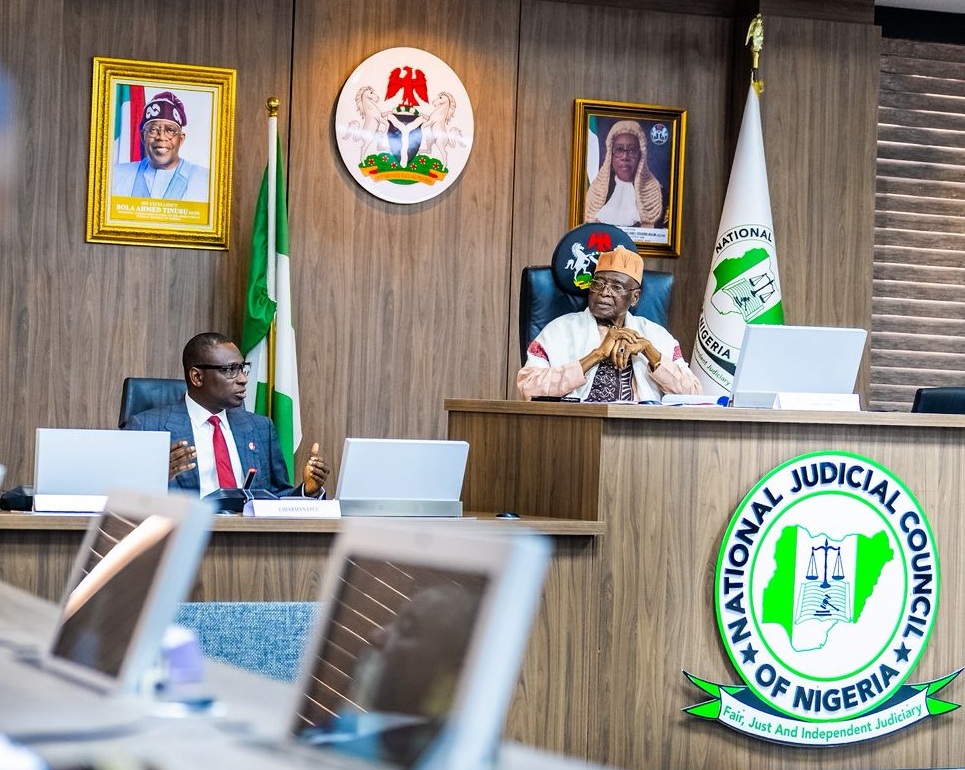
The Chairman of the Economic and Financial Crimes Commission (EFCC), Mr. Ola Olukoyede, and the Chairman of the Independent Corrupt Practices and Other Related Offences Commission (ICPC), Musa Adamu Aliyu, SAN, have commended the National Judicial Council (NJC) for its efforts to ensure the speedy adjudication of corruption and financial crimes cases in Nigeria.
The anti-graft chiefs gave the commendation separately on Tuesday and Wednesday in Abuja during the 9th meeting of the Corruption and Financial Crimes Cases Trial Monitoring Committee (COTRIMCO).
While acknowledging the progress made in the prosecution of high-profile corruption cases across the country, both chairmen expressed concern over persistent delays in the trial of such cases and suggested measures to address the challenge.
Olukoyede, who appeared before the Committee on Tuesday, raised concerns over what he described as the liberal exercise of judicial discretion in some sensitive matters.
According to him, the continued consideration of frivolous applications by some courts has contributed significantly to prolonged trials and undermined efforts aimed at ensuring timely justice in corruption and financial crimes cases.
The EFCC chairman therefore stressed the need to establish clear benchmarks for acceptable judicial conduct, adding that there should be consequences for misconduct or actions that frustrate the course of justice.
Similarly, the ICPC chairman, who appeared on Wednesday, called for the introduction of a Practice Direction to guide the handling of corruption cases in courts across the country.
Aliyu suggested that corruption trials should be time-bound, similar to election petitions, to ensure the speedy resolution of cases. He noted that countries such as Kenya and Zambia have already adopted practice directions prescribing specific timelines for the trial of corruption cases.
The ICPC boss urged COTRIMCO to develop mechanisms that would strengthen standards in the prosecution of criminal cases and promote consistency in the application of judicial principles.
In his remarks, the Chairman of the Committee and a retired Justice of the Supreme Court, Hon. Justice Suleiman Galadima, said the collaboration between the NJC and anti-corruption agencies has continued to yield positive results.
Alluding to remarks made by the Chief Justice of Nigeria (CJN), Justice Kudirat Kekere-Ekun, during the 2025/2026 Legal Year ceremony, Justice Galadima said the partnership between COTRIMCO and the anti-graft agencies has recorded impressive outcomes.
According to him, the EFCC secured 1,417 convictions in the first and second quarters of 2025 alone, while the ICPC initiated 43 new cases and recorded nine convictions during the period under review.
Although Justice Galadima noted a decline in the number of cases currently being prosecuted by the ICPC, he explained that the development was due to the Commission’s increasing focus on preventive and proactive strategies aimed at curbing corruption before it escalates into prosecutable offences.
He reaffirmed the Council’s commitment to strengthening institutional cooperation in the fight against corruption.
Stakeholders at the meeting also reiterated their commitment to improving efficiency, accountability, and integrity in the handling of corruption and financial crimes cases across the country.
News
BREAKING: NAICOM Cancels Universal Insurance Plc’s Registration, Appoints Receiver/Provisional Liquidator

The National Insurance Commission (NAICOM) has cancelled the certificate of registration of Universal Insurance Plc and appointed a receiver/provisional liquidator to commence the process of winding up the affairs of the insurance company.
The cancellation, which took effect on August 14, 2026, followed the company’s failure to meet the prescribed Minimum Capital Requirement (MCR) applicable to its category of licence within the stipulated compliance period.
In a notice dated August 13, 2026, and addressed to the Chairman of the Board of Directors of Universal Insurance Plc, NAICOM said the cancellation was effected pursuant to the powers conferred on the Commission by the Nigerian Insurance Industry Reform Act (NIIRA) 2025.
The Commission consequently appointed Ogbonna Chukwumerije, a Partner at Pinheiro LP, as Receiver/Provisional Liquidator of the company.
According to the appointment letter dated August 14, 2026, Chukwumerije is required to immediately trace, recover, secure and take over the assets of Universal Insurance Plc.
He is also mandated to collate and settle the liabilities of the company in accordance with the provisions of NIIRA 2025, liaise with NAICOM on information available to the Commission, and submit periodic reports on the progress of the process.
NAICOM said the appointment was subject to the receiver signing a Deed of Appointment and complying with the terms of engagement and extant rules governing receivership and liquidation.
In a separate public notice signed by Chukwumerije and dated August 18, 2026, the receiver formally notified banks, financial institutions, policyholders, creditors, debtors, customers and members of the public of the company’s receivership.
The notice said the receiver had been appointed following the cancellation of Universal Insurance’s licence by NAICOM on account of its failure to meet the applicable Minimum Capital Requirement.
Chukwumerije said that, pursuant to NIIRA 2025 and the terms of his appointment, he was empowered to take over the management and control of Universal Insurance Plc.
He was also authorised to trace, recover, secure and take possession of all assets belonging to the company, as well as take necessary steps for their preservation, protection and realisation.
The receiver is further required to collate, verify and settle the company’s liabilities in accordance with NIIRA 2025, other applicable laws and NAICOM directives.
He is also to liaise with NAICOM on matters relating to the liquidation and winding-up of the company’s affairs and submit periodic reports to the Commission on the progress and administration of the liquidation process.
The development has also triggered restrictions on dealings with the company’s accounts and affairs.
In the public notice, banks, financial institutions, policyholders, creditors, debtors, agents, customers and members of the public were directed to exercise caution and not honour, process, recognise or act upon any instruction, mandate, request, payment direction, withdrawal instruction, transfer instruction or other communication purportedly issued on behalf of Universal Insurance Plc.
Such instructions, the receiver said, would only be recognised where they were issued by him or by a person expressly authorised in writing by him.
The receiver further directed all persons and institutions dealing with the company’s assets, funds, records, policies, claims, liabilities or affairs to verify the authority of anyone purporting to act for or on behalf of Universal Insurance during the liquidation process.
He said only instructions bearing his official seal and stamp as a Legal Practitioner and Receiver/Provisional Liquidator, or instructions issued by persons duly authorised by him in writing, would be recognised in connection with the affairs and liquidation of the company.
The public notice also warned individuals and institutions against acting on instructions purportedly emanating from Universal Insurance Plc, its former officers, directors, employees, agents or representatives unless such instructions had been duly authorised by the receiver.
It further required anyone in possession, custody or control of any asset, fund, document, book, record, policy, claim or other property belonging to or relating to the company to cooperate fully with the receiver and comply with all lawful requests and directives issued in furtherance of the liquidation.
According to the receiver, the notice would take immediate effect and remain in force throughout the liquidation process, subject to any further directive or notice issued by NAICOM or the Receiver/Provisional Liquidator.
He said the receivership process was being conducted with the objective of safeguarding the company’s assets and ensuring that valid claims were properly identified, assessed and dealt with in accordance with applicable laws and regulations.
The documents did not disclose the total value of Universal Insurance’s outstanding liabilities, the number of policyholders affected or the value of assets to be recovered.
The development is expected to trigger a process of identifying the company’s assets and liabilities and determining the status of outstanding obligations to policyholders, creditors and other stakeholders.
Universal Insurance Plc’s licence cancellation comes against the backdrop of NAICOM’s enforcement of the minimum capital requirements applicable to insurance companies under the current regulatory framework.
The receiver’s appointment formally transfers responsibility for managing the company’s affairs and dealing with its assets and liabilities to the appointed receiver, subject to the provisions of NIIRA 2025 and the oversight of NAICOM.
The Commission’s appointment letter was signed by Olusegun Ayo Omosehin, Commissioner for Insurance/Chief Executive Officer of NAICOM.
The receiver’s public notice was dated August 18, 2026.
Judiciary
Kasunmu’s Death Elevates Folake Solanke as Most Senior Living SAN, BOSAN Vice-Chair – Pinheiro
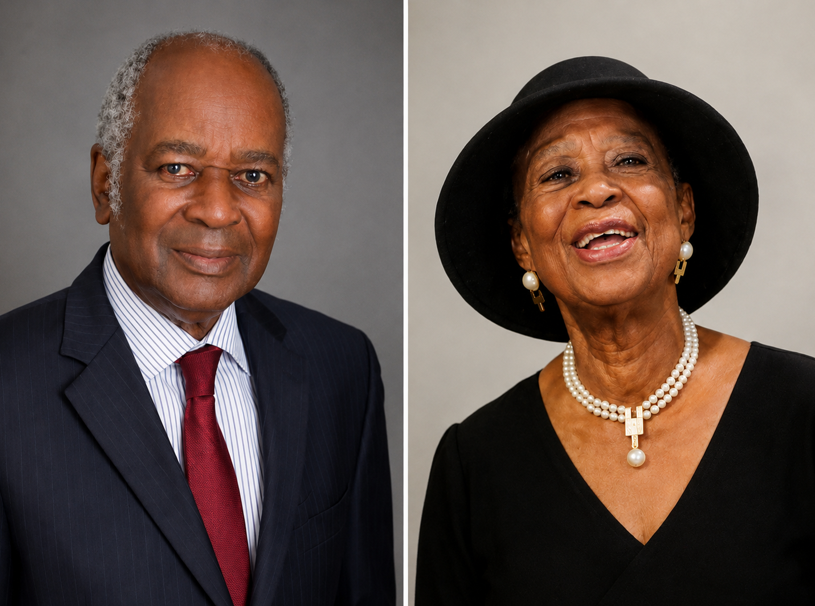
The death of renowned legal scholar and advocate, Professor Alfred Bandele Kasunmu, SAN, has altered the hierarchy of seniority within Nigeria’s legal profession, with Chief Folake Solanke, SAN, emerging as the most senior living Senior Advocate of Nigeria.
Kasunmu, who died at the age of 92, was, until his death, the most senior living Senior Advocate of Nigeria and, by virtue of that distinction, the statutory Vice-Chairman of the Body of Senior Advocates of Nigeria (BOSAN).
According to a tribute by Chief Kemi Pinheiro, OFR, SAN, LLD, FCIArb., the position now falls to Solanke, herself one of the most distinguished figures in the Nigerian Bar.
Pinheiro described Kasunmu’s position as a measure of the exceptional stature he attained within the legal profession over several decades.
“With his passing, that distinction and position now fall on Chief Folake Solanke, SAN, herself a towering figure of the Nigerian Bar,” Pinheiro stated.
He described Kasunmu as a “living institution of the Nigerian Bar”, whose name commanded respect in the courtroom, the academy, and the administration of justice.
Kasunmu’s legal career spanned advocacy, academia, and public service. He was a formidable advocate, distinguished scholar, former Attorney-General and Commissioner for Justice of Lagos State, and Professor of Law at Obafemi Awolowo University and the University of Lagos.
Beyond his professional titles, Pinheiro described him as “a lawyer’s lawyer” and “a gentleman through and through”, stressing that his influence extended far beyond the courtroom.
He said Kasunmu was renowned for his formidable command of the law, intellectual rigour, and celebrated photographic memory, while his commitment to mentoring generations of Nigerian lawyers and judges remained one of his most enduring legacies.
Recalling his courtroom encounters with the late legal giant, Pinheiro said Kasunmu’s advocacy was characterised by precision, penetrating questions, and an ability to dismantle an opponent’s case without losing his wit or composure.
He particularly recalled the case Dioudonne Donnie Ngnoumen v. Texaco Overseas, in which Kasunmu represented the opposing side and conducted what Pinheiro described as a devastating cross-examination.
“There was theatre in his advocacy; there was intellect in every question; there was purpose behind every pause,” Pinheiro said.
He, however, noted that the Kasunmu he remembered most was not merely the formidable advocate he encountered in court, but the friend who stood beside him during a difficult period of his career.
Pinheiro said Kasunmu’s passing represented a major loss to the Nigerian Bar, academia, and the administration of justice.
“Today, the Bar has lost one of its finest forensic minds; the academy has lost a distinguished teacher; the legal profession has lost one of its great repositories of knowledge and experience,” he said.
He added that Kasunmu’s ultimate legacy would not be measured merely by the titles he accumulated, but by the lives he strengthened and the generations of lawyers he influenced.
Kasunmu, he said, might have taken his “final bow”, but his contributions to the legal profession would endure.
News
BREAKING: NAICOM Revokes Nigeria Reinsurance Corporation’s Licence, Appoints Muiz Banire as Receiver/Provisional Liquidator

The National Insurance Commission (NAICOM) has revoked the operating licence of Nigeria Reinsurance Corporation over its failure to meet the statutory Minimum Capital Requirement (MCR) and appointed Senior Advocate of Nigeria, Dr. Muiz Banire, SAN, OON, as Receiver/Provisional Liquidator to oversee the winding-up of the company’s affairs.
The appointment took effect on August 3, 2026, following the cancellation of the corporation’s certificate of registration by the insurance regulator.
In a public notice dated August 4, 2026, Banire stated that he was appointed by NAICOM, in the exercise of its statutory powers, to take charge of the receivership and liquidation of Nigeria Reinsurance Corporation (RR-002).
According to the notice, the company’s licence was revoked after it failed to comply with the prescribed Minimum Capital Requirement applicable to its category of licence within the stipulated compliance period, in accordance with the Nigerian Insurance Industry Reform Act (NIIRA), 2025, and other extant laws, regulations, and guidelines.
Banire stated that his appointment empowers him to immediately trace, recover, secure, and take possession of all assets belonging to the company; collate and settle its liabilities in accordance with the NIIRA 2025; liaise with NAICOM on matters relating to the liquidation; and submit periodic reports to the Commission.
He also directed banks, financial institutions, insurance policyholders, creditors, and members of the public not to honour any instruction relating to the company except those issued by him or by persons expressly authorised by him.
As part of the liquidation process, Banire announced that all bank accounts belonging to Nigeria Reinsurance Corporation had been frozen with immediate effect pending further directives from his office.
He warned that any transaction carried out without his authorisation would be at the risk of the parties involved.
“Members of the general public, banks, and financial institutions in Nigeria are hereby informed that no financial transactions should be conducted pursuant to any instruction from anyone except those that I issue as the Receiver/Provisional Liquidator,” the notice stated.
According to him, only instructions bearing his official seal and stamp as a legal practitioner, or those issued by persons duly authorised by him, will be recognised throughout the liquidation process.
The regulatory action marks a significant enforcement measure by NAICOM and underscores the Commission’s resolve to ensure that insurance and reinsurance companies operating in Nigeria comply with statutory capital requirements designed to protect policyholders and strengthen the financial stability of the industry.
The liquidation process is expected to involve the recovery and realisation of the company’s assets, the verification and settlement of valid claims and liabilities, and the orderly winding-up of its affairs in accordance with the provisions of the law.
The public notice serves as formal notification to policyholders, creditors, banks, and other stakeholders that all dealings concerning Nigeria Reinsurance Corporation must henceforth be channelled through the Receiver/Provisional Liquidator until the liquidation process is concluded.



COPSUN Applauds EFCC on NELFUND

Alleged 184.5kg Cocaine: Court Dismisses KC Luxury’s Suit Challenging Detention Order

NBA Commends Olukoyede on Impact in Fight Against Corruption, Seeks Closer Collaboration
Nigerian nurses stage seven‑day warning strike over pay, staffing

Dangote Refinery to deploy 4,000 gas‑powered trucks for distribution

Nigeria approves plan to refinance ₦4tn power-sector debt
-
Health1 year ago
Nigerian nurses stage seven‑day warning strike over pay, staffing
-
Energy1 year ago
Dangote Refinery to deploy 4,000 gas‑powered trucks for distribution
-
Economy1 year ago
Nigeria approves plan to refinance ₦4tn power-sector debt
-
 Education1 year ago
JAMB sets 2025/26 university cut‑off at 150, bars under‑16
-
 Entertainment1 year ago
Sean Kingston sentenced to 3½ years in prison over $1 million fraud
-
 Crime & Justice7 months ago
BREAKING: Two Chinese Directors Jailed 46 Years Each Over ₦3.4bn, $2.5m Crypto Fraud in Lagos
-

 Business7 months ago
Nigeria Revenue Service Collects ₦28.3trn in 2025, Sets ₦40.7trn Target for 2026
-

 Crime & Justice8 months ago
Police Arrest 24-Year-Old Over ₦48.5m Romance Fraud in Lagos