
EFCC
BREAKING: EFCC Recovers ₦38.66bn, Properties in Multi-Billion-Dollar Refinery Fraud Probe, Moves to Prosecute NNPCL Officials

The Economic and Financial Crimes Commission (EFCC) has recovered over ₦38.66 billion in cash and assets as part of an ongoing investigation into the alleged diversion of funds earmarked for the rehabilitation and turnaround maintenance of Nigeria’s state-owned refineries, with several former and serving officials of the Nigerian National Petroleum Company Limited (NNPCL) and contractors now facing possible criminal prosecution.
The anti-graft agency has so far recovered ₦9.4 billion, $21.2 million—equivalent to about ₦29.26 billion at the Central Bank of Nigeria’s official exchange rate of ₦1,380 to the dollar—as well as several landed properties allegedly traced to individuals under investigation.
Investigators described the probe as one of the most extensive corruption investigations involving Nigeria’s oil sector, focusing on the management of approximately $2.79 billion released between 2021 and 2023 for the rehabilitation of the Port Harcourt, Warri and Kaduna refineries.
According to findings by investigators, the probe centres on allegations of criminal conspiracy, criminal breach of trust, diversion of public funds, economic sabotage, abuse of office, money laundering and procurement fraud involving officials of the NNPCL, its subsidiary, the NNPC Engineering and Technical Company Limited (NETCO), former and serving managing directors of the three refineries, and major contractors, including Daewoo Engineering Nigeria Limited and Tecnimont S.p.A.
The Federal Government had awarded contracts valued at approximately $2.79 billion for the quick-fix repairs, turnaround maintenance and rehabilitation of the country’s refineries.
The contracts included about $1.56 billion for the Port Harcourt Refining Company, $740.7 million for the Kaduna Refining and Petrochemical Company, and $492.3 million for the Warri Refining and Petrochemical Company.
Despite the huge financial commitment, investigators reportedly found little evidence of corresponding improvements in refinery operations, raising strong suspicions that substantial portions of the funds were diverted, misappropriated or fraudulently disbursed.
The findings have intensified scrutiny of successive government efforts to revive Nigeria’s long-moribund refineries, which continue to operate far below installed capacity despite repeated injections of public funds.
The EFCC had, last year, arrested several senior NNPCL officials in connection with the investigation. Among those detained were former Chief Financial Officer Umar Isa, Warri Refinery Managing Director Tunde Bakare, and former Port Harcourt Refinery Managing Directors Ahmed Adamu Dikko and Ibrahim Onoja.
As part of the investigation, the commission has interrogated more than 30 senior NNPCL officials and over 50 officials of contracting firms and subcontractors involved in the refinery rehabilitation projects.
Investigators also examined procurement procedures, reviewed project execution, analysed payment records, scrutinised bank accounts, sought information from the Corporate Affairs Commission (CAC), the Central Bank of Nigeria (CBN) and commercial banks, and traced ownership of companies linked to the contracts.
According to sources familiar with the investigation, the EFCC uncovered widespread violations of procurement procedures, questionable payment approvals and manipulation of contract processes allegedly facilitated by officials across different levels of management.
The investigation specifically accused former Port Harcourt Refinery Managing Director Ahmed Dikko of breaching contractual procedures by approving direct payments to contractors from provisional sum funds, contrary to provisions requiring such payments to be handled through Tecnimont.
Investigators said they traced assets valued at ₦983.9 million, $227,030, and three landed properties to Dikko—assets he allegedly failed to satisfactorily account for.
An interim forfeiture order has reportedly been obtained over the properties, while prosecutors are preparing criminal charges against him.
Similarly, investigators said they established a prima facie case against Jimoh Yisawu, a senior official linked to the rehabilitation of the Warri Refinery.
Yisawu is alleged to have approved payments to unqualified third-party contractors, authorised inflated invoices and contractual mark-ups exceeding $10 million and nearly ₦8 billion.
He was also accused of approving payment vouchers without the required cash-back arrangements, allegedly resulting in losses estimated at about $7.47 million and ₦1.89 billion in tax revenue.
The EFCC said it traced more than ₦1.4 billion and four landed properties to Yisawu—assets investigators claimed he could not satisfactorily explain. The properties have also been placed under interim forfeiture pending prosecution.
Sources disclosed that the ₦9.4 billion and $21.2 million already recovered have been paid into the EFCC’s recovery accounts, while an additional $2.32 million was recovered through the Federal Inland Revenue Service (FIRS).
Investigators further revealed that a separate case involving alleged revenue fraud valued at $28.39 million and ₦665 million has been established against the management of the Port Harcourt Refining Company, with efforts ongoing to recover the funds.
The investigation remains ongoing, with officials indicating that further recoveries, arrests and prosecutions are expected as additional evidence emerges.
The latest findings raise fresh concerns over the effectiveness of Nigeria’s refinery rehabilitation programme despite the expenditure of billions of dollars over the years.
Nigeria’s four state-owned refineries—the two Port Harcourt refineries, with a combined installed capacity of 210,000 barrels per day, the Kaduna Refinery, with 110,000 barrels per day, and the Warri Refinery, with 125,000 barrels per day—have a combined installed capacity of 445,000 barrels per day.
However, they have remained largely non-functional for decades despite repeated rehabilitation efforts.
The Warri Refinery, which resumed operations in December 2024, shut down barely a month later over safety concerns, while the Port Harcourt Refinery was taken offline in May 2025 for scheduled maintenance.
In October 2025, the NNPCL announced a comprehensive technical and commercial review of the three refineries as part of efforts to improve operational efficiency and profitability.
More recently, the company disclosed that it had signed a Memorandum of Understanding (MoU) with two Chinese firms—Sanjiang Chemical Company Limited and Xinganchen (Fuzhou) Industrial Park Operation and Management Co., Ltd.—to support the completion, operation and possible expansion of the Port Harcourt and Warri refineries.
Details of the agreement, however, have yet to be made public.
Efforts to obtain the reactions of the NNPCL and the officials named in the investigation were unsuccessful as of the time of filing this report.
Their responses will be included when received.
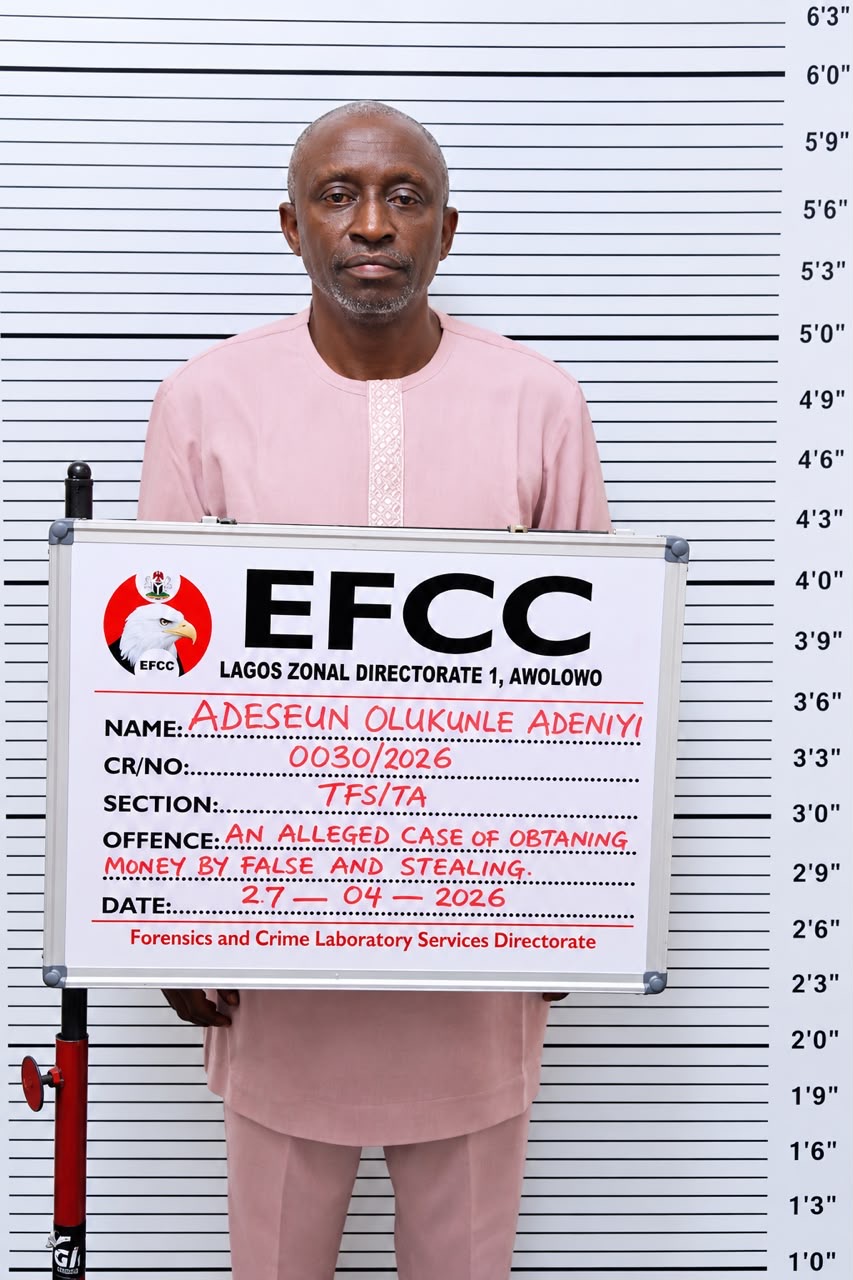
The Lagos Zonal Directorate 1 of the Economic and Financial Crimes Commission (EFCC) on Monday, November 2, 2026, arraigned Adeseun Adeniyi Olukunle before Justice A. O. Okunuga of the Lagos State High Court sitting in Ikeja, Lagos, over an alleged ₦238.35 million fraud.
Olukunle was arraigned on a 10-count charge bordering on obtaining money under false pretences, stealing and retention of stolen property.
The alleged offences are contrary to Sections 280 and 287 of the Criminal Law of Lagos State, 2011, and Section 328 of the same law.
One of the counts reads: “That you, Adeseun Adeniyi Olukunle, Chanaiyah International Limited and Omotosho Abraham Aremu (at large), sometime in 2025 in Lagos, within the jurisdiction, converted the sum of ₦11,000,000.00 (Eleven Million Naira) to the use of Faniran Olusoji John, property of Temitope Bolarinde Samuel, aka Boteam Nigeria Limited.”
Another count reads: “That you, Adeseun Adeniyi Olukunle, Chanaiyah International Limited and Omotosho Abraham Aremu (at large), sometime in 2025, in Lagos, within the jurisdiction, converted the sum of ₦19,000,000.00 (Nineteen Million Naira) to the use of Omotayo Faniran, property of Temitope Bolarinde Samuel, aka Boteam Nigeria Limited.”
He pleaded not guilty to the charges when they were read to him.
Following his plea, prosecuting counsel, Bilikisu Buhari, urged the court to fix a trial date and remand the defendant in a correctional centre pending trial.
She informed the court that the second defendant, Chanaiyah International Limited, was controlled by Omotosho Abraham Aremu, who is currently at large. She consequently urged the court to enter a plea of not guilty on behalf of the company, a request that was granted.
However, defence counsel, Yusuf T. Nurudeen, informed the court that he had filed a bail application on behalf of his client and urged the court to grant the defendant bail on liberal terms.
In his ruling, Justice Okunuga granted Olukunle bail in the sum of ₦300 million, with two sureties in like sum.
The judge directed that one of the sureties must own landed property within the court’s jurisdiction, subject to verification by the court registrar. The sureties were also required to provide evidence of tax payment.
The case was adjourned until January 18, 19 and 20, 2027, for the commencement of trial.
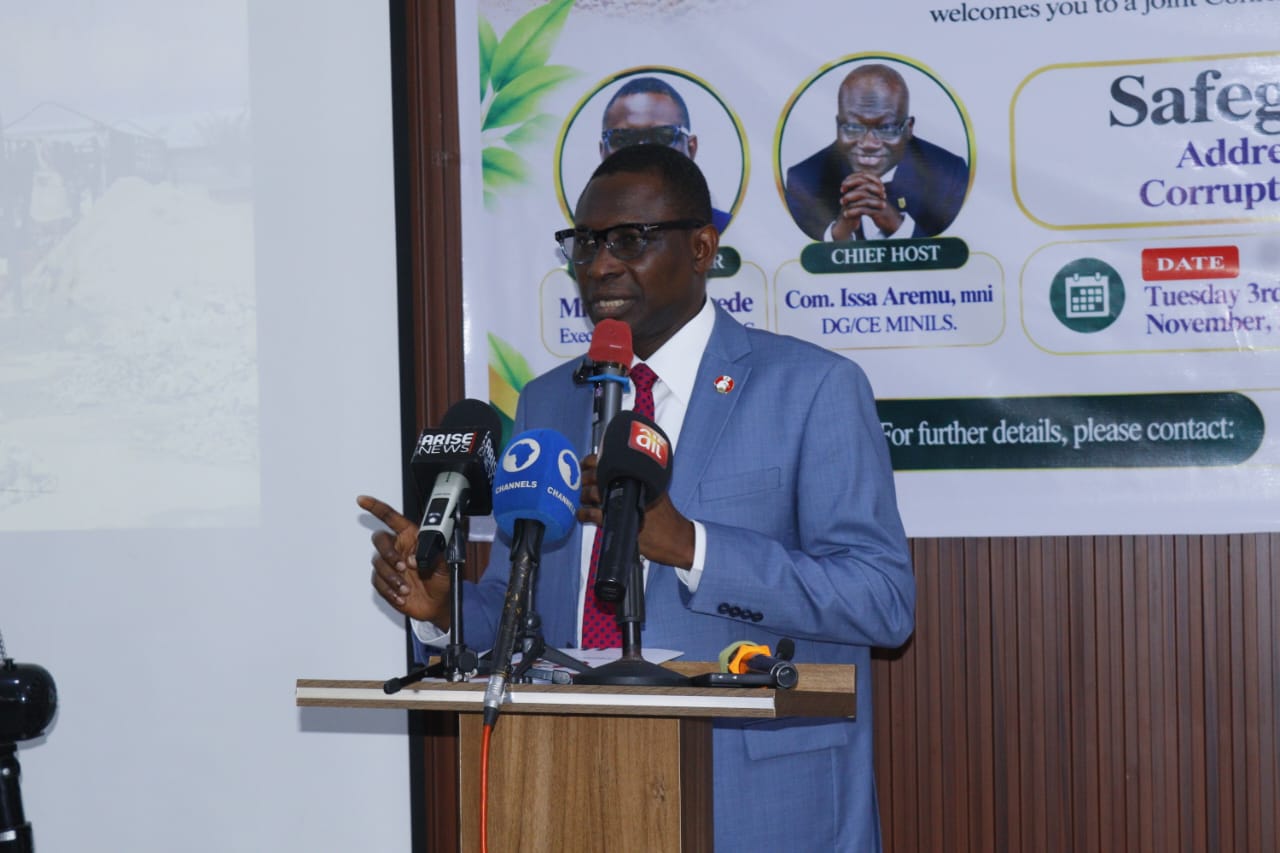
The Executive Chairman of the Economic and Financial Crimes Commission (EFCC), Mr Ola Olukoyede, has vowed to intensify the crackdown on illegal mining by targeting financiers, mineral buyers, compromised public officials and other collaborators who profit from the illicit exploitation of Nigeria’s mineral resources.
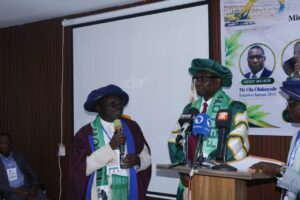
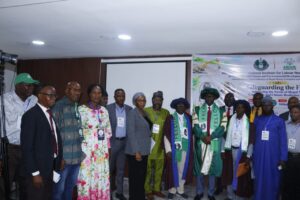
Olukoyede made this known in Ilorin, Kwara State, on Tuesday, November 3, 2026, while delivering a keynote address at a joint conference on illegal mining, corruption and climate implications, organised by the Michael Imoudu National Institute for Labour Studies (MINILS), Ilorin, in partnership with the Human and Environmental Development Agenda (HEDA). The EFCC chairman was also conferred with a Fellowship Award by the institute.
Speaking on the theme, “Uprooting the Roots of Resource Theft: A Zero-Tolerance Approach to Mining Corruption and Increasing Insecurity in Nigeria,” the anti-corruption czar observed that despite Nigeria’s abundant mineral resources, including gold, lithium, tin, lead and zinc, the country had yet to maximise their economic benefits due to corruption, illegal exploitation and insecurity.
He stressed that mineral wealth could only become a national blessing if properly managed and protected from criminal exploitation.
He explained that illegal mining was not merely the work of individuals operating mining pits but involved sophisticated networks of local and international financiers, buyers, compromised officials, transporters and beneficiaries of illicit proceeds.
He therefore advocated an enforcement strategy that goes beyond arresting miners to identifying and dismantling the financial networks behind the criminal enterprise.
“A serious enforcement strategy must move from the pit to the purse,” he declared, adding that the EFCC would continue to follow the money, investigate financiers and facilitators, trace illicit proceeds and prosecute offenders based on evidence.
Giving an account of the Commission’s efforts, Olukoyede disclosed that between October 2023 and July 2026, the EFCC recorded 52 illegal mining cases within its specialised enforcement portfolio, resulting in investigations, prosecutions and convictions.
He also revealed that the Commission had secured the forfeiture of 102 tonnes of solid minerals.
He emphasised that illegal mining was not just an economic crime but could fuel extortion, smuggling, violence and other forms of criminality, thereby worsening insecurity in affected communities.
The EFCC chairman further called for stronger collaboration among mining regulators, law enforcement agencies, financial intelligence institutions, customs authorities, revenue agencies and host communities.
He maintained that effective information-sharing, joint intelligence and coordinated operations were essential to identifying the financiers and ultimate beneficiaries of illegal mining.
He also urged organised labour, traditional institutions, civil society organisations and the media to support efforts to promote transparency, decent work and accountability in the extractive sector.
Earlier, the Director-General of MINILS and chief host, Comrade Issa Aremu, commended the EFCC under Olukoyede’s leadership for its efforts to curb illegal activities and promote accountability in the country.
He also underscored the importance of the conference in advancing labour education and addressing contemporary challenges confronting workers and the environment.
In his remarks, the Chairman of HEDA Resource Centre, Mr Olanrewaju Suraju, described illegal mining, corruption and environmental degradation as interconnected challenges requiring collective action.
He stressed that organised labour must play a central role in Nigeria’s transition to clean energy to ensure that workers are not left behind.
He explained that the three-day engagement was designed to equip labour leaders with advocacy, skills development and collective bargaining tools while promoting a joint action plan for monitoring suspicious mining activities and a Green Accountability Campaign.
The highlight of the event was the conferment of a Fellowship Award on the EFCC chairman by MINILS in recognition of his contributions to the fight against corruption and related economic crimes.
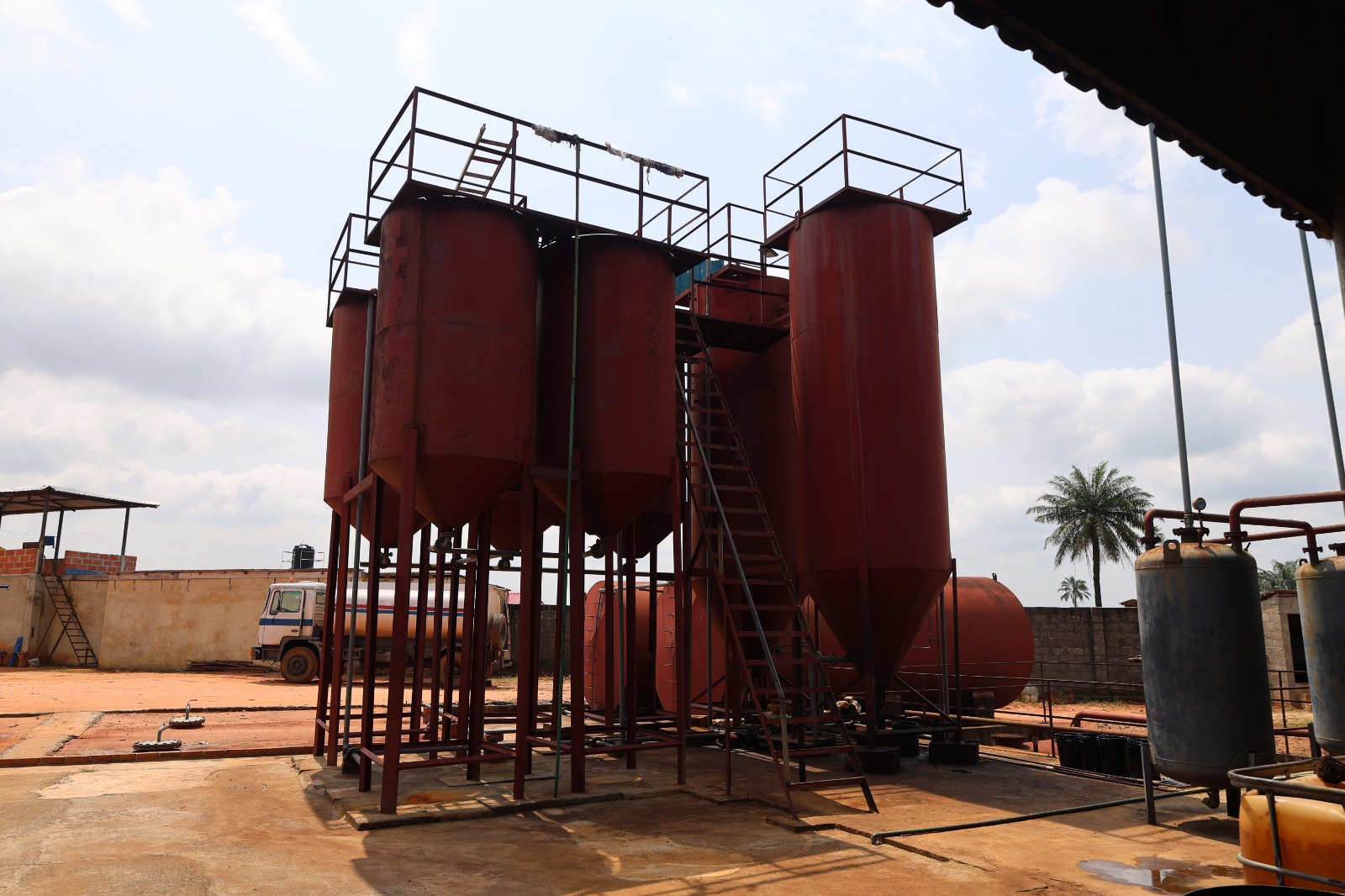
The Economic and Financial Crimes Commission (EFCC) has uncovered an illegal oil refinery allegedly operated by Chinese nationals in the Ogere area of Ogun State.
The operation, conducted on Saturday, October 31, 2026, by operatives of the EFCC’s Lagos Zonal Directorate 2, followed credible intelligence and surveillance by the Commission into the activities of illegal sludge oil refiners.
The refinery was deserted when EFCC operatives stormed the premises, following the Commission’s earlier clampdown on four illegal lithium processing plants in the area.
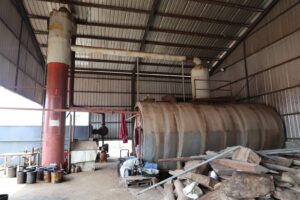
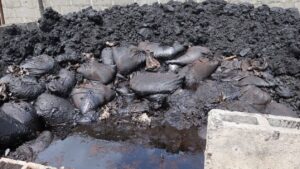
However, waste products from the refining process were discovered at the site.
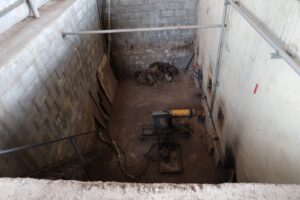
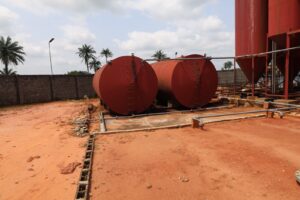
During the raid, operatives also discovered underground tanks believed to have been used for heating and processing sludge oil.
Two of the tanks inspected contained substances suspected to be Automotive Gas Oil (AGO), commonly known as diesel.
Preliminary investigations revealed that the operators sourced sludge oil, also known as black sludge, from Warri, Delta State, and Port Harcourt, Rivers State, and transported it to the illegal facility in Ogere for processing.
Further investigations indicated that the operators subjected the sludge oil to intense heat, allowing lighter petroleum components to pass through a series of chambers and filters in a process believed to produce Automotive Gas Oil (AGO) for sale in the Nigerian market.
Security personnel at the facility reportedly told EFCC operatives that the Chinese operators had neither disclosed their identities nor identified the company behind the facility.
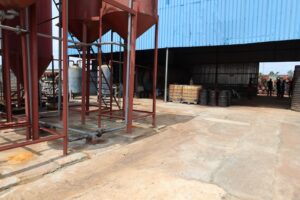
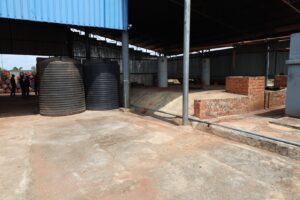
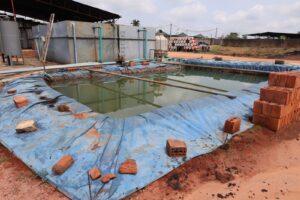
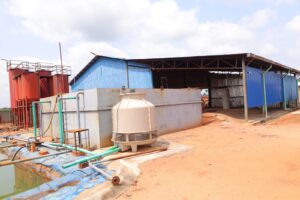
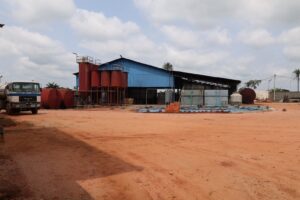
Consequently, operatives of the EFCC’s Lagos Zonal Directorate 2 have taken over the premises as investigations continue to establish the identities of the operators, determine ownership of the facility and ascertain the full extent of the suspected illegal activities and economic sabotage.



Kekere-Ekun to Chair Presentation of Pinheiro’s Six Legal Publications

Fatal Bayelsa Clash: Monarch Exonerates Nembe E&P, Points to Black Sand Mining Dispute

Alleged ₦238.35m Fraud: EFCC Arraigns Man in Lagos

Alleged ₦1.4bn Oil Fraud: EFCC Re-Arraigns Nadabo Energy Boss, Ali Peters, Firm in Lagos

Alleged ₦1.06bn Fraud: EFCC Secures Court Order to Freeze Suspect’s Account

Again, Dangote Refinery Hikes Petrol To ₦1,175/Litre, Diesel To ₦1,620/Litre — Report
-
 EFCC7 months ago
Alleged ₦1.4bn Oil Fraud: EFCC Re-Arraigns Nadabo Energy Boss, Ali Peters, Firm in Lagos
-
EFCC2 weeks ago
Alleged ₦1.06bn Fraud: EFCC Secures Court Order to Freeze Suspect’s Account
-
 News8 months ago
Again, Dangote Refinery Hikes Petrol To ₦1,175/Litre, Diesel To ₦1,620/Litre — Report
-
EFCC4 weeks ago
EFCC Hands Over Recovered ₦107m to Property Fraud Victim in Lagos
-
 News9 months ago
Senate Retains Two-Year Jail Term for PVC Trading, Raises Fine to ₦5m
-

 EFCC8 months ago
Lagos Court Jails Man 18 Months for Defrauding Sterling Bank of ₦30m
-

 Economy8 months ago
Naira Rebounds To ₦1,363.5/$
-

 Economy9 months ago
Naira Closes in the Red at ₦1,341.35/$