
EFCC
BREAKING: EFCC Appeals Omatsuli, Firms’ Acquittal Over Alleged ₦3.6bn Money Laundering


The Economic and Financial Crimes Commission (EFCC) has filed a comprehensive appeal at the Court of Appeal, Lagos Division, challenging the acquittal of former Niger Delta Development Commission (NDDC) Executive Director, Engr. Touyo Omatsuli, and three others over an alleged ₦3.645 billion money laundering scheme.
Also listed as respondents in the appeal are Don Parker Properties Limited, Francis Momoh, and Building Associates Limited.
The appellant, EFCC, is represented by a team of counsel led by E.E. Iheanacho, SAN, alongside Bilikisu Bala Buhari, Esq., Emenike Mgbenmele, Esq., O.S. Ujam, Esq., Famen Anum, Esq., M.A. Babatunde, Esq., and Lydia Ebenezer, Esq.
The appeal follows the judgment of the Federal High Court in Lagos, presided over by Justice Daniel Osiagor, which discharged and acquitted the defendants on all 46 counts contained in an amended charge bordering on money laundering, conspiracy, and failure to comply with statutory reporting obligations.
In its Notice of Appeal, the EFCC contended that the trial court erred in law and failed to properly evaluate the extensive evidence presented during the trial, including the testimonies of 16 witnesses and several documentary exhibits.
The anti-graft agency argued that the lower court disregarded binding decisions of the Court of Appeal delivered in earlier interlocutory rulings arising from the same case, particularly on the issue of a no-case submission, where the appellate court had held that a prima facie case had been established against the defendants.
According to the EFCC, the trial judge wrongly concluded that there was no evidence linking the respondents to the alleged offences, despite prior appellate findings affirming the credibility and sufficiency of the prosecution’s evidence.
The Commission further maintained that the trial court mischaracterised the nature of the funds traced to the first respondent, insisting that the sum of ₦3.645 billion paid by a contractor, identified as PW4, constituted unlawful gratification rather than legitimate transactions.
The EFCC argued that the evidence before the court showed that the funds were paid as “appreciation” to members of the NDDC board and were subsequently laundered through proxies and corporate entities.
It stated that the payments were funnelled through Building Associates Limited and other accounts before being used to acquire high-value properties, thereby disguising their origin.
In challenging the judgment, the Commission outlined what it described as a coordinated laundering scheme involving the respondents.
It alleged that the first respondent nominated accounts for the receipt of the funds, while the third and fourth respondents facilitated transfers and conversions.
The funds were said to have been used to acquire properties in the names of corporate entities, with some transactions converted into foreign currency to conceal their origin.
The EFCC also claimed that the respondents engaged in cover-up actions after investigations commenced, including restructuring company ownership, relinquishing shares, and creating backdated documents to justify the transactions.
The Commission faulted the trial court for relying heavily on selected portions of cross-examination while ignoring the totality of the prosecution’s case.
It argued that there were no material contradictions in the testimonies of key witnesses, including PW1 and PW4, and that their evidence was corroborated by documentary exhibits.
The EFCC further maintained that the lower court failed to properly interpret anti-corruption laws, including provisions of the Corrupt Practices and Other Related Offences Act and the Code of Conduct Bureau and Tribunal Act, which prohibit public officers from receiving benefits linked to official duties.
On the issue of criminal intent, the EFCC argued that the trial court adopted an unduly narrow approach by insisting on direct proof of knowledge.
It maintained that, under the Money Laundering (Prohibition) Act, knowledge can be inferred from surrounding circumstances and patterns of conduct.
According to the Commission, evidence of unusual financial flows, absence of legitimate business relationships, and subsequent concealment efforts clearly established that the respondents knew or ought to have known that the funds were proceeds of unlawful activity.
The EFCC also challenged the trial court’s finding that conspiracy was not proved, arguing that the law does not require direct evidence of an agreement.
It submitted that the coordinated actions of the respondents, as revealed through witness testimonies and financial records, were sufficient to infer a common unlawful design.
The Commission further insisted that the companies involved qualified as Designated Non-Financial Institutions under the Money Laundering (Prohibition) Act and were therefore obligated to report suspicious transactions—obligations which it said were breached.
The EFCC is urging the Court of Appeal to set aside the judgment of the Federal High Court in its entirety, allow the appeal, and enter a conviction against the respondents.
It also asked the appellate court to make any further orders deemed appropriate in the circumstances of the case.
EFCC
Alleged $6b Mambilla Power Contract: Tinubu Hails EFCC for FG’s Victory at Arbitration Tribunal
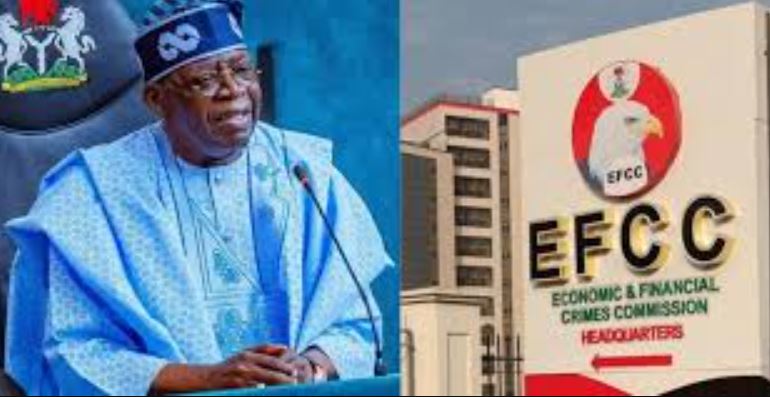
President Bola Ahmed Tinubu has expressed appreciation to the Economic and Financial Crimes Commission, EFCC, for its investigation of the alleged fraudulent contract award of $6 billion for the construction of 3,960mw Mambilla Hydroelectric Power Station to Sunrise Power and Transmission Company Limited, SPTCL.
The Commission’s investigations were pivotal to the September 17, 2026 victory of the federal government over the contractor company at the International Arbitration Tribunal.
The President in celebration of the federal government’s victory over SPTCL hailed the Commission for its findings in the irregular contract award.
“On behalf of the Government and People of the Federal Republic of Nigeria, I strongly commend the tremendous efforts of the Attorney-General of the Federation and Minister of Justice, Prince Lateef Fagbemi and the entire team at the Federal Ministry of Justice for their efforts in this matter.
“I also commend the FRN defence team, led by Ms Elizabeth Oger-Gross and Mr Tolu Obamuroh, both of Paul Hastings LLP, for their professional and excellent defence of the country.
“I commend the patriotism and support of former President Olusegun Obasanjo, and late President Muhammadu Buhari, who testified in the case, which dated back to an illegal 2003 contract to build a 3,050-megawatt hydroelectric plant in Taraba State under a build-operate-transfer model. The Federal Executive Council never authorised the contract.
“I thank the other witnesses in this case, including former Ministers Babatunde Raji Fashola, SAN, and Suleiman Adamu, and the experts, for their active participation in defending Nigeria’s interest in the arbitration.
“I commend the National Security Adviser for his support and the Economic and Financial Crimes Commission for its investigation into the case.
“I want to assure you that while our country remains committed to partnering with genuine investors and honouring its legal obligations, it will continue to defend all opportunistic claims instituted against our commonwealth, strongly”
“Today’s ICC ruling clears the single biggest legal hurdle that has paralysed the Mambilla hydro power project for years” he said.
The International Arbitration Tribunal under the auspices of the International Chamber of Commerce, ICC, Paris, while ruling in favour of the country, rejected the damages of $680 million demanded by SPTCL as a settlement sum and interest in respect of another arbitration in which it is claiming over $2.7 billion in compensation and interest, relating to disputes associated with the construction of the 3960mw Mambila Hydroelectric Power Project in the arbitration instituted by the company against the federal government.
The former minister of power, Olu Agunloye had on May 22, 2003 awarded the project on a Build, Operate and Transfer Basis” to Sunrise Power and Transmission Company Limited, SPTCL.
Investigations by the EFCC established that the former minister awarded the contract without the approval of the National Executive Council, then chaired by former President Olusegun Obasanjo, making such award inconsistent with federal government’s procedure on award of contracts.
Investigations showed that the award was suffused with favouritism as the owner of the company, Leno Adesanya and the former minister are old time pals, who also in August, 2019 caused SPTCL to transfer the sum of N3,600,000.00 (Three Million Six Hundred Thousand Naira) to the former minister’s Guaranty Trust Bank account no.0022530926.
These non-standard developments surrounding the contract led to its revocation by the former President Muhammadu Buhari’s government and the subsequent prosecution of the minister on a seven-count charge, bordering on fraudulent award of contract and official corruption by the Commission.
Agunloye’s prosecution subsists since Wednesday, January 10, 2024.
He was arraigned before Justice Jude Onwuegbuzie of the Federal Capital Territory High Court, Apo, Abuja,
SPTCL dragged the federal government to the International Arbitration Tribunal, seeking monetary compensation for the contract the Tribunal established it never awarded in the first place.

The Economic and Financial Crimes Commission, EFCC, Lagos Zonal Directorate 2, Okotie-Eboh, Ikoyi, Lagos, on Thursday, September 17, 2026, handed over the sum of N140,000,000.00 (One Hundred and Forty Million Naira) to an investment and money-lending company, B4 Sail Limited.
The recovery of the funds, handed over in bank drafts by the Acting Zonal Director, Lagos Zonal Directorate 2, Assistant Commander of the EFCC, ACE I Bawa Usman Kaltungo, followed investigations into an alleged case of obtaining money by false pretence and diversion of funds involving one Jacob Oyebola Esan and companies linked to him.
In a petition submitted on April 20, 2026, B4 Sail Limited alleged that Esan, on behalf of his company, Geo Fields Plc, had approached the company in August 2025 for a N500,000,000.00 (Five Hundred Million Naira) loan facility to boost his business.
The loan facility, according to the petitioner, attracted an interest rate of 15 per cent per month and had a tenor of one month.
Investigation revealed that Esan, who is the first suspect, had previously obtained other loan facilities from the company, bringing his total loan exposure to N1,065,000,000.00 (One Billion, Sixty-Five Million Naira).
It was also revealed that Esan pledged shares held by him as collateral for the facilities through Calyx Securities Limited, the clearing house for the stocks, with the understanding that the shares would be subject to a lien in favour of B4 Sail Limited and that the company would have the first right of payment upon the sale of the shares.
The lien, investigation revealed, was communicated to B4 Sail Limited through a letter signed by the second suspect, Gbolahan Azeez Bello, Managing Director, Calyx Securities Limited.
Further investigation, however, revealed that the shares pledged as collateral had been sold without the knowledge of the petitioner, resulting in the suspect’s alleged default in repaying the facilities.
Consequently, the outstanding loan and accrued interest had risen to N2,250,500,000.00 (Two Billion, Two Hundred and Fifty Million, Five Hundred Thousand Naira).
Speaking during the handover ceremony, Kaltungo stated that the recovery “represents a further step in the Commission’s efforts to ensure that funds and assets recovered in the course of its investigations are appropriately returned to legitimate owners and victims in accordance with due process.
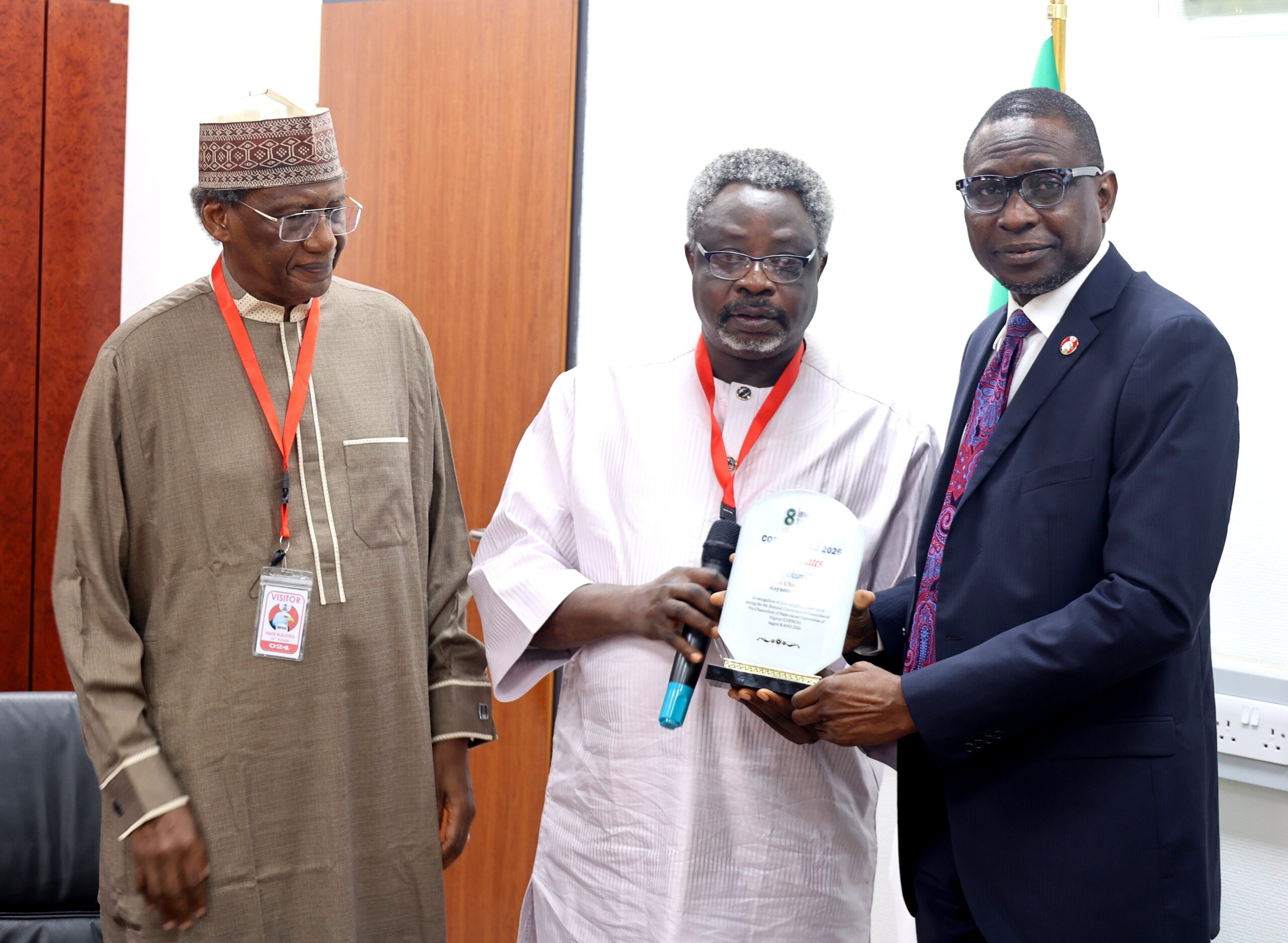
The Committee of Pro-Chancellors of State-Owned Universities in Nigeria (COPSUN) has commended the Executive Chairman of the Economic and Financial Crimes Commission (EFCC), Mr Ola Olukoyede, for his support for the Nigerian Education Loan Fund (NELFUND) and efforts to boost the education sector.
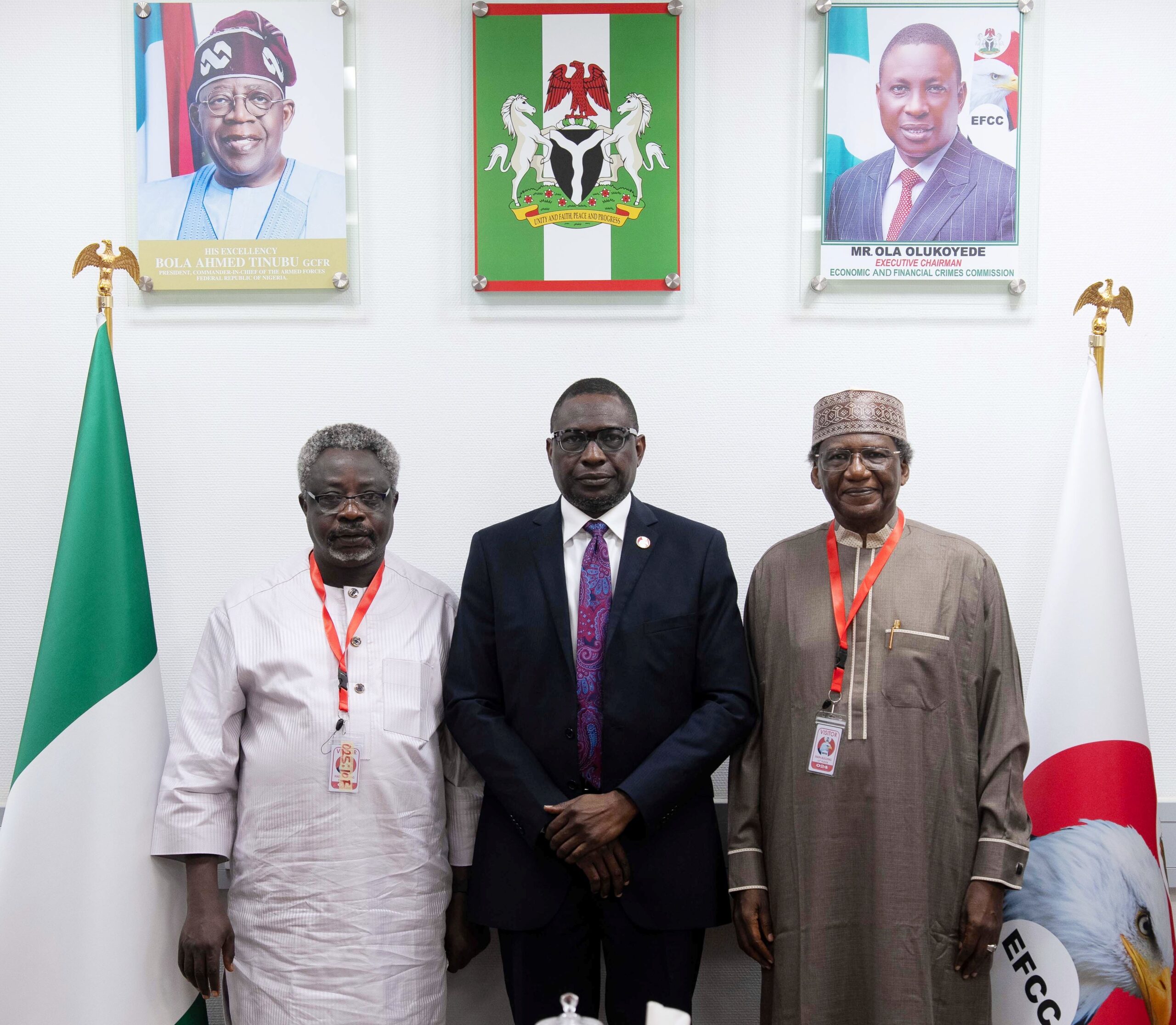
The Chairman of COPSUN, Prof. Ayodeji Omole, gave the commendation in Abuja on Thursday, September 17, 2026, when he led a delegation of the committee on a courtesy visit to the EFCC’s Corporate Headquarters.
Omole said the committee appreciated Olukoyede’s role in supporting NELFUND, noting that the scheme had helped prevent many students from dropping out of school.
He urged Olukoyede to sustain his support for the scheme while also calling for stronger collaboration between the EFCC and state-owned universities. 
The COPSUN Chairman said, “We appreciate the EFCC Chairman for the role he has played in NELFUND. As university policymakers, we know what NELFUND has done in the lives of some students who ordinarily would have dropped out of school as a result of financial constraints. We continue to encourage the Executive Chairman and his team to support the scheme.” 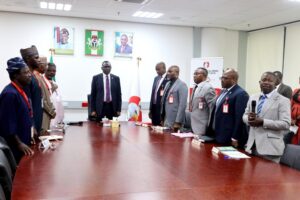
He proposed that the Commission establish institutes in universities where some of its activities could be domiciled, stressing that such collaboration would promote knowledge-sharing and research.
Omole added that the EFCC could leverage the expertise of university lecturers in research and other areas, while the partnership could also provide an avenue to educate students on the dangers of corruption.
“We appeal to the Commission to collaborate with our universities. The Executive Chairman cannot fight corruption alone. The Commission needs the support of our lecturers and experts in the universities in areas such as research, among others. The opportunities will also be used to train our students on the dangers of corruption and cybercrime,” he said.
Olukoyede, in his response, thanked the lecturers for their dedication and commitment to upholding standards in state-owned universities.
He stressed the importance of education to national development, noting that depriving a country of a functional education system would undermine its progress and leadership.
Olukoyede said, “When you take the educational sector from a nation, it cannot be developed, and there will be no good leadership, as education gives knowledge.
“We need to discourage the younger ones from doing the wrong things and let them know the consequences. We need to encourage them to channel their skills to add value to themselves. That is what motivated us to develop a Cyber Research Academy. With time, we will incorporate the universities into this structure. The idea is to develop the skills of our younger ones in the areas of ICT and research.”
In August 2026, President Bola Tinubu directed that additional recovered funds from the Commission be diverted to NELFUND to sustain its growing funding obligations.



Alleged $6b Mambilla Power Contract: Tinubu Hails EFCC for FG’s Victory at Arbitration Tribunal

EFCC Hands Over Recovered N140m to Loan Firm in Lagos

COPSUN Applauds EFCC on NELFUND
Nigerian nurses stage seven‑day warning strike over pay, staffing

Dangote Refinery to deploy 4,000 gas‑powered trucks for distribution

Nigeria approves plan to refinance ₦4tn power-sector debt
-
Health1 year ago
Nigerian nurses stage seven‑day warning strike over pay, staffing
-
Energy1 year ago
Dangote Refinery to deploy 4,000 gas‑powered trucks for distribution
-
Economy1 year ago
Nigeria approves plan to refinance ₦4tn power-sector debt
-
 Education1 year ago
JAMB sets 2025/26 university cut‑off at 150, bars under‑16
-
 Entertainment1 year ago
Sean Kingston sentenced to 3½ years in prison over $1 million fraud
-
 Crime & Justice7 months ago
BREAKING: Two Chinese Directors Jailed 46 Years Each Over ₦3.4bn, $2.5m Crypto Fraud in Lagos
-

 Business7 months ago
Nigeria Revenue Service Collects ₦28.3trn in 2025, Sets ₦40.7trn Target for 2026
-

 Crime & Justice8 months ago
Police Arrest 24-Year-Old Over ₦48.5m Romance Fraud in Lagos