
EFCC
EFCC, South Korean Police Flag Off 10-Day Training on Asset Tracing, Cryptocurrency Investigations


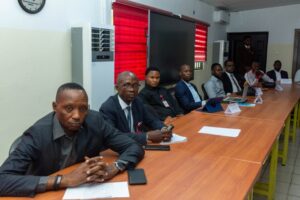
The Economic and Financial Crimes Commission (EFCC) has taken another step towards strengthening its officers’ capacity to combat sophisticated financial crimes with the commencement of a 10-day specialised training programme on asset tracing and cryptocurrency investigations.
The training, organised in partnership with the South Korean Police for more than 30 EFCC operatives, commenced on Tuesday, October 13, 2026, at the EFCC Academy, Karu, Abuja.
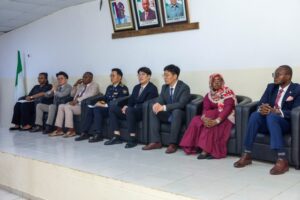
The Executive Chairman of the EFCC, Ola Olukoyede, who spoke through the Acting Commandant of the EFCC Academy, Assistant Commander of the EFCC (ACE I) Joseph Ogwiji, said the increasing use of digital financial services and virtual assets required investigators to continually develop their knowledge and skills.

“While these technologies support legitimate economic activity, they can also be exploited to facilitate fraud, transfer criminal proceeds and conceal the identities of those involved. Our response must be informed, technically competent and grounded in lawful investigative procedures,” he said.
He explained that, given the growing prevalence of cross-border crimes and money laundering, the ability to interpret transaction records, trace funds across different platforms and link digital evidence to the activities of individuals under investigation was essential to combating economic and financial crimes globally.
The Consul and Police Attaché at the Embassy of the Republic of Korea in Nigeria, Mr Eun-pyo Hong, said the training, described as the first of its kind to be conducted by the Korean Government in Africa, marked the first anniversary of a memorandum of understanding (MoU) signed between the EFCC and the Korean National Police Agency (KNPA) in Seoul, South Korea, in October 2025.

“I am especially pleased that our first programme in Africa is taking place here in Nigeria, a leading country in West Africa. And I am also very pleased to start this programme with the EFCC, one of Nigeria’s most respected law-enforcement institutions,” he said.
The MoU, signed by Olukoyede and the Deputy Commissioner General of the KNPA, Park Seong-Ju, focuses on information exchange, sharing of best practices, capacity building, institutional strengthening, research collaboration, asset recovery coordination, public education, mutual support, training exchanges and international cooperation, among other areas.

Woosung Kwon, leader of the training team from the Korean Police Investigation Academy of the KNPA, alongside Inspector Kim Sung Jae and Sergeant Jung Youngmo, thanked the EFCC management and the organising team for their hospitality and cooperation.
According to Kwon, “Financial crime is changing fast. Criminals now use crypto, cross-chain tools and the dark web to hide money. We came to learn from your cases and your experience. Crypto crime has no borders, so our cooperation must have no borders, too.”
He further explained that the training would include practical sessions on open-source investigation techniques and cryptocurrency tracing, from identifying initial leads to seizing assets and preparing evidence for court.
The Head of External Cooperation at the EFCC, Aliyu Wali, said the growing exploitation of virtual assets and emerging technologies by financial criminals had made it imperative to strengthen investigators’ capacity to trace, analyse and investigate virtual asset transactions.

“This training will enhance our officers’ technical capabilities and further strengthen our efforts to combat cyber-enabled financial crimes and recover the proceeds of crime,” he said.
Wali, who spoke through Assistant Commander of the EFCC (ACE II) Michael Kayang, encouraged participants to take full advantage of the opportunity to engage actively with their Korean counterparts and apply the knowledge acquired to their operational responsibilities.
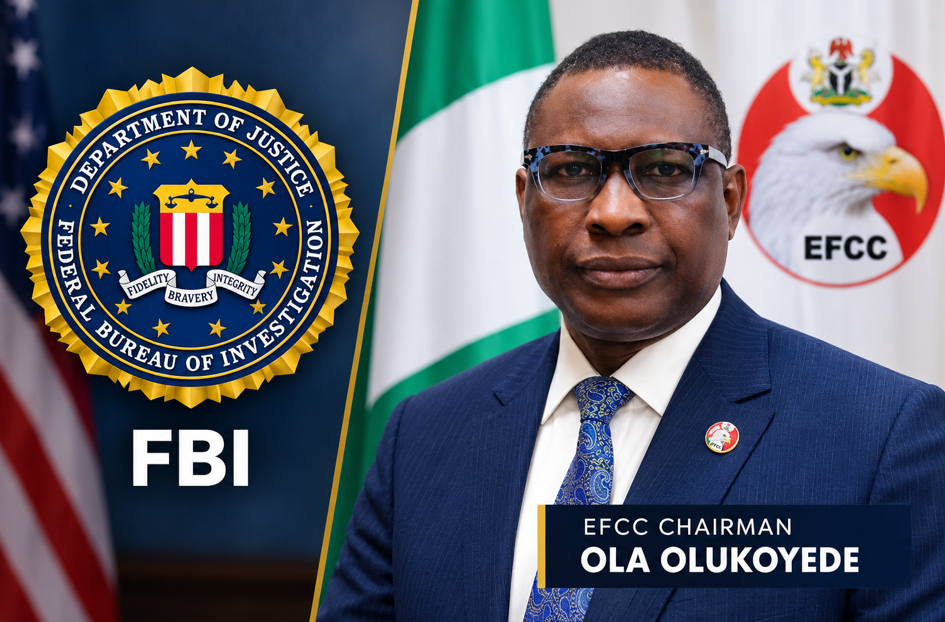
The Federal Bureau of Investigation (FBI) has commended the Executive Chairman of the Economic and Financial Crimes Commission (EFCC), Ola Olukoyede, and the Commission for their efforts and vital role in Operation Artemis, a joint international effort to disrupt financially motivated sextortion networks targeting minors.
The commendation was conveyed in a letter signed by FBI Director Kash Patel, who praised the Commission for its collaboration with the Bureau in the arrest and extradition of suspects facing federal charges in the United States.
In the letter addressed to Olukoyede, Patel acknowledged the Commission’s contribution to the operation, stating that “the Economic and Financial Crimes Commission, EFCC, has played a vital role in Operation Artemis, a joint effort focused on disrupting financially motivated sextortion rings targeting juveniles.”
He said that, under Olukoyede’s leadership, the EFCC designated personnel to support the investigations and facilitate the transfer of suspects from Nigeria to face prosecution in the United States.
Specifically, the FBI Director commended the EFCC for apprehending Adebola Festus Adekunle and Mudashiru Afeez Olawale, who were indicted in the United States in 2023 over allegations relating to the sexual exploitation and extortion of minors.
The two suspects were extradited to the United States in August 2026, with the EFCC facilitating the process following investigations and extradition proceedings. They are facing federal charges relating to sexual exploitation in cases involving the deaths of minors.
Patel noted that the successful outcome of the cases would not have been possible without the EFCC’s assistance and commitment to international law enforcement cooperation.
“The successful outcome of these cases would not have been possible without your assistance and dedication to international law enforcement collaboration,” he said.
The FBI Director further expressed appreciation to Olukoyede and the Commission for their commitment to justice and continued cooperation, while expressing optimism about strengthening the partnership between both agencies.
“Please accept my sincere appreciation for your commitment to justice and steadfast cooperation. I look forward to the continued partnership with the EFCC,” he stated in the letter.
The extradition of Adekunle and Olawale followed FBI investigations into separate sextortion schemes targeting male minors in the United States. The investigations linked the alleged activities to two teenage victims who died by suicide after being subjected to online sexual exploitation and extortion.
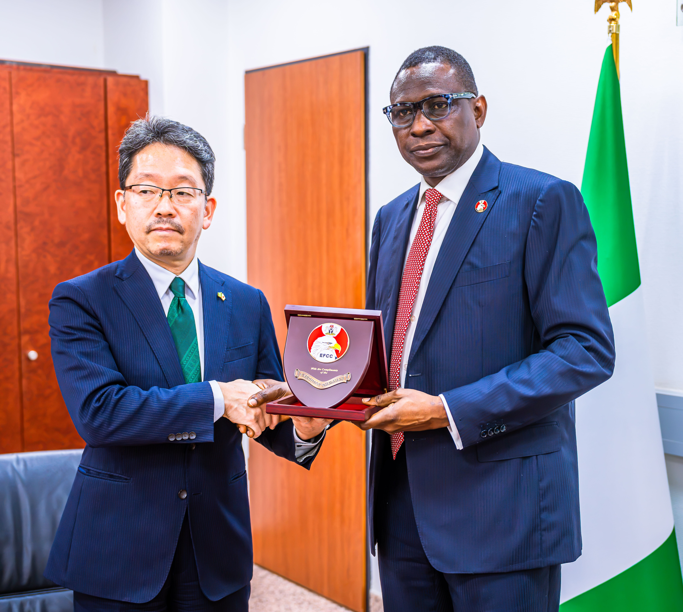
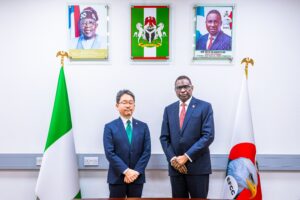
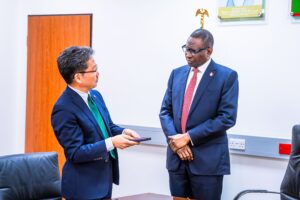
The Japanese Ambassador-Designate to Nigeria, His Excellency, Hideo Suzuki Paid a Courtesy Visit to the Executive Chairman of the Economic and Financial Crimes Commission, EFCC, Mr. Ola Olukoyede in his office today, October 28, 2026. He was accompanied on the visit by First Secretary, Security, Yuji Murakami and Senior Information Analyst, Dogara Ankut.
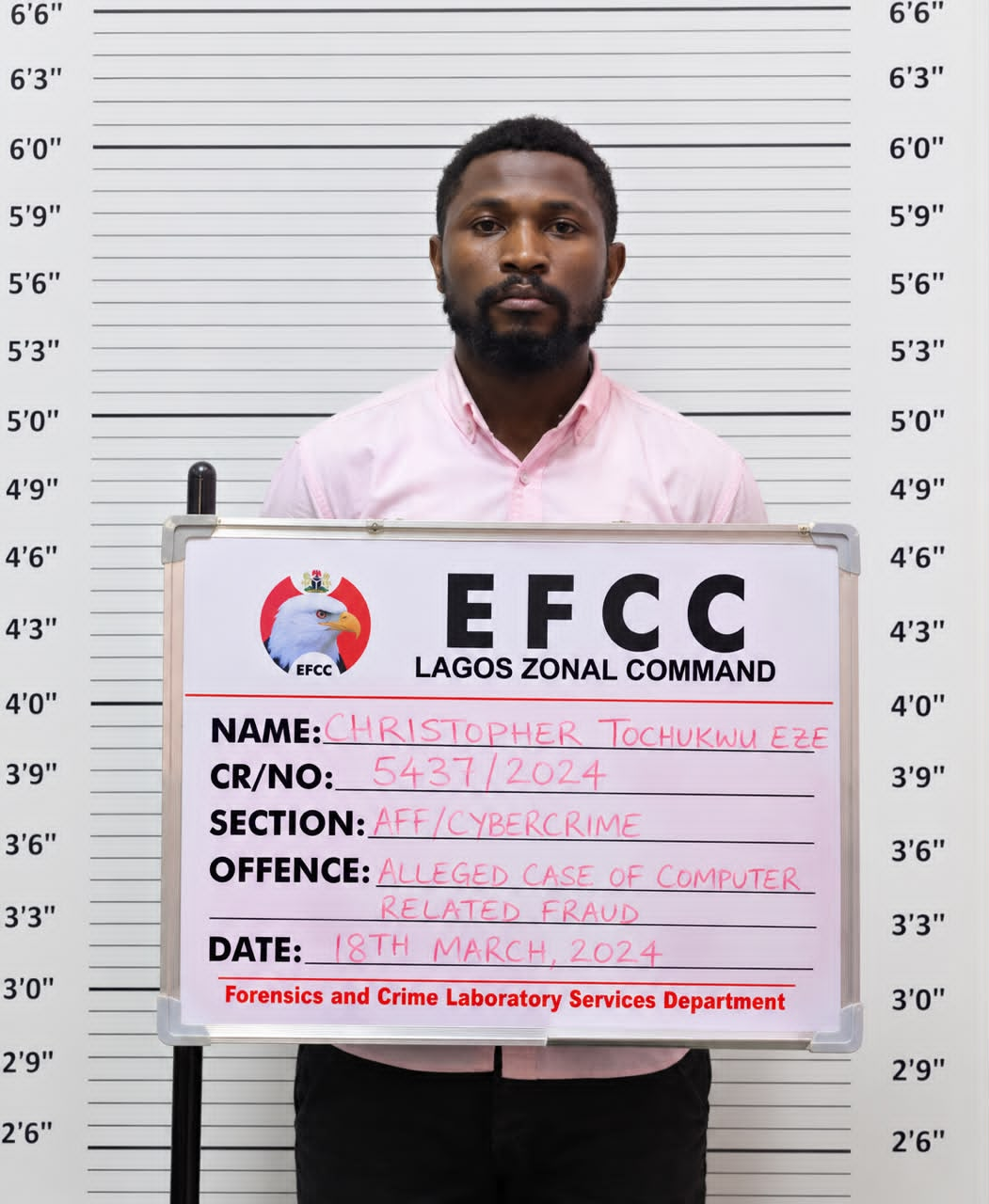
Justice O. O. Abike-Fadipe of the Special Offences Court sitting in Ikeja, Lagos, on Tuesday, October 27, 2026, sentenced a former banker, Christopher Jackson Edeh, to a total of 39 years’ imprisonment for his involvement in a ₦2.7 billion fraud prosecuted by the Lagos Zonal Directorate 1 of the Economic and Financial Crimes Commission (EFCC).
Edeh, who was arraigned on February 28, 2024, faced nine counts bordering on fraudulent false accounting and unauthorised access to a computer system.
The charges alleged that he altered the bank account details of several customers and government-related entities, including the Kano State Government Power Intervention Fund, NNPC Trading Limited, Stallion Vision Ltd, the Lagos State Government Blue Line, the State Contributory Pension Account and Chukwuemeka Odumegwu Ojukwu University, with intent to defraud.
During the trial, prosecuting counsel, Z. B. Atiku, called three witnesses and tendered several documents in evidence to establish the case against the defendant. The defence, in turn, called one witness.
In her judgment, Justice Abike-Fadipe held that the prosecution had proved its case beyond reasonable doubt and consequently convicted Edeh on all nine counts.
The court sentenced him to five years’ imprisonment without an option of fine on each of counts one to seven, bordering on fraudulent false accounting, and two years’ imprisonment without an option of fine on each of counts eight and nine, relating to unauthorised access to a computer system with intent to facilitate the commission of crimes.
The court ordered that all the sentences run concurrently.



FBI Commends Olukoyede, EFCC for Support in Tackling Sextortion, Cybercrime

EFCC Photo News

Alleged ₦76bn, $31.5m Fraud: Witness Says Kuru Approved Arik Air Receivership Without Prior AMCON Board Approval

Alleged ₦1.4bn Oil Fraud: EFCC Re-Arraigns Nadabo Energy Boss, Ali Peters, Firm in Lagos

Alleged ₦1.06bn Fraud: EFCC Secures Court Order to Freeze Suspect’s Account

Again, Dangote Refinery Hikes Petrol To ₦1,175/Litre, Diesel To ₦1,620/Litre — Report
-
 EFCC7 months ago
Alleged ₦1.4bn Oil Fraud: EFCC Re-Arraigns Nadabo Energy Boss, Ali Peters, Firm in Lagos
-
 EFCC1 week ago
Alleged ₦1.06bn Fraud: EFCC Secures Court Order to Freeze Suspect’s Account
-
 News8 months ago
Again, Dangote Refinery Hikes Petrol To ₦1,175/Litre, Diesel To ₦1,620/Litre — Report
-
 News9 months ago
Senate Retains Two-Year Jail Term for PVC Trading, Raises Fine to ₦5m
-

 EFCC8 months ago
Lagos Court Jails Man 18 Months for Defrauding Sterling Bank of ₦30m
-
EFCC4 weeks ago
EFCC Hands Over Recovered ₦107m to Property Fraud Victim in Lagos
-

 Economy8 months ago
Naira Rebounds To ₦1,363.5/$
-

 Economy8 months ago
Naira Closes in the Red at ₦1,341.35/$