
EFCC
Alleged ₦36m Fraud: Court Reserves Ruling on Blessing CEO’s Bail Application Till June 9

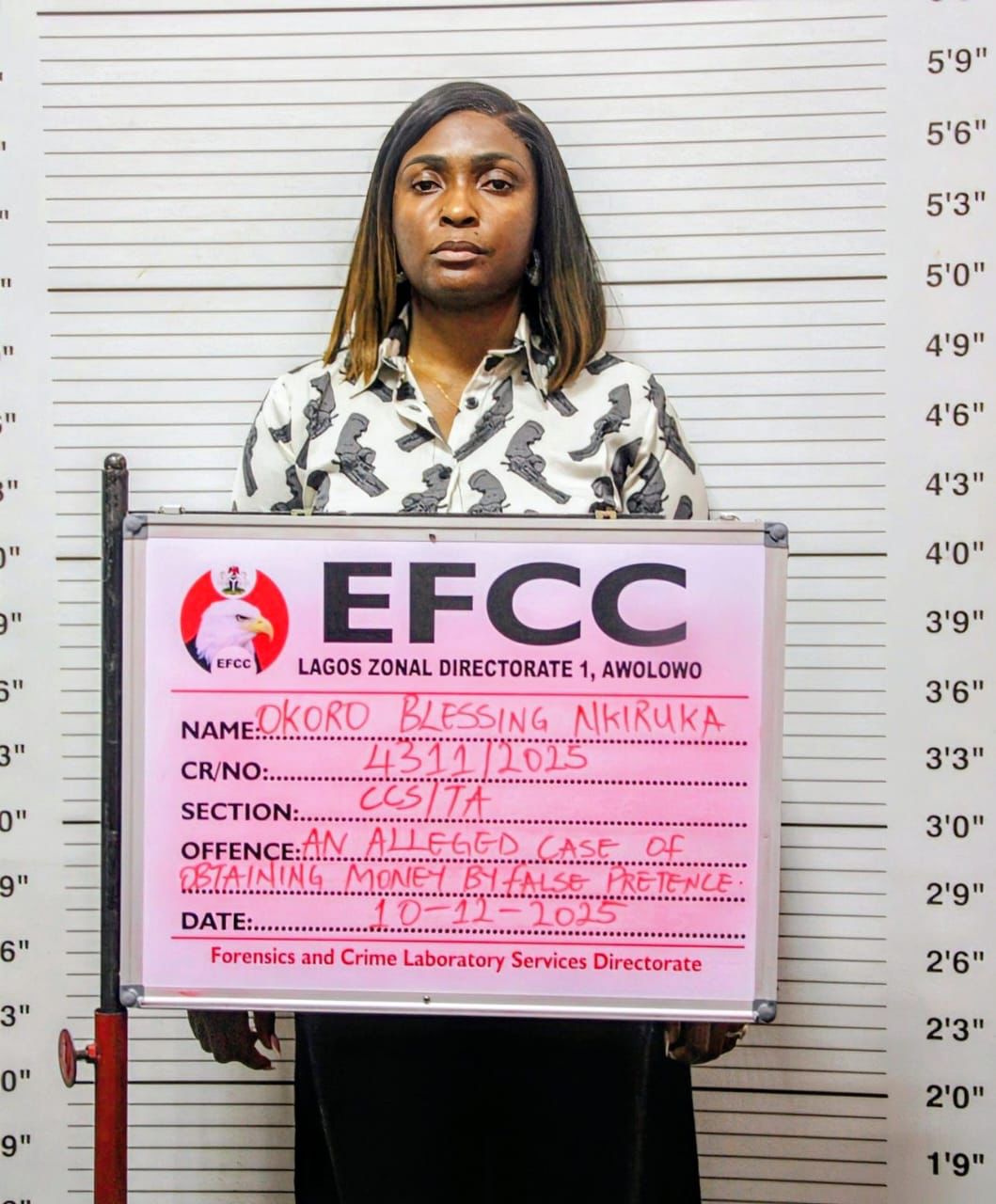
Justice D.I. Dipeolu of the Federal High Court, Ikoyi, Lagos, on Friday, June 5, 2026, reserved ruling until June 9, 2026, on the bail application filed by social media influencer, Okoro Blessing Nkiruka (a.k.a. Blessing CEO), who is standing trial over an alleged ₦36 million fraud.
The defendant is facing a two-count charge filed by the Lagos Zonal Directorate 1 of the Economic and Financial Crimes Commission (EFCC), bordering on obtaining money by false pretence and stealing to the tune of ₦36 million.
During the hearing of the bail application, counsel to the defendant, P.I. Nwafuru, urged the court to grant his client bail on the most liberal terms.
Opposing the application, prosecution counsel, S.I. Suleiman, informed the court that the EFCC had filed a 28-paragraph counter-affidavit deposed to by the investigating officer, Bufa Regina Okangbe, on May 29, 2026.
“We rely on all the depositions contained therein and the exhibits attached. At some point during the course of the investigation, the defendant stopped honouring invitations extended to her by the Commission.
“We urge Your Lordship not to accede to the request of the defence and instead order an accelerated hearing of the matter,” Suleiman submitted.
After listening to arguments from both parties, Justice Dipeolu reserved ruling on the bail application until June 9, 2026.
Earlier in the proceedings, the prosecution presented its first witness, Bufa Regina Okangbe, an investigator with the EFCC. She narrated a trail of bank transactions, property records, and witness statements that allegedly revealed how the defendant received ₦36 million from the petitioner for a property she did not own.
According to Okangbe, the Commission received a petition, which was assigned to her team for investigation. She stated that a Bank Verification Number (BVN) search conducted on the defendant revealed several bank accounts linked to her.
“Following this, letters of investigation were sent to the banks, while another letter was forwarded to the Lagos State Land Bureau to determine whether the property belonged to the defendant.
“The Commission also wrote to the Corporate Affairs Commission (CAC) regarding the defendant’s company, Break or Makeup Limited.
“After analysing the defendant’s statements of account, she was invited to the Commission’s office and confronted with transactions traced to her and the petitioner.”
The witness further testified that the defendant made statements under caution in the presence of her lawyer and husband, admitting that the petitioner paid her the sum of ₦30 million.
Okangbe told the court that the response from the Lagos State Land Bureau revealed that the property in question did not belong to the defendant but to one Mr. Tunbosun Osobu.
“The Commission invited Mr. Osobu, who appeared with his lawyer and son. He confirmed that he had leased the property to the defendant for three years and that the lease expired in 2023 before it was renewed in 2025,” she stated.
The witness also informed the court that the petitioner submitted the lease agreement executed between the petitioner and the defendant, along with a tenancy acquisition form.
During the proceedings, prosecution counsel Suleiman sought to tender several documents through the witness, including the petition dated February 18, 2025; statements made by the defendant on December 10, 11, 12, and 16, 2025; the tenancy acquisition form submitted by the petitioner’s lawyer; the petitioner’s Zenith Bank statement of account in the name of Pipes and Barrel Limited; and the defendant’s GTBank and Access Bank statements.
However, defence counsel P.I. Nwafuru objected to the admissibility of the defendant’s statements, arguing that there was no endorsement indicating the presence of a legal practitioner during the recording of the statements. He also contended that no video recording of the statement-taking process had been produced before the court.
In response, Suleiman argued that the absence of a legal practitioner did not render an extra-judicial statement inadmissible.
“The law only requires the presence of a legal practitioner or any person chosen by the defendant. The statements are very key to this matter, and we urge My Lord to admit them in evidence,” he submitted.
On the issue of the bank statements, Suleiman maintained that all statements of account were accompanied by certificates of identification in compliance with Section 84 of the Evidence Act.
“The witness through whom the statements of account are being tendered is the investigating officer in this case, and the law recognises such authority as an exception to the hearsay rule,” he added.
In his ruling, Justice Dipeolu overruled the objections and admitted the documents into evidence as exhibits.
The judge held: “Section 17(2) of the Administration of Criminal Justice Act (ACJA) clearly provides that a suspect’s statement may be taken in the presence of a legal practitioner of his or her choice, a representative of the Legal Aid Council, a representative of a civil society organisation, or any other person chosen by the suspect.”
Continuing her testimony, Okangbe stated that the petitioner, through the company account, paid a total sum of ₦36 million to the defendant.
According to her, ₦25 million was transferred into the defendant’s GTBank account, while an additional ₦11 million was paid into her Access Bank account for the lease of a property located at No. 1B Tunbosun Osobu Street, Lekki, Lagos.
She further testified that an analysis of the defendant’s bank accounts revealed several subsequent transfers, including ₦8 million to Mr. and Mrs. Osobu, ₦1.9 million to Beauty City by Lekki, ₦11 million to Lina Uzoma Okoro, the defendant’s mother, and ₦15 million to Kenneth Emeka Onuora.
Under cross-examination, the witness stated that the Federal Republic of Nigeria, being the petitioner in the criminal proceedings, was not privy to any settlement arrangement allegedly entered into between the defendant and the petitioner.
She also informed the court that she was unaware of any attempt by the defendant to refund ₦24 million to the petitioner, as earlier claimed by the defence.
According to the witness, the petitioner had already commenced renovation work on the property before the owner, Mr. Tunbosun Osobu, allegedly appeared and ejected them from the premises.
Justice Dipeolu subsequently adjourned the matter until June 9, 2026, for ruling on the bail application and June 22, 2026, for continuation of trial.
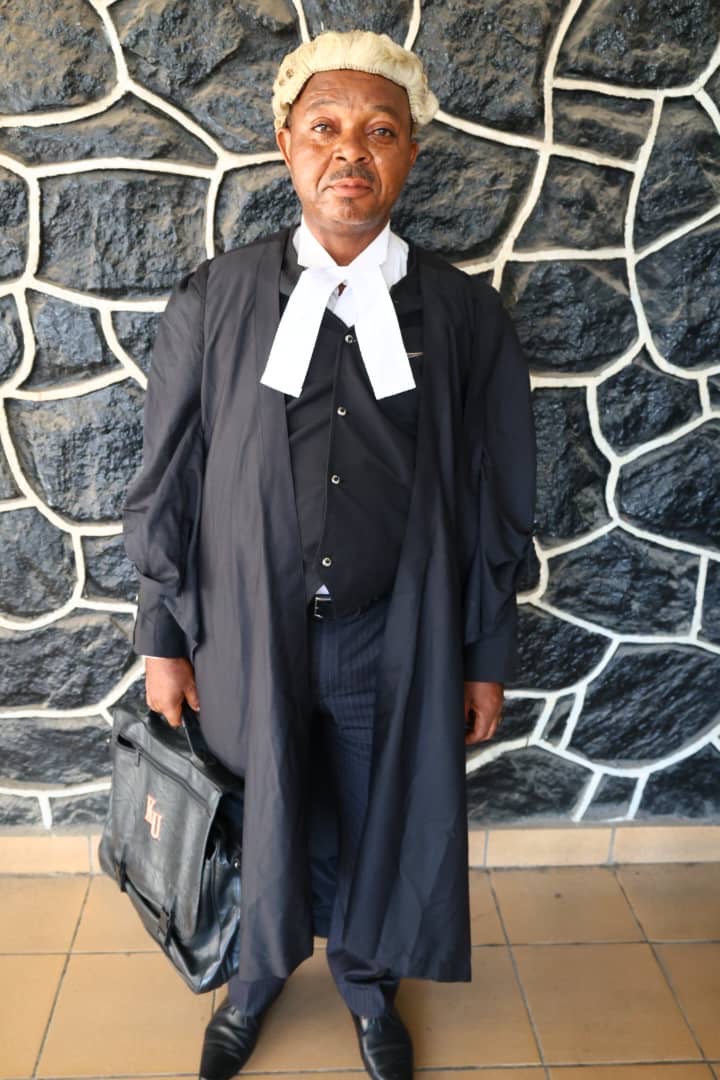
Justice A.M. Lawal of the Lagos State High Court sitting in Ikeja, Lagos, on Tuesday, August 4, 2026, convicted and sentenced a fake lawyer, John Nwawuto Anoruo, for impersonation and possession of a forged seal of the Nigerian Bar Association (NBA).
Anoruo, who operates a legal and educational consultancy in the Ikorodu area of Lagos, was arrested by operatives of the Economic and Financial Crimes Commission (EFCC) on Monday, April 20, 2026.
His ordeal began after he submitted a petition dated September 22, 2025, to the EFCC on behalf of his clients against the management of Global West Vessel Specialist Nigeria Limited.
Investigations, however, revealed that both the petition and a subsequent Letter of Withdrawal dated March 5, 2026, bore a forged NBA seal, which Anoruo admitted obtaining from an undisclosed business centre in Lagos.
In the course of investigations, the 55-year-old claimed that although he obtained a law degree from the University of Nigeria, Nsukka, in 2018 through evening classes, he did not attend the Nigerian Law School.
Upon the conclusion of the investigation, Anoruo was arraigned on Tuesday, August 4, 2026, by the Lagos Zonal Directorate 2 of the EFCC on a two-count charge bordering on the use of a counterfeit NBA seal and impersonation.
One of the counts reads: “That you, JOHN NWAWUTO ANORUO, sometime between 2025 and 2026, within the jurisdiction of this Honourable Court, fraudulently used a counterfeited seal titled ‘Nigerian Bar Association’ with Supreme Court Number SCN037400, with intent that the same be acted upon as genuine, and thereby committed an offence contrary to Section 366(1) and punishable under Section 365(1)(x) of the Criminal Law of Lagos State, 2015.”
The second count stated that the defendant, on September 4, 2025, falsely represented himself to the Economic and Financial Crimes Commission as a legal practitioner duly qualified to practise law in Nigeria and as the holder of a Nigerian Bar Association seal bearing Supreme Court Number SCN037400, which lawfully belonged to another legal practitioner, thereby committing an offence contrary to Section 382 of the Criminal Law of Lagos State, 2015.
He pleaded guilty to the charges preferred against him.
Following his plea, prosecution counsel, Saadatu Mahmud Yabo, called Umar Faruk Ahmad, an investigating officer with the EFCC, to review the facts of the case.
In his testimony, Ahmad told the court that the Commission, on April 15, 2026, received a petition dated April 14, 2026, from a legal practitioner, Adeyinka Olumide-Fusika.
According to the witness, the petitioner alleged that Anoruo had filed a petition against him and his law firm while falsely presenting himself as a legal practitioner.
Ahmad stated that investigations revealed that the Supreme Court enrolment number on the NBA seal used by the defendant belonged to another legal practitioner.
He further informed the court that the defendant admitted obtaining the counterfeit NBA seal from a business centre in Lagos and confirmed that he had not been called to the Nigerian Bar.
The witness also disclosed that the defendant earned ₦7,500,000.00 (Seven Million, Five Hundred Thousand Naira) from the legal brief in question, out of which he paid ₦1,500,000.00 (One Million, Five Hundred Thousand Naira) to a qualified legal practitioner to handle the matter on his behalf.
Ahmad further testified that when the defendant honoured the EFCC’s invitation, he came to the Commission’s office dressed in a legal practitioner’s attire. He added that a subsequent search of the defendant’s residence led to the recovery of the counterfeit NBA seal bearing the Supreme Court enrolment number of another lawyer.
Through the investigating officer, the prosecution tendered in evidence the petition written by Olumide-Fusika; the defendant’s extra-judicial statement made under caution; investigation letters sent by the EFCC to the Body of Benchers and the Supreme Court of Nigeria, together with their responses; the legal practitioner’s attire recovered from the defendant; the counterfeit NBA seal; and evidence of a ₦300,000.00 (Three Hundred Thousand Naira) bank draft paid by the defendant into the EFCC’s recovery account.
The witness also identified the legal practitioner’s attire produced before the court as the same attire the defendant brought to the EFCC’s office during interrogation.
Defence counsel, G.E. Demkemefa, raised no objection to the admissibility of the exhibits, following which Justice Lawal admitted and marked them as Exhibits 1 to 9.
During his allocutus, the defendant informed the court that he paid ₦2,500,000.00 (Two Million, Five Hundred Thousand Naira) to the individual who introduced the legal brief to him and ₦1,500,000.00 (One Million, Five Hundred Thousand Naira) to the lawyer he engaged to handle the matter.
Yabo thereafter urged the court to convict and sentence the defendant in accordance with his guilty plea.
She also prayed the court to order the forfeiture of all the exhibits to the Federal Government of Nigeria.
Delivering judgment, Justice Lawal held: “In view of the plea of the defendant, the defendant is hereby convicted on the two counts.”
Thereafter, the defence counsel pleaded with the court to temper justice with mercy, describing the defendant as a first-time offender who did not waste the time of either the EFCC or the court.
He added that the defendant “is the breadwinner of his family, comprising his wife and five children,” and urged the court to impose the option of a fine rather than a custodial sentence.
Justice Lawal subsequently sentenced the defendant to a fine of ₦120,000.00 (One Hundred and Twenty Thousand Naira) on Count One and ₦150,000.00 (One Hundred and Fifty Thousand Naira) on Count Two, bringing the total fine to ₦270,000.00 (Two Hundred and Seventy Thousand Naira), payable to the Lagos State Judiciary.
The court also ordered that the legal practitioner’s attire and the forged NBA seal recovered from the defendant be forfeited to the Federal Government of Nigeria through the EFCC.
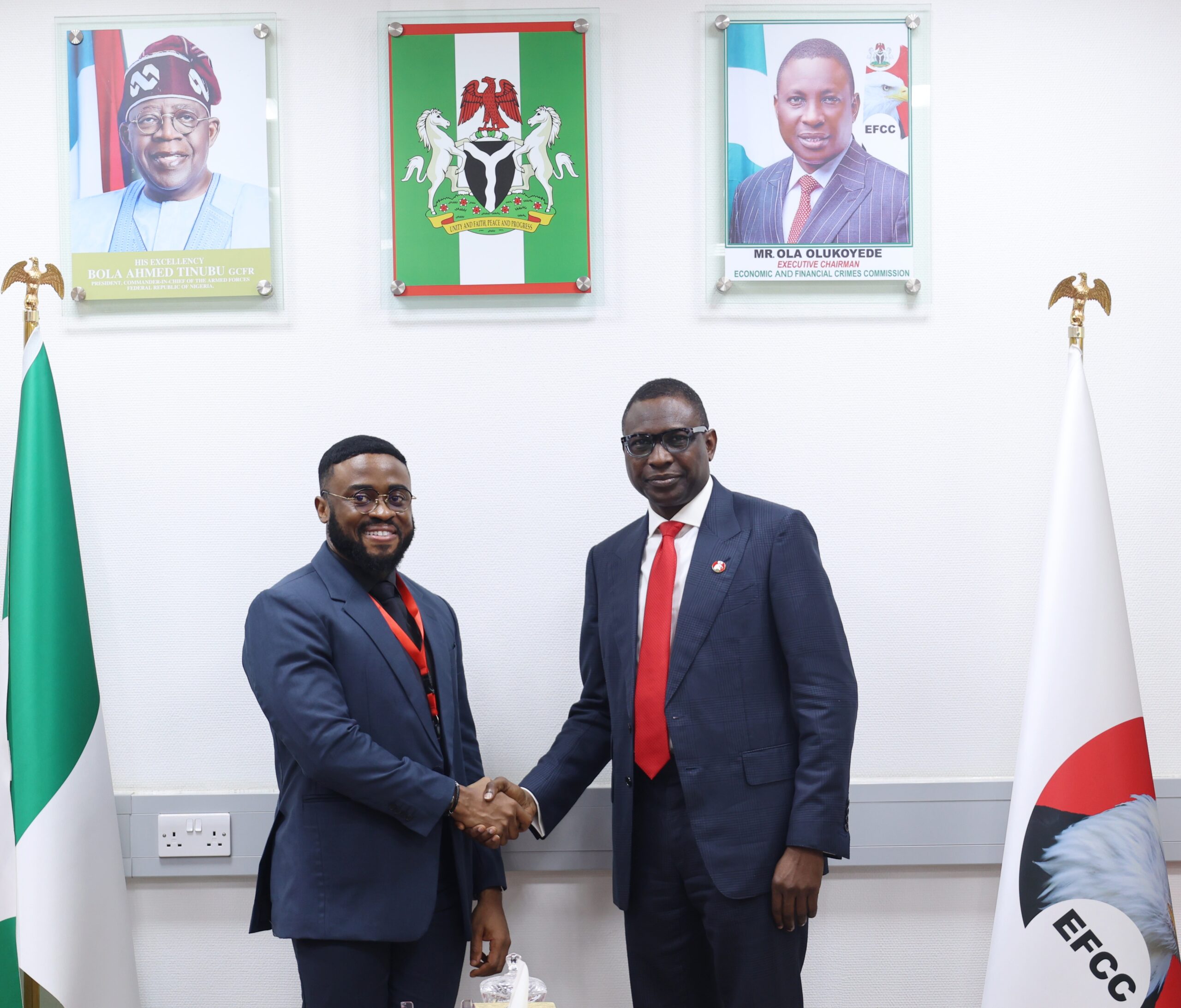
The Executive Chairman of the Economic and Financial Crimes Commission (EFCC), Mr. Ola Olukoyede, has stated that policy reforms are the most effective approach to combating corruption, economic crimes, and financial crimes.
He made the statement on Tuesday, August 4, 2026, when the Managing Director of the Nigerian Consumer Credit Corporation (CREDICORP), Uzoma Nwagba, led the corporation’s top management team on a courtesy visit to the EFCC’s corporate headquarters in Jabi, Abuja.
“Being part of the system, I did a bit of analytical presentation on how we can effectively curb corruption and financial crimes in Nigeria, and we came to the conclusion that it is not just the work of law enforcement agencies alone. As a matter of fact, law enforcement agencies should be at the lowest rung of the ladder in the fight against corruption and economic crimes. Policy reform is the best approach in the fight against corruption all over the world. It is when that fails that enforcement comes in,” he said.
He further described the CREDICORP scheme as one of the greatest legacies the administration of President Bola Ahmed Tinubu would leave for Nigerians, adding that any country without an effective consumer credit system creates conditions that encourage corruption.
According to Olukoyede, access to affordable consumer credit significantly reduces the incentive for public servants to engage in fraudulent practices.
“Any country that does not have a functional credit system cannot effectively fight financial crimes because its absence creates the propensity for people to commit such crimes,” he said.
He recalled stating during his confirmation hearing before the Senate that the fight against corruption, economic crimes, and financial crimes would become much easier if Nigeria implemented a robust consumer credit system. He expressed satisfaction that “eventually, the President came up with the idea.”
The EFCC Chairman linked the rising wave of cybercrime among young Nigerians to poverty and limited access to education, which, he said, necessitated the establishment of the Nigerian Education Loan Fund (NELFUND). He disclosed that Nigeria lost more than $500 million to cybercriminals in 2022 alone.

“I advocated for two things: a consumer credit scheme and NELFUND because of the challenge of internet fraud in our country. In 2022 alone, we lost over $500 million to the activities of cybercriminals, most of whom are young people who should be in school.
“We are not just interested in sending them to jail. When we interrogate some of them, they tell us, ‘We want to go to school. We want to graduate with certificates, but we cannot afford it.’ That was how the idea of NELFUND came about, and we said we needed to support the Fund.”
Commending the student loan programme, Olukoyede disclosed that it had already supported about 1.5 million students, thereby reducing the number of young people vulnerable to financial crimes.
“Effectively, that has taken about 1.5 million people off my docket of those who have the potential to commit financial crimes. The scheme has supported about 1.5 million students by paying their tuition fees and providing them with ₦20,000 monthly to support themselves. That is how to fight corruption,” he said.
Speaking on CREDICORP, Olukoyede observed that many public servants resort to corrupt practices because their earnings are insufficient to meet basic needs such as housing, transportation, education, and the welfare of their families.
He explained that if workers could access affordable mortgages and consumer loans repayable over an extended period, the pressure to acquire wealth through illicit means would be significantly reduced.

“If an average public servant believes that after working for 35 years, he can access credit to own a home and repay it over a long period, that will reduce the propensity to commit financial crimes,” he said.
The EFCC Chairman also disclosed that President Tinubu, in recognition of the successes of both the CREDICORP scheme and NELFUND, had approved the disbursement of ₦50 billion each from the EFCC’s Proceeds of Crime Account to the two intervention agencies.
“I believe you must have received the money by now because it has already been taken from our account. If you have not, follow up with the Central Bank of Nigeria (CBN),” he said.
While commending the performance of CREDICORP, Olukoyede urged its leadership to maintain the highest standards of transparency and ensure that recovered public funds are used solely for the benefit of Nigerians.
“The money is not EFCC money; it belongs to Nigerians. Please use it to benefit Nigerians, particularly public servants and civil servants. If a civil servant has access to credit, he probably will not steal.
“Again, I plead with you not to lend the proceeds of crime we are entrusting to you at interest rates above single digits, and do not repeat the mistakes of past intervention programmes,” he said.
He also advised the CREDICORP leadership to exercise due diligence in carrying out its responsibilities.
“Be careful about those working with you. When they bring anything for your approval, make sure you read it between the lines because you are the chief accounting officer. If anything goes wrong, you will be held accountable,” he warned.
In his introductory remarks, Nwagba disclosed that the visit was to express the corporation’s gratitude to the EFCC for its financial support.
He revealed that CREDICORP had disbursed about ₦47 billion in consumer credit to more than 301,000 Nigerians within two years while maintaining a 100 per cent repayment rate with no non-performing loans.
“The biggest message we have here today is simply to say thank you for remembering us,” he said.
He added that the corporation had set a target of assisting one million Nigerians with new consumer credit in 2026.
Nwagba noted that expanding access to credit serves as an anti-corruption tool by reducing the pressures that often drive people to engage in illicit financial activities.
He further explained that increased consumer credit stimulates economic growth because greater purchasing power enables Nigerians to buy locally produced goods and services, allowing businesses to expand and create more jobs.
He disclosed that the corporation is collaborating with the Central Bank of Nigeria (CBN) to develop a robust national credit infrastructure that will link borrowing records to the National Identification Number (NIN), enabling lenders to instantly verify applicants’ credit histories before granting loans.
Nwagba also stated that the scheme is expanding targeted programmes for youths, women, pensioners, and persons with disabilities. He added that it has financed 10,000 women to become first-time owners of commercial tricycles as part of efforts to promote economic inclusion.
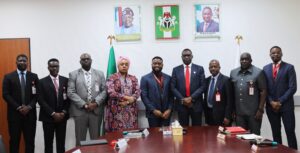
He concluded by thanking Olukoyede for his continued support, noting that the EFCC’s encouragement had strengthened the corporation’s resolve to expand access to consumer credit for more Nigerians.
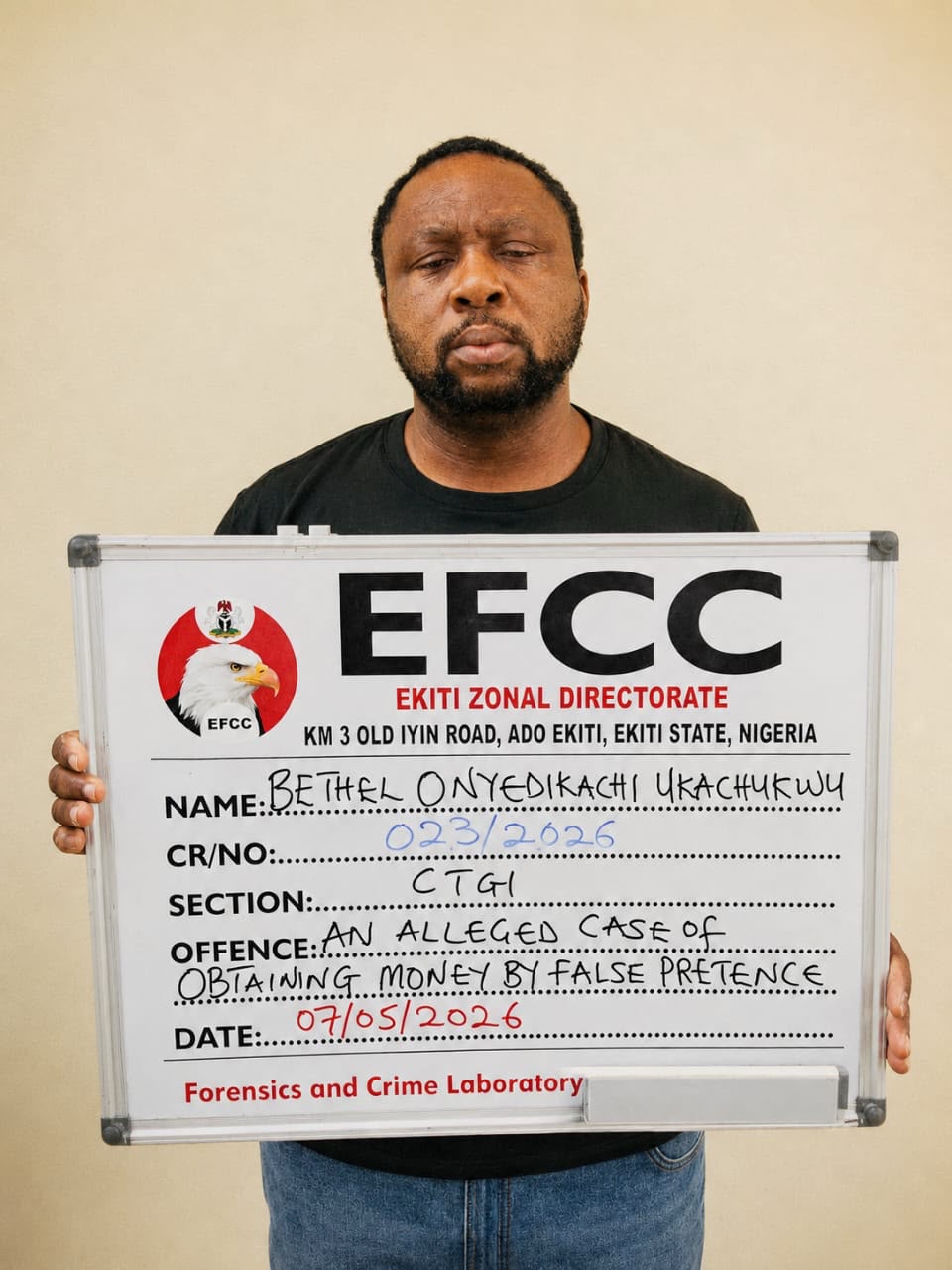
Justice Lekan Ogunmoye of the Ekiti State High Court, sitting in Ado-Ekiti, on Tuesday, July 28, 2026, convicted and sentenced one Bethel Onyedikachi Ukachukwu to two years’ imprisonment for car auction fraud.
The convict was arraigned by the Ekiti Zonal Directorate of the Economic and Financial Crimes Commission (EFCC) on a three-count amended charge bordering on obtaining by false pretence.
Specifically, he obtained the sum of Five Hundred Thousand Naira (₦500,000.00) from Mr. Kayode Aina Samuel under the false pretence that he would secure a bid for an auctioned vehicle through the Nigeria Customs Service.
Count One reads: “That you, Bethel Onyedikachi Ukachukwu, sometime on 15th April, 2026, at Ado-Ekiti, Ekiti State, within the jurisdiction of this Honourable Court, with intent to defraud, obtained the total sum of Five Hundred Thousand Naira Only (₦500,000.00) from one Kayode Aina Samuel under the pretence that you would use the money to bid for an auctioned vehicle for him through the Nigeria Customs Service, which pretence you knew to be false, thereby committing an offence contrary to Sections 1(1)(b) and 1(3) of the Advance Fee Fraud and Other Fraud Related Offences Act, 2006.”
Count Two reads: “That you, Bethel Onyedikachi Ukachukwu, on or about the 15th day of April, 2026, at Ado-Ekiti, Ekiti State, within the jurisdiction of this Honourable Court, dishonestly converted to your own use the sum of Five Hundred Thousand Naira Only (₦500,000.00), being the property of Mr. Kayode Aina Samuel, which was entrusted to you for the specific purpose of purchasing a motor vehicle on his behalf, and thereby committed an offence contrary to Section 295(2)(f) and punishable under Section 302(1) of the Criminal Law of Ekiti State, 2021.”
Following the defendant’s guilty plea, prosecution counsel, Saidu Yusuf, called the first prosecution witness (PW1), Emmanuel Onuminya, and tendered all the exhibits and evidence against the defendant. The court admitted the exhibits in evidence, after which the prosecution counsel urged the court to convict the defendant accordingly.
Defence counsel, T.A. Salami, pleaded with the court to temper justice with mercy, informing the court that the convict was remorseful for his actions and had made restitution to the petitioner.
Justice Ogunmoye thereafter convicted and sentenced the defendant to two years’ imprisonment, with an option of a fine of One Hundred and Fifty Thousand Naira (₦150,000.00).
The convict’s journey to the Correctional Centre began when he falsely presented himself as a Lieutenant in the Nigerian Army and fraudulently obtained the sum of Five Hundred Thousand Naira (₦500,000.00) from the petitioner under the pretence of securing a vehicle for him. However, he neither delivered the vehicle nor refunded the money. He has since been remanded at the Ado-Ekiti Correctional Centre.



Court Jails Fake Lawyer for Impersonation, Possession of Forged NBA Seal in Lagos

Policy Reform Best Approach to Fighting Corruption, Financial Crimes – Olukoyede

Data Privacy Breach: Court Orders X Corp to Unmask Parody Account User Within 14 Days or Pay ₦50m, Awards Student ₦20m Damages Against Violator
Nigerian nurses stage seven‑day warning strike over pay, staffing

Dangote Refinery to deploy 4,000 gas‑powered trucks for distribution

Sean Kingston sentenced to 3½ years in prison over $1 million fraud
-
Health1 year ago
Nigerian nurses stage seven‑day warning strike over pay, staffing
-
Energy12 months ago
Dangote Refinery to deploy 4,000 gas‑powered trucks for distribution
-
Entertainment12 months ago
Sean Kingston sentenced to 3½ years in prison over $1 million fraud
-
 Education1 year ago
JAMB sets 2025/26 university cut‑off at 150, bars under‑16
-
 Economy12 months ago
Nigeria approves plan to refinance ₦4tn power-sector debt
-
 Crime & Justice6 months ago
BREAKING: Two Chinese Directors Jailed 46 Years Each Over ₦3.4bn, $2.5m Crypto Fraud in Lagos
-

 Business6 months ago
Nigeria Revenue Service Collects ₦28.3trn in 2025, Sets ₦40.7trn Target for 2026
-

 Crime & Justice6 months ago
Police Arrest 24-Year-Old Over ₦48.5m Romance Fraud in Lagos