
Judiciary
BREAKING: Alleged Coup Plotters to Face Court April 22 as FG Files Treason Charges


The Federal Government has filed a 13-count charge before the Federal High Court in Abuja against a retired Major General, a retired Naval Captain, a serving police inspector, and three others over their alleged involvement in a plot to wage war against Nigeria and commit acts of terrorism.
The defendants—Major General Mohammed Ibrahim Gana (rtd), Captain (NN) Erasmus Ochegobia Victor (rtd), Inspector Ahmed Ibrahim, Zekeri Umoru, Bukar Kashim Goni, and Abdulkadir Sani—are scheduled to be arraigned on Wednesday, April 22, before Justice Joyce Abdulmalik of the Federal High Court, Abuja.
Also listed in the charge, but said to be at large, is a former Minister of State for Petroleum Resources, Timipre Sylva.
The charge, filed by the Office of the Attorney-General of the Federation and signed by the Director of Public Prosecutions of the Federation, Rotimi Oyedepo, SAN, accuses the defendants of offences ranging from treason and terrorism to failure to disclose security intelligence and money laundering linked to terrorism financing.
At the heart of the case is the allegation that the defendants conspired in 2025 to undermine the Nigerian state.
According to the charge, they “conspired with one another to levy war against the state in order to overawe the President of the Federal Republic of Nigeria,” an offence punishable under Section 37(2) of the Criminal Code.
The prosecution further alleged that the defendants had prior knowledge of a planned treasonable act involving one Colonel Mohammed Alhassan Ma’aji and others but failed to alert the authorities.
The charge states that they, “knowing that it was intended to commit treason, did not give the information thereof with all reasonable dispatch to either the President or a peace officer.”
In a related count, the defendants were also accused of failing to take preventive steps, as they allegedly “did not use any reasonable endeavours to prevent the commission of the offence.”
Beyond treason, the Federal Government is prosecuting the defendants for terrorism-related offences under the Terrorism (Prevention and Prohibition) Act, 2022.
The charge alleged that they “conspired with one another to commit an act of terrorism in the Federal Republic of Nigeria.”
Specifically, Inspector Ahmed Ibrahim and Zekeri Umoru are accused of participating in meetings linked to terrorist activities.
Prosecutors claim they acted “in a bid to further a political ideology that may seriously destabilize the constitutional structure of the Federal Republic of Nigeria.”
The charge also accuses the defendants of providing support for terrorism, alleging that they “knowingly and indirectly rendered support” to facilitate acts of terror.
In addition, the prosecution alleged deliberate suppression of intelligence, stating that the defendants “had information which would have been of material assistance in preventing the commission of the act of terrorism but failed to disclose it to the relevant agency as soon as practicable.”
The case further traces financial transactions allegedly linked to terrorism financing, with multiple defendants accused of handling proceeds of unlawful activities.
Bukar Kashim Goni is alleged to have “indirectly retained the aggregate sum of ₦50,000,000, being part of the proceeds of an unlawful act, to wit: terrorism financing,” while Abdulkadir Sani allegedly retained ₦2,000,000 from a similar source.
Zekeri Umoru, according to the charge, “without going through a financial institution, accepted a cash payment of ₦10,000,000,” and also retained an additional ₦8,800,000 suspected to be proceeds of terrorism financing.
Inspector Ahmed Ibrahim was also accused of taking possession of ₦1,000,000 linked to the same alleged scheme.
All financial-related counts were brought under the Money Laundering (Prevention and Prohibition) Act, 2022.
Judiciary
Court Admits Statements, Video Recordings Against Alleged Coup Plotters, Fixes December 7 for Trial
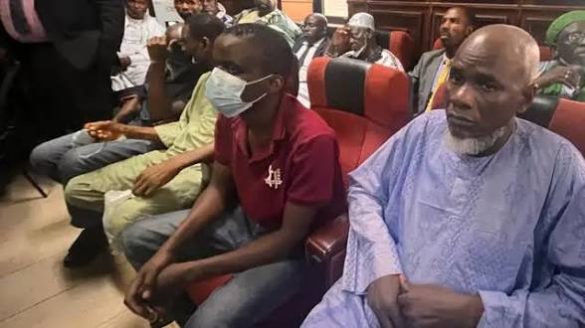
A Federal High Court sitting in Abuja has dismissed objections by alleged coup plotters to the admissibility of statements and video recordings made during their interrogation by the military over an alleged plot to overthrow the government of President Bola Tinubu.
When the case came up on Thursday, the trial judge, Justice Joyce Abdulmalik, upheld the Federal Government’s submission that the statements and video recordings were voluntarily made by the defendants during military interrogation.
In a ruling following a trial-within-trial conducted to determine the voluntariness of the defendants’ statements, Justice Abdulmalik held that there was no evidence that the statements and video recordings were obtained under duress.
She described the defendants’ allegations of duress as an afterthought and unbelievable in all ramifications.
The judge specifically dismissed claims of torture, inducement and the use of force by the military to obtain the defendants’ confessional statements and video recordings. She subsequently admitted the statements and recordings as exhibits against the defendants.
The alleged coup plotters are retired Major General Mohammed Gana, retired Navy Captain Erasmus Victor, Inspector Ahmed Ibrahim, Zekeri Umoru, Bukar Goni and Abdulkadir Sani, listed as the first to sixth defendants, respectively.
The Federal Government, through the Office of the Attorney-General of the Federation (AGF), arraigned the six defendants on April 22 on a 13-count charge marked FHC/ABJ/CR/206/2026, filed on April 20 by the Director of Public Prosecutions of the Federation (DPPF), Mr Rotimi Oyedepo, SAN.
The defendants were accused of offences bordering on treason, terrorism, failure to disclose security intelligence and money laundering linked to terrorism financing.
Justice Abdulmalik had, on May 11, ordered a trial-within-trial after defence lawyers objected to the admissibility of the statements and video recordings the prosecution sought to tender, arguing that they were not made voluntarily. The objection followed the prosecution’s presentation of four witnesses.
The fourth prosecution witness (PW-4), an army officer identified by the codename “AAA”, had earlier tendered video recordings of the defendants’ interrogations before the trial-within-trial commenced.
Following Thursday’s ruling, the judge fixed December 7 and 10 for the continuation of the trial.
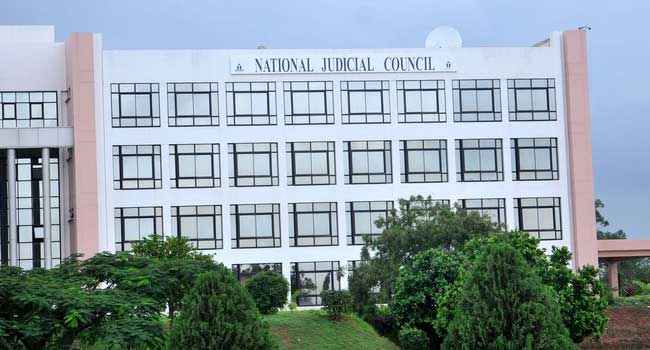
The National Judicial Council (NJC) has sanctioned three judicial officers with one-year suspensions without pay over acts of judicial misconduct, while six others have been cautioned or issued warning letters for various breaches of judicial ethics and due process.
The disciplinary actions, taken at the Council’s 112th meeting held on November 3, 2026, under the chairmanship of the Chief Justice of Nigeria, Justice Kudirat Kekere-Ekun, also include restrictions on the promotion of two of the suspended judges for three years.
The three suspended judicial officers are Justice Hannatu Mohammed Kabir of the Nasarawa State High Court, Grand Kadi Mohammed Sani Salihu of the Jigawa State Sharia Court of Appeal and Justice Sobere Biambo of the Rivers State High Court.
In a statement issued on Wednesday by the NJC’s Deputy Director of Information, Kemi Babalola-Ogedengbe, the Council said Justice Kabir was sanctioned for unlawfully detaining a litigant for 58 days over alleged disobedience of court orders without complying with the mandatory procedures for contempt proceedings.
The investigation committee found that the judge ordered the litigant’s arrest and detention without issuing and serving Forms 48 and 49 or instituting proper contempt proceedings.
It held that the alleged contempt was committed outside the court’s presence and could not lawfully be dealt with through summary proceedings. The committee also found that the judge’s actions violated the litigant’s right to a fair hearing. Consequently, the Council approved her suspension for one year without pay and barred her from being considered for elevation for three years.
Similarly, Grand Kadi Salihu was suspended for one year without pay for exceeding his judicial authority by reopening a judgment delivered by the FCT Upper Area Court.
The NJC found that the Grand Kadi constituted a committee to review the judgment and subsequently assigned the matter to a Higher Sharia Court judge, who received fresh evidence and delivered another judgment.
The Council held that the process amounted to an appeal against a valid judgment of a court of competent jurisdiction, which was subsequently set aside by the Jigawa State High Court. It also found that his conduct breached Rule 3.3.1 of the Revised Code of Conduct for Judicial Officers, 2016.
The Council directed the most senior Kadi of the Jigawa State Sharia Court of Appeal to perform the functions of the Grand Kadi during his suspension.
The third judicial officer, Justice Biambo of the Rivers State High Court, was sanctioned for issuing bench warrants and imposing fines on litigants in a civil dispute without following due process.
According to the NJC, the judge ordered the arrest of the petitioners for alleged disobedience of an interim injunction and subsequently imposed a fine of ₦300,000 on each of them without instituting contempt proceedings or serving Forms 48 and 49.
The investigation committee held that the alleged contempt occurred outside the court’s presence and could not lawfully be tried and punished summarily. The Council consequently approved his one-year suspension without pay and barred him from being considered for elevation for three years.
Beyond the suspensions, the NJC approved the issuance of warning letters or cautions to six other judicial officers following investigations into complaints bordering on disregard for court orders, delayed judgments, abuse of judicial powers and breaches of due process.
Among them is Justice Bello Kawu of the Federal Capital Territory High Court, who was found to have acted improperly by granting interim bail to former Attorney-General of the Federation, Abubakar Malami, SAN, despite a subsisting remand order issued by another judge of the same court.
The investigation committee found that Justice Kawu was aware that the remand order was due to expire at midnight on December 24, 2025, but granted interim bail on December 23, 2025, in conflict with the subsisting order.
The Council directed that he be issued a warning letter and placed on its Watch List.
Two Nasarawa State High Court judges, Justices Danjuma A. Oyigbenu and Isa Ebini Kana, were also found culpable of failing to deliver judgment in an appeal within the constitutionally prescribed 90-day period.
The NJC rejected their argument that the constitutional provision did not apply to appellate courts, noting that they admitted delivering judgment outside the stipulated period without providing a satisfactory explanation for the delay.
The Council directed that warning letters be issued to them for breaching Section 294 of the 1999 Constitution, as amended, and advised them to improve their case management.
Justice Mohammed Zubairu of the FCT High Court was cautioned and placed on the Council’s Watch List for entertaining an application and making orders after being informed that an appeal had already been entered at the Court of Appeal.
The investigation committee held that his actions amounted to disregard for the appellate court and bordered on judicial insubordination.
Similarly, Justice C. A. Ogbuagor of the Enugu State High Court was cautioned for allegedly displaying judicial impertinence, denying a party fair hearing and disregarding due process and court hierarchy by continuing proceedings despite a pending appeal and an application for a stay of proceedings.
The Council advised him to familiarise himself with the laws and procedures governing appeals.
Justice Chibuike L. Azuama of the Imo State High Court was also cautioned and placed on the Watch List after the NJC found that he granted an ex parte garnishee order freezing the bank accounts of Puma Energy, a company that was not a party to the substantive suit, thereby causing it substantial losses.
Meanwhile, the Council recommended 28 candidates for appointment to various judicial positions across five states and the Sharia and Customary Courts of Appeal in Plateau and Adamawa states.
The recommendations comprise 24 candidates for appointment as judges of the High Courts of Kano, Ebonyi, Edo, Adamawa and Ogun states; one Grand Kadi for the Plateau State Sharia Court of Appeal; one Kadi for the Adamawa State Sharia Court of Appeal; and two judges for the Adamawa State Customary Court of Appeal.
The candidates are expected to be sworn in by their respective state governors without delay.
In another significant decision, the NJC directed the Imo State Judicial Service Commission to include the name of the Acting Chief Judge and most senior judge of the state’s High Court, Justice Ijeoma Agugua, in the shortlist of candidates for appointment as substantive Chief Judge.
The decision followed a petition dated June 11, 2026, by Mr Bob Kay Njemanze, challenging her exclusion from the shortlist submitted by the State Judicial Service Commission.
The Council noted that although the State Judicial Service Commission has the constitutional responsibility to advise it on suitable candidates for appointment as Chief Judge, the NJC retains the authority to determine the suitability of persons presented for judicial appointments.
It consequently directed its secretariat to formally request the Imo State Judicial Service Commission to include Justice Agugua’s name in the shortlist.
The Council also considered reports on 35 petitions submitted by its Preliminary Complaints Assessment Committees. It dismissed 24 for lack of merit, recommended four for further investigation and placed one in abeyance because the matter was sub judice.
Two petitions against Justice B. M. Balarabe of the Kaduna State High Court and Justice Evelyn N. Anyadike were dismissed following their withdrawal by the petitioners.
A petition against Justice Peter O. Ikujuni of the Ondo State High Court was struck out because it had been leaked and published on social media, contrary to the provisions of the National Judicial Policy, 2016.
Another petition against Justice Abdullahi Mika’ilu of the Niger State High Court was dismissed for want of diligent prosecution.
However, the Council resolved that an investigation into a petition against Justice G. N. Ugbala of the Ebonyi State High Court should continue despite the petitioner’s notice of withdrawal.
The NJC also approved the retirement notifications of six judicial officers, including two Supreme Court justices, one Court of Appeal justice and three state High Court judges.
They are Justices Ibrahim Mohammed Musa Saulawa and Uwani Musa Abba Aji of the Supreme Court; Justice O. F. Omoleye of the Court of Appeal; Justice Ogechi Okehielem of the Abia State High Court; Justice Theresa Isidore Obot of the Akwa Ibom State High Court; and Justice Munir Muhammad Ladan of the Kaduna State High Court.
While Justices Saulawa, Omoleye and Okehielem have already retired, Justices Abba Aji, Obot and Ladan are due to retire on November 7, December 30 and December 31, 2026, respectively.
The Council commended the retiring judicial officers for their dedicated and meritorious service to the judiciary and the nation.
It also expressed condolences to the families of nine judicial officers who died between May 1 and September 26, 2026, as well as the Nigerian legal community.
The deceased include Justices Mohammed Nasir Yunusa of the Federal High Court, Kano Division; Sambo Sammy Daka of the Kaduna State High Court; Josephine Efunkumbi Oyefeso of the Lagos State High Court; Musa Mohammed Dallah of the Nasarawa State High Court; Bello Muhammed Shinkafi of the Zamfara State High Court; Edem Nyong Okokon of the Cross River State High Court; Kadi Aliyu Mani Yauri of the Kebbi State Sharia Court of Appeal; Justice Dorothy Sim Inwulale of the Kaduna State Customary Court of Appeal; and Justice Legor Torbira Senewo of the Rivers State Customary Court of Appeal.
The NJC prayed for the peaceful repose of their souls.
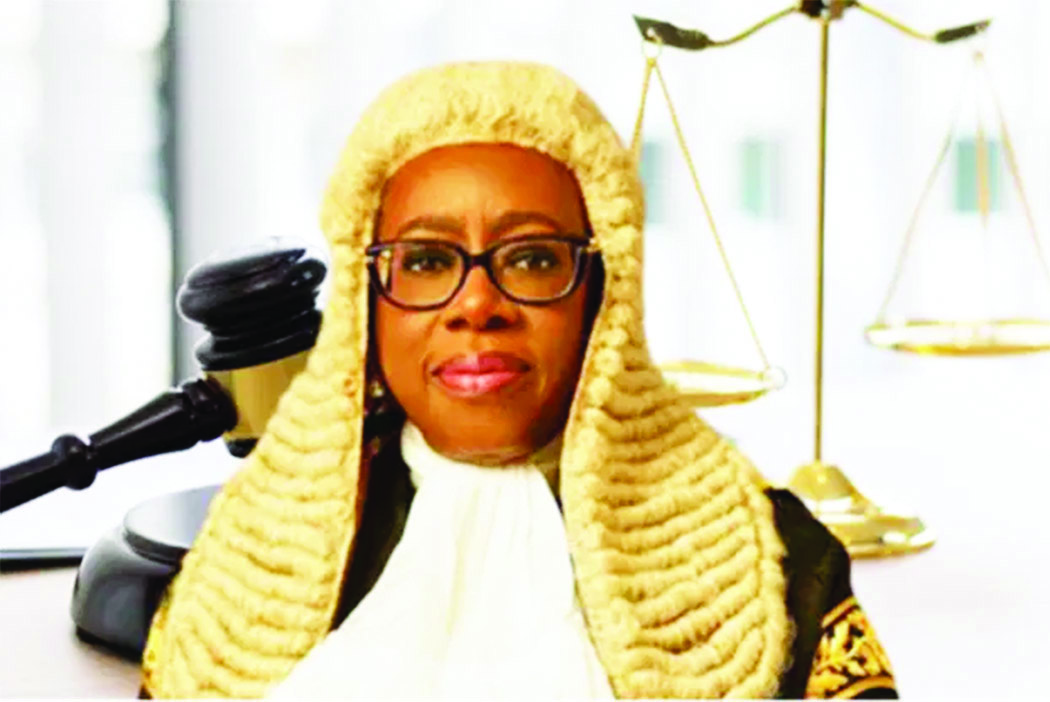
The Chief Justice of Nigeria (CJN), Justice Kudirat Motonmori Olatokunbo Kekere-Ekun, will chair the public presentation of six legal books authored by Senior Advocate of Nigeria (SAN), Dr ‘Kemi Pinheiro, on November 20, 2026.
The publications draw on Pinheiro’s nearly four decades of legal practice and examine critical areas of Nigerian law, including criminal litigation, arbitration, corporate insolvency, the administration of justice and emerging legal issues.
The collection comprises Strategies in Criminal Trial: A Practitioner’s Guide; Insolvency Law in Nigeria: Practice and Procedure; Arbitration Law and Practice in Nigeria; Defining Moments: Chronicles of a Silk (Volume One); The Compendium; and MULAN Legal: Trending Issues of Law and Faith – Essays in Honour of ‘Kemi Pinheiro, SAN.
The book on criminal trials examines key procedural and evidential issues in criminal proceedings, including the treatment and admissibility of electronic evidence.
Similarly, Insolvency Law in Nigeria: Practice and Procedure explores the legal framework governing corporate rescue, restructuring and insolvency proceedings under the Companies and Allied Matters Act 2020.
Arbitration Law and Practice in Nigeria examines Nigeria’s arbitration framework, with particular attention to the Arbitration and Mediation Act 2023 and the enforcement of arbitral awards. It also addresses the growing importance of alternative dispute resolution in resolving commercial disputes.
Beyond these practice-oriented publications, Defining Moments: Chronicles of a Silk (Volume One) chronicles Pinheiro’s professional journey and experiences in the legal profession.
The Compendium features scholarly essays by legal practitioners and academics, while MULAN Legal: Trending Issues of Law and Faith – Essays in Honour of ‘Kemi Pinheiro, SAN examines the intersection of law and faith within Nigeria’s plural legal system through contributions from various authors.
The six publications bring together practical legal guidance, academic research and professional reflections on the development of Nigerian law. Their subject matter is relevant to judges, legal practitioners, academics and other stakeholders in the administration of justice.
The public presentation, organised by Pinheiro LP, is expected to attract members of the judiciary, the Bar, academia and other stakeholders in the legal profession.



Court Admits Statements, Video Recordings Against Alleged Coup Plotters, Fixes December 7 for Trial

NJC Suspends Three Judges for One Year Without Pay, Cautions Six Others

Kekere-Ekun to Chair Presentation of Pinheiro’s Six Legal Publications

Alleged ₦1.06bn Fraud: EFCC Secures Court Order to Freeze Suspect’s Account

Alleged ₦1.4bn Oil Fraud: EFCC Re-Arraigns Nadabo Energy Boss, Ali Peters, Firm in Lagos

Again, Dangote Refinery Hikes Petrol To ₦1,175/Litre, Diesel To ₦1,620/Litre — Report
-
 EFCC2 weeks ago
Alleged ₦1.06bn Fraud: EFCC Secures Court Order to Freeze Suspect’s Account
-
 EFCC7 months ago
Alleged ₦1.4bn Oil Fraud: EFCC Re-Arraigns Nadabo Energy Boss, Ali Peters, Firm in Lagos
-
 News8 months ago
Again, Dangote Refinery Hikes Petrol To ₦1,175/Litre, Diesel To ₦1,620/Litre — Report
-
EFCC1 month ago
EFCC Hands Over Recovered ₦107m to Property Fraud Victim in Lagos
-

 EFCC8 months ago
Lagos Court Jails Man 18 Months for Defrauding Sterling Bank of ₦30m
-
 News9 months ago
Senate Retains Two-Year Jail Term for PVC Trading, Raises Fine to ₦5m
-

 Economy8 months ago
Naira Rebounds To ₦1,363.5/$
-

 Economy9 months ago
Naira Closes in the Red at ₦1,341.35/$