
Judiciary
₦9bn Debt Dispute: Petrocam Accuses Zenith Bank of Concealment, Seeks Lifting of Account Freeze as Court Reserves Ruling

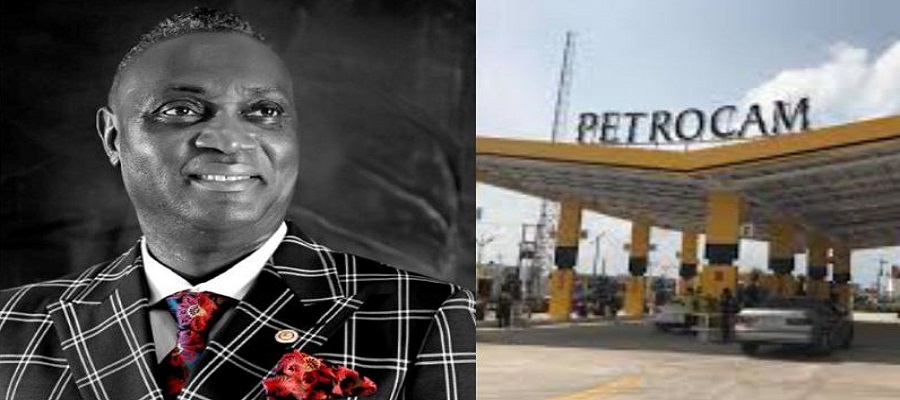
Justice Chukwujekwu Aneke of the Federal High Court, Ikoyi, Lagos, has fixed April 30, 2026, to rule on an application by Petrocam Trading Nigeria Ltd seeking to vacate an interim order freezing its bank accounts over an alleged ₦9.05 billion debt claimed by Zenith Bank.
The court had earlier granted the freezing order in Suit No: FHC/L/CS/393/2026 following an ex parte application by Zenith Bank, aimed at preserving funds allegedly owed by Petrocam and its principal, Patrick Ilo, as of May 31, 2025.
At the resumed hearing on Thursday, Petrocam’s counsel, Gboyega Oyewole (SAN), alongside S. Isaac John (SAN), leading Kolawole Salami and Ademola Adefolaju, urged the court to discharge the interim injunction granted on March 3, 2026.
He argued that the order was obtained through the suppression of material facts and has inflicted severe financial hardship on the company.
According to him, Petrocam is a viable business with extensive operations nationwide, and the freezing of its accounts has crippled its day-to-day activities without any real risk of dissipation of assets.
In an affidavit deposed to by the company’s Head of Trade, Sunmola Omolara, Petrocam maintained that it is not indebted to Zenith Bank, insisting that all obligations under a 2014 import finance facility have been fully liquidated.
The defendants stated that over ₦7.4 billion in petroleum sales proceeds were remitted directly to the bank.
These payments, they said, are supported by bank statements and domiciliation records involving major industry players such as Total Nigeria Plc and Oando Plc.
They further explained that the facility was structured to be repaid through petroleum sales proceeds and Sovereign Debt Notes issued under the Federal Government’s fuel subsidy regime.
Petrocam attributed any temporary financing gaps to delays by the Federal Government in servicing the Sovereign Debt Notes, adding that the obligations were eventually settled between 2019 and 2020.
The company claimed that interest on the short-term facility was cancelled, with payments made through the Debt Management Office.
The defendants stressed that Zenith Bank was fully aware of and actively participated in the subsidy-backed financing arrangement.
A central plank of Petrocam’s case is the allegation that Zenith Bank failed to comply with a directive of the Central Bank of Nigeria mandating a 100 per cent interest waiver on subsidy-related debts.
The company argued that while other banks complied with the directive, Zenith allegedly continued to impose interest charges on the facility up to 2023 and 2024.
Petrocam further claimed that regulatory panels had directed the bank to refund excess charges, but that the bank failed to comply.
In support of its position, the company tendered a Letter of Non-Indebtedness dated December 16, 2024, allegedly issued by Zenith Bank.
The document, according to the defendants, confirmed that Petrocam’s account was in credit and that it was not indebted to the bank, except for a contingent liability tied to a bank guarantee.
Relying on this letter, the defendants argued that Zenith Bank’s subsequent claim of a ₦9 billion debt is contradictory and undermines the legal basis for the freezing order.
Petrocam also challenged the procedure leading to the suit, contending that no valid demand notice was issued prior to the commencement of the action.
It described the alleged demand letter, which surfaced in June 2025 and was reportedly sent to the wrong address, as an afterthought.
The company maintained that its banking relationship with Zenith Bank had remained cordial over the years, with no prior indication of any outstanding indebtedness.
Beyond disputing the debt, the defendants accused the bank of negligence in managing the transaction.
They alleged that Zenith failed to secure the foreign exchange required to liquidate letters of credit, continued to impose charges despite regulatory interventions, and did not properly account for funds remitted under the facility.
These actions, they argued, significantly contributed to the dispute.
Patrick Ilo, the second defendant, is also seeking to have his name struck out of the suit.
He contended that he neither provided a personal guarantee nor assumed personal liability for the facility, maintaining that he acted solely as an agent of Petrocam.
He also denied allegations of fraud or diversion of funds, insisting that all inflows were domiciled with Zenith Bank, making any diversion impossible.
In their written address, the defendants argued that Zenith Bank failed to satisfy the legal conditions for the grant of an interlocutory injunction.
They maintained that no serious issue exists for trial, particularly in light of the bank’s alleged letter confirming non-indebtedness.
They further argued that the balance of convenience tilts in favour of Petrocam, which faces operational paralysis if the freezing order remains, whereas the bank can be compensated in damages if it ultimately succeeds.
The defendants also contended that the injunction was obtained in bad faith, without full disclosure of material facts, and without an undertaking as to damages.
Opposing the application, counsel to Zenith Bank, Chief Ajibola Aribisala (SAN), urged the court to dismiss Petrocam’s application and retain the freezing order.
Aribisala argued that the bank’s claim is founded on a subsisting indebtedness, maintaining that the issues raised by the defendants are matters for trial and do not justify setting aside the interim order at this stage.
He further submitted that the preservation order was necessary to protect the res in dispute, warning that lifting the restriction on the accounts could jeopardise the bank’s chances of recovering the alleged debt if judgment is eventually entered in its favour.
After taking arguments from both parties, Justice Aneke adjourned the matter to April 30, 2026, for ruling.
I am a lawyer. I studied law and have remained in the practice of law in memory of my late mother, who paid for me to study law at Holborn Law Tutors in the UK. I eventually continued my legal education at the University of Ibadan and graduated from there. She paid almost £7,000 upfront for one year, which was the total tuition fee for one year at that private law school. I will be eternally grateful to her. May her soul continue to rest in perfect peace. We all know what the exchange rate would be today.
In her memory, I decided to remain in the practice of law throughout my legal practice and thereafter, even until now. I tried my hand at property marketing at one time, but I had to drop it, even though I made some money from it. I stopped because it was affecting my legal practice.
There is nothing you do, from my point of view, outside your profession that will not affect your profession. Politics is one of them. Politics itself is an art and a profession, but I must add that, if it is truly for the people and the betterment of the people, it is a good one.
One of the most respected politicians in this country was Chief Obafemi Awolowo, of blessed memory. He practised law and politics successfully, but he was more of a politician. He used his knowledge of law to better the lot of so many people during his lifetime, and, till today, his name remains a reference point in using politics to serve humanity.
Mahatma Gandhi was first a lawyer before he became a politician to serve his people. His name is known more in politics than in law.
Chief F.R.A. Williams was a politician until he dropped politics to devote his entire life to law. He was not a crossbreed. His pathological devotion to law can be seen and read in the political history of Nigeria. In legal practice, to which he committed his entire life after publicly renouncing politics, his invaluable impact is evident in law books, legal records and law reports. He was an enigma and an icon who will forever be remembered, like others too numerous to name, who stayed in the service of law.
The lawyer is meant to be the beacon of society. The lawyer’s creed is to ensure that society is governed according to the law. Chief Gani Fawehinmi was the people’s lawyer. He used the law to better the lot of society. His foray into politics was disastrous because the perception of the lawyer in practice and the lawyer in politics are not symbiotic. They are strange bedfellows.
The people may hail the lawyer in law, but not the lawyer in politics. The ingredients you add to the soup that make a lawyer are different from the ingredients you add to the soup that make a politician. Femi Falana, SAN, my dear friend, was in the same boat as the late Chief Gani Fawehinmi. I feel him more in law now than when he did both.
A lawyer is known to keep to his or her word. Robert Traver, in his book The Anatomy of Murder, stated thus:
“That’s what makes the practice of law, like prostitution, one of the last of the unpredictable professions—both employ the seductive arts, both try to display their wares to best advantage and both must pretend enthusiastically to woo total strangers.”
Joseph Story lived from 1779 to 1845. He was an American lawyer, politician and jurist who served as an Associate Justice of the United States Supreme Court from 1812 until his death in 1845. He stated thus:
“I will not say….that ‘The law will admit of no rival’, but I will say that it is a jealous mistress, and requires a long and constant courtship. It is not to be won by trifling favours…”
Henry David Thoreau (1817–1862) was not a lawyer. He was an American essayist, poet and philosopher. He said:
“The lawyer’s truth is not Truth, but consistency, or a consistent expediency. Truth is always in harmony with herself, and is not concerned chiefly to reveal the justice that may consist with wrongdoing.”
I have gone through the lawyer’s creed, which is to uphold the rule of law, personal dignity and independence; to offer faithfulness, competence, diligence and good judgment while providing vigorous and honest representation without sacrificing professional ethics; to practise with fairness, integrity and civility, avoiding malicious tactics, unnecessary delays or abusive discovery; to show profound respect, candour and courtesy, ensuring that the search for truth and justice remains uncompromised; to the court or tribunal; to make justice accessible to the poor; and to protect the legal profession as a noble calling rather than a mere business.
I have gone this far in order to buttress the topic for discussion. The practice of law and politics can never converge. You cannot be a master of both. You can be successful in both, no doubt, but along the way, there are sacrifices that will most likely be at cross-purposes with the law.
Very few lawyers, like Chief F.R.A. Williams, of blessed memory, have sacrificed politics for law. The political lawyer will criticise anything, even when the law is clear that, without evidence, you are not expected to speculate.
Nowadays, many lawyers in politics take to the airwaves and the print media, especially in this era of social media, to generalise when making statements. How can a lawyer, trained in the practice of law, make general statements on any topic, especially these days when the judiciary, even in retirement, has become a topic for discussion without any evidence? How can people make general statements about Senior Advocates of Nigeria or lawyers generally?
It is pathetic that those who ought to know, by virtue of their level of education, professional qualifications and recognition in the legal community, are more guilty of this. How can a lawyer remain silent even when injustice happens in front of him and behind him, too, but he keeps quiet?
Many keep quiet these days because they want to satisfy their paymasters, even when it is glaring that the legal profession is suffering from their silence and/or complicity and complacency. These days, many voice personal opinions without let or hindrance for personal and political reasons. Some attack their professional colleagues, even the judiciary, when they cannot get what they want, but they must vent their anger on someone. Some are paid to attack or bring down their fellow colleagues, whether at the Bar or on the Bench.
I like the Yoruba language a lot. I am sorry I will not be able to interpret the idioms I will use:
“Tó bá máa jẹ Oshakala, jẹ Oshakala; tó bá máa jẹ Oshokolo, jẹ Oshokolo. Oshakala, Oshokolo kò yẹ ọmọ ènìyàn.”
“Arítení mo ń wí, àfi àpáàdì bó tiẹ̀ mọ́lẹ̀.”
“Kò sí ẹni tí a máa sí idi ẹ̀, tí a kò ní bá ẹ̀ẹ̀pà níbẹ̀.”
Apologies to those who will read this who are not Yoruba, or those who are Yoruba but do not understand these idioms.
To those who criticise, not out of holiness per se, not out of being a “straight” lawyer or simply out of a desire to be fair, but generalise in order to look good or elicit unmerited applause, look in the mirror and think back to whether you have not done anything you accuse others of doing.
In writing or criticising generally, come out, but most importantly, PRACTISE WHAT YOU PREACH BEFORE YOU CRITICISE.
Judiciary
Family Petitions Tinubu Over Alleged Threat by Faleke, OORBDA to Eject It from Agidingbi Land




NBA Commends Olukoyede on Impact in Fight Against Corruption, Seeks Closer Collaboration

SMEDAN Seeks EFCC Support in Promoting Home-made Products

EFCC Warns Lawyers Against Charging Clients in Foreign Currencies
Nigerian nurses stage seven‑day warning strike over pay, staffing

Dangote Refinery to deploy 4,000 gas‑powered trucks for distribution

Nigeria approves plan to refinance ₦4tn power-sector debt
-
Health1 year ago
Nigerian nurses stage seven‑day warning strike over pay, staffing
-
Energy1 year ago
Dangote Refinery to deploy 4,000 gas‑powered trucks for distribution
-
Economy1 year ago
Nigeria approves plan to refinance ₦4tn power-sector debt
-
 Education1 year ago
JAMB sets 2025/26 university cut‑off at 150, bars under‑16
-
 Crime & Justice7 months ago
BREAKING: Two Chinese Directors Jailed 46 Years Each Over ₦3.4bn, $2.5m Crypto Fraud in Lagos
-
 Entertainment1 year ago
Sean Kingston sentenced to 3½ years in prison over $1 million fraud
-

 Business7 months ago
Nigeria Revenue Service Collects ₦28.3trn in 2025, Sets ₦40.7trn Target for 2026
-

 Crime & Justice7 months ago
Police Arrest 24-Year-Old Over ₦48.5m Romance Fraud in Lagos