
Judiciary
NDLEA’s Media Trial of Ilumuanya Sparks “Public Court” Conviction Debate

Media trial by security agencies in Nigeria has been a source of concern for many decades, with legal experts, including members of the Bench and human rights organizations, persistently criticizing the act as despicable and a flagrant violation of citizens’ rights.
The practice of media trial among security agencies in Nigeria includes the premature parade of suspects before journalists’ cameras, declaring individuals wanted without proper and valid court orders, and the dissemination of misinformation or biased narratives regarding individuals or high-profile cases. These actions can harm reputations and undermine fair treatment of suspects.
In many instances, security agencies resort to pre-trial publicity—such as public parades and press releases—to create the impression that they are actively working, even when cases may lack robust and admissible evidence. This tactic often creates an impression of guilt, which can prejudice public opinion and potentially influence judicial outcomes.
Experts have argued that media trials create a hostile environment for suspects or accused persons, thereby undermining the fairness of the judicial process. Human rights activists also contend that when media-driven cases collapse in court, it erodes public trust in both security agencies and the judiciary.
Lawyers have consistently opposed the practice, noting that it undermines the rule of law and contradicts the constitutional provision of the presumption of innocence as guaranteed under the law.
In light of these concerns, experts strongly believe that security agencies must prioritize evidence gathering over public relations exercises to ensure that justice is properly served. Although it appears that the Police have improved in this regard in recent years due to sustained criticism, concerns persist.
Of particular concern is the continued violation of rights through media trials by the National Drug Law Enforcement Agency (NDLEA), which frequently publishes suspects’ pictures and personal details, as well as shares information about ongoing investigations before such individuals are brought before a court of law.
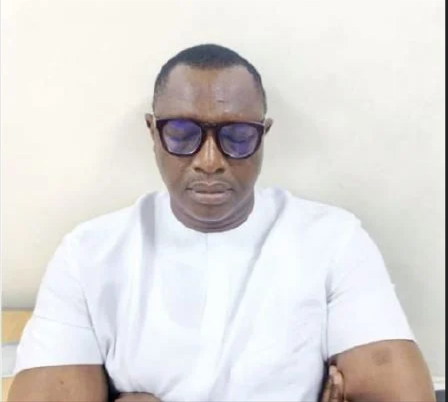
A recent example is the controversial declaration of Mr. Uzoma Valentine Ilomuanya as a wanted fugitive, despite the fact that he has been standing trial before the agency since 2021.
In a press statement signed by the NDLEA spokesperson, Femi Babafemi, the agency announced the arrest of a 58-year-old man, Uzoma Valentine Ilomuanya, who it claimed had been on its wanted list, as well as that of British authorities, for over 15 years.
The statement indicated that Ilomuanya was apprehended in Lagos on Monday, February 23, 2026, following what was described as a high-stakes and well-coordinated operation by officers of the Agency’s Special Operations Unit. The agency further described his arrest as the end of a “long-standing cat-and-mouse game with the law.”
It also alleged that Ilomuanya had previously been arrested in the United Kingdom in July 2011 for drug-related offences, granted administrative bail, and subsequently absconded.
According to the statement: “Typical of a recidivist, Ilomuanya was arrested in November 2018 in Nigeria by NDLEA operatives. He was subsequently charged before a Federal High Court in Lagos, after which he jumped bail and has been on the run since then.”
The Chairman of NDLEA, Brig. Gen. Mohamed Buba Marwa (Rtd), described the development as a significant breakthrough in the agency’s fight against drug trafficking and commended the officers involved for their diligence and professionalism.
However, what appears both shocking and troubling is that the information presented to the public is, at best, incomplete and, at worst, misleading.
Available records show that the NDLEA has been prosecuting Ilomuanya since 2021 at the Federal High Court, Ikoyi, Lagos, on drug-related charges. The case has been handled by two judges—Justice A.O. Awogboro and, subsequently, Justice Musa Kakaki, who is currently presiding over the matter.
Court records further reveal that Ilomuanya has appeared in court at least eighteen times during proceedings conducted by NDLEA prosecutors.
More concerning is the claim that Ilomuanya was arrested after a 15-year manhunt at an undisclosed location, whereas reports indicate that he was, in fact, apprehended within the court premises immediately after proceedings on February 23, 2026, and subsequently taken into custody.
This raises critical questions: if the NDLEA has been prosecuting Ilomuanya since 2021 and he has consistently appeared in court, on what basis was he declared a fugitive, and where exactly was the alleged manhunt?
The consequences of such half-truths in media trials amount to a violation of the presumption of innocence guaranteed under Section 36(5) of the 1999 Constitution of the Federal Republic of Nigeria.
Furthermore, media trials can lead to “public court” verdicts that are deeply prejudicial to suspects and extremely difficult to reverse, even when a court of competent jurisdiction ultimately finds the accused person innocent.
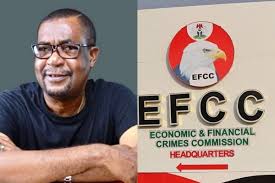
The Fifth Prosecution Witness (PW5) in the trial of former Minister of Power, Olu Agunloye, on Wednesday, June 10, 2026, clarified issues surrounding the certification of the extract of the minutes of the Federal Executive Council (FEC) meeting of May 21, 2003, before Justice Jude Onwuegbuzie of the Federal Capital Territory (FCT) High Court, Apo, Abuja, following a formal request by the Economic and Financial Crimes Commission (EFCC) for certified extracts of the meeting.
The former minister is facing prosecution on an amended seven-count charge bordering on alleged official corruption and the fraudulent award of the Mambilla Power Project contract worth $6 billion to Sunrise Power Transmission Company Limited.
The witness, Iliya John Iyakwari, an Assistant Director of Legal in the Federal Ministry of Justice, currently serving in the Federal Ministry of Power as an Assistant Legal Adviser since August 2014, stated during cross-examination by defence counsel, Adeola Adedipe, SAN, that the request for a certified copy of the extract of the FEC meeting of May 21, 2003, was received from the EFCC in July 2023.
He explained that the certification was eventually done in 2024 because, upon receipt of the request letter from the User Department, the Legal Department forwarded a memo to the EFCC dated July 27, 2023, but the initial copy sent to the Commission was not certified, prompting the EFCC to return it.
“It was after it was received by the EFCC in July 2023 that they realised the extract was not certified. So, in January 2024, a staff of the EFCC brought back Exhibit Three K to my Legal Adviser, and the name of the EFCC staff is Babangida.
“He brought it personally and reminded my director that it was not certified. My director then gave me the document to certify. That is why my lord will see on the face of the document that the date it was certified, January 26, 2024, is different from the date it was forwarded. It was in the process of certification that I mistakenly stamped the original forwarding letter dated June 27, 2023. After stamping the document, I gave it back to my director, who I believe handed it over to Babangida because I left them afterwards,” he said.
When asked whether his earlier testimony suggesting certification in June 2023 was contradictory, prosecution counsel, Abba Mohammed, SAN, defended the witness’ position, insisting that the testimony was not contradictory and that court records spoke for themselves.
“My lord, I object to this particular question anchored on Exhibit PW5A, which was just tendered in court. What I see in our record, and what I believe is reflected in the records of the court, is that in his explanation, he summarised that all these activities were done in June 2023; he never said the certification was done in 2023.
“This objection is founded on Section 36 of the 1999 Constitution of the Federal Republic of Nigeria, which is superior to the Evidence Act. We will rely on the record of the court, particularly line 16,” he said.
The witness was also asked whether the document tendered in court by Babangida during his testimony was a different extract of the FEC meeting from the one he certified.
The prosecution counsel again objected, arguing that the witness, in line with court procedure, was absent from the courtroom during Babangida’s testimony and therefore could not be cross-examined on a document that was not tendered through him. He cited the case of Buhari v. INEC & Others (2008).
Justice Onwuegbuzie adjourned the matter until June 18 and July 2, 2026, for the continuation of trial.
Judiciary
Alleged ₦2bn Nigeria Air Fraud: How Sirika Allegedly Used Ethiopian Airlines as Fake Nigeria Air – Witness
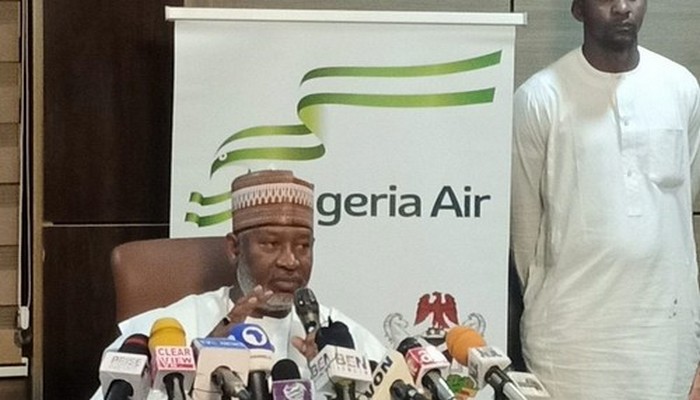
The 12th Prosecution Witness (PW12), Christopher Odofin, in the trial of former Minister of Aviation, Hadi Abubakar Sirika, on Wednesday, June 10, 2026, told Justice S.C. Oriji of the Federal Capital Territory (FCT) High Court, Abuja, how Sirika allegedly passed off an aircraft belonging to Ethiopian Airlines as the promised Nigeria Air by the government of the late President Muhammadu Buhari.
The decoy aircraft, adorned with the livery of the proposed Nigeria Air, landed on the tarmac of the Nnamdi Azikiwe International Airport, Abuja, on May 27, 2023, three days before the expiration of the Buhari administration, and was flown back to Addis Ababa on the morning of May 29, 2023, the handover date to the succeeding government.
Hadi Sirika is being prosecuted by the Economic and Financial Crimes Commission (EFCC) on an amended six-count charge bordering on alleged abuse of office and misappropriation of public funds amounting to over ₦2 billion, alongside his daughter, Fatima Hadi Sirika; son-in-law, Hamma Jalal Sule; and Al Buraq Global Investment Limited.
The contract for the establishment of Nigeria Air was awarded to Tianaero Nigeria Limited, a company belonging to Gabriel Tilmann, described as a close associate and friend of the former minister.
Reading from a portion of the contract agreement with Ethiopian Airlines, the witness, an investigator with the EFCC, stated: “The aircraft will depart from Addis Ababa (ADD) late evening of May 26, 2023, for it to be positioned early morning of May 27, 2023, at the Abuja (ABV) airport. The aircraft will stay at ABV airport for the static display of Nigeria Air livery until May 28, 2023. The aircraft will leave ABV airport early morning on May 29, 2023. The chartered flight will be operated by Ethiopian Airlines crew in Ethiopian Airlines uniforms. The Federal Government of Nigeria and Nigeria Air may put together local models who will be in Nigeria Air uniforms to pose for ceremonial pictures. The models may come to Addis Ababa so they may fly with the chartered flight to ABV.”
The witness told the court that the display of the aircraft at the Abuja International Airport was deliberately planned to coincide with the end of the first defendant’s tenure as Nigeria’s Minister of Aviation and Aerospace Development on May 29, 2023, and to present the aircraft as evidence of the actualisation of his promise to revive Nigeria Air.
He further stated that after the less-than-72-hour display, the Nigeria Air logo was removed from the aircraft and it was returned to Ethiopian Airlines in Addis Ababa.
According to the witness, the investigating team also established that Ethiopian Airlines entered into a charter arrangement for the static display of the Nigeria Air livery for only three days, from May 27 to May 29, 2023. This was based on documents and information received from the airline in a letter dated June 12, 2023, sent in response to the EFCC’s request for information regarding Nigeria Air.
He added that although the contract was purportedly for the establishment of Nigeria Air, the charter agreement with Ethiopian Airlines was entered into on May 24, 2023—just five days before the expiration of Sirika’s tenure—and was solely for a static display of the Nigeria Air logo on an aircraft.
All documents tendered in evidence by the prosecution were shown to have been duly signed, authorised, and accompanied by certificates of identification. None of the counsel representing the four defendants objected to their admissibility.
Among the exhibits was a compact disc containing a voice note from the first defendant, Hadi Sirika, marked as Exhibit 37, which prosecution counsel applied to be played in court at the next adjourned date.
Further in his testimony, the witness disclosed that although the contract for the start-up of Nigeria Air was initially awarded to Tianaero Nigeria Limited for over ₦299 million on April 4, 2022, the company later received a contract extension on October 17, 2022, increasing the sum to over ₦599 million. He alleged that the extension was granted on the instructions and directives of the first defendant due to his relationship with the company’s alter ego.
According to him: “The investigating team arrived at this position when the phone of one Enitan Muyiwa Abel, who was a Permanent Secretary in the first defendant’s ministry, was analysed, revealing a voice note sent to the Permanent Secretary while the first defendant was in Spain, instructing him to ensure that the contract was awarded to Tianaero Nigeria Limited.”
Justice Oriji adjourned the matter until June 17, 2026, for the continuation of the trial.
The Economic and Financial Crimes Commission (EFCC) has arraigned three men and another suspect currently at large before the Lagos State High Court sitting in Ikeja over an alleged ₦10 billion fraud involving Fidelity Bank Plc.
The defendants, identified as Ibeh Emmanuel, Chidiebere Ihekoronye, Akubuo Chimuanya, and Austen Peaks Aniekan, who is currently at large, were brought before Justice Olubusola A. Okunuga on Wednesday on a five-count charge bordering on conspiracy, obtaining by false pretence, possession of fraudulent documents, and forgery.
According to the EFCC, the defendants allegedly conspired to fraudulently obtain ₦10 billion from Fidelity Bank Plc through forged documents and false representations.
One of the charges alleged that on or about April 16, 2026, the defendants, with intent to defraud, conspired among themselves to obtain the sum of ₦10 billion from Fidelity Bank Plc by falsely claiming that Maton Engineering Limited, which maintains account number 4011468821 with the bank, had issued an irrevocable standing order directing the reservation, blocking, and transfer of the funds in favour of Prospera Finance Limited, domiciled with Wema Bank Plc.
The anti-graft agency stated that the representation was false and that the defendants were fully aware of its falsity at the time it was made.
The commission further alleged that the defendants attempted to obtain the said amount based on the same purported instruction and false representation.
According to the charge, the alleged offences contravene Sections 1(1)(a), 8(a), and 1(3) of the Advance Fee Fraud and Other Fraud Related Offences Act, 2006.
The EFCC also accused Emmanuel of being in possession of a document purportedly issued by Fidelity Bank Plc confirming the existence of blocked funds amounting to ₦10 billion in favour of Prospera Finance Limited, which he allegedly knew to be false.
In addition, the defendants were accused of forging a document titled, “Confirmation of Ten Billion Naira (₦10,000,000,000.00) Blocked Funds in Favour of Prospera Finance Limited,” purportedly emanating from Fidelity Bank Plc.
The commission alleged that the document was knowingly fabricated without lawful authority, contrary to Section 365(1) of the Criminal Law of Lagos State, 2015.
When the charges were read to them, the defendants pleaded not guilty.
Following their plea, prosecution counsel, A.A. Usman, urged the court to fix a date for trial and requested that the defendants be remanded in a correctional facility pending the determination of their bail applications.
Justice Okunuga subsequently ordered that the defendants be remanded at the Ikoyi Correctional Centre and adjourned the matter until June 18, 2026, for the hearing of their bail applications and the commencement of trial.
The EFCC stated that investigations into the alleged fraud are ongoing, while efforts are being intensified to apprehend the fourth defendant, Aniekan, who remains at large.



Alleged $6bn Mambilla Project Fraud: Witness Clarifies Certification of FEC Meeting Extracts

Alleged ₦2bn Nigeria Air Fraud: How Sirika Allegedly Used Ethiopian Airlines as Fake Nigeria Air – Witness

EFCC Arraigns Three Over Alleged ₦10bn Fidelity Bank Fraud in Lagos
Sean Kingston sentenced to 3½ years in prison over $1 million fraud
Nigerian nurses stage seven‑day warning strike over pay, staffing

Nigeria approves plan to refinance ₦4tn power-sector debt
-
Entertainment10 months ago
Sean Kingston sentenced to 3½ years in prison over $1 million fraud
-
Health11 months ago
Nigerian nurses stage seven‑day warning strike over pay, staffing
-
Economy10 months ago
Nigeria approves plan to refinance ₦4tn power-sector debt
-
 Energy10 months ago
Dangote Refinery to deploy 4,000 gas‑powered trucks for distribution
-
 Education11 months ago
JAMB sets 2025/26 university cut‑off at 150, bars under‑16
-
 Crime & Justice4 months ago
BREAKING: Two Chinese Directors Jailed 46 Years Each Over ₦3.4bn, $2.5m Crypto Fraud in Lagos
-
 Business4 months ago
Nigeria Revenue Service Collects ₦28.3trn in 2025, Sets ₦40.7trn Target for 2026
-

 Crime & Justice4 months ago
Police Arrest 24-Year-Old Over ₦48.5m Romance Fraud in Lagos