
EFCC
Policy Reform Best Approach to Fighting Corruption, Financial Crimes – Olukoyede


The Executive Chairman of the Economic and Financial Crimes Commission (EFCC), Mr. Ola Olukoyede, has stated that policy reforms are the most effective approach to combating corruption, economic crimes, and financial crimes.
He made the statement on Tuesday, August 4, 2026, when the Managing Director of the Nigerian Consumer Credit Corporation (CREDICORP), Uzoma Nwagba, led the corporation’s top management team on a courtesy visit to the EFCC’s corporate headquarters in Jabi, Abuja.
“Being part of the system, I did a bit of analytical presentation on how we can effectively curb corruption and financial crimes in Nigeria, and we came to the conclusion that it is not just the work of law enforcement agencies alone. As a matter of fact, law enforcement agencies should be at the lowest rung of the ladder in the fight against corruption and economic crimes. Policy reform is the best approach in the fight against corruption all over the world. It is when that fails that enforcement comes in,” he said.
He further described the CREDICORP scheme as one of the greatest legacies the administration of President Bola Ahmed Tinubu would leave for Nigerians, adding that any country without an effective consumer credit system creates conditions that encourage corruption.
According to Olukoyede, access to affordable consumer credit significantly reduces the incentive for public servants to engage in fraudulent practices.
“Any country that does not have a functional credit system cannot effectively fight financial crimes because its absence creates the propensity for people to commit such crimes,” he said.
He recalled stating during his confirmation hearing before the Senate that the fight against corruption, economic crimes, and financial crimes would become much easier if Nigeria implemented a robust consumer credit system. He expressed satisfaction that “eventually, the President came up with the idea.”
The EFCC Chairman linked the rising wave of cybercrime among young Nigerians to poverty and limited access to education, which, he said, necessitated the establishment of the Nigerian Education Loan Fund (NELFUND). He disclosed that Nigeria lost more than $500 million to cybercriminals in 2022 alone.

“I advocated for two things: a consumer credit scheme and NELFUND because of the challenge of internet fraud in our country. In 2022 alone, we lost over $500 million to the activities of cybercriminals, most of whom are young people who should be in school.
“We are not just interested in sending them to jail. When we interrogate some of them, they tell us, ‘We want to go to school. We want to graduate with certificates, but we cannot afford it.’ That was how the idea of NELFUND came about, and we said we needed to support the Fund.”
Commending the student loan programme, Olukoyede disclosed that it had already supported about 1.5 million students, thereby reducing the number of young people vulnerable to financial crimes.
“Effectively, that has taken about 1.5 million people off my docket of those who have the potential to commit financial crimes. The scheme has supported about 1.5 million students by paying their tuition fees and providing them with ₦20,000 monthly to support themselves. That is how to fight corruption,” he said.
Speaking on CREDICORP, Olukoyede observed that many public servants resort to corrupt practices because their earnings are insufficient to meet basic needs such as housing, transportation, education, and the welfare of their families.
He explained that if workers could access affordable mortgages and consumer loans repayable over an extended period, the pressure to acquire wealth through illicit means would be significantly reduced.

“If an average public servant believes that after working for 35 years, he can access credit to own a home and repay it over a long period, that will reduce the propensity to commit financial crimes,” he said.
The EFCC Chairman also disclosed that President Tinubu, in recognition of the successes of both the CREDICORP scheme and NELFUND, had approved the disbursement of ₦50 billion each from the EFCC’s Proceeds of Crime Account to the two intervention agencies.
“I believe you must have received the money by now because it has already been taken from our account. If you have not, follow up with the Central Bank of Nigeria (CBN),” he said.
While commending the performance of CREDICORP, Olukoyede urged its leadership to maintain the highest standards of transparency and ensure that recovered public funds are used solely for the benefit of Nigerians.
“The money is not EFCC money; it belongs to Nigerians. Please use it to benefit Nigerians, particularly public servants and civil servants. If a civil servant has access to credit, he probably will not steal.
“Again, I plead with you not to lend the proceeds of crime we are entrusting to you at interest rates above single digits, and do not repeat the mistakes of past intervention programmes,” he said.
He also advised the CREDICORP leadership to exercise due diligence in carrying out its responsibilities.
“Be careful about those working with you. When they bring anything for your approval, make sure you read it between the lines because you are the chief accounting officer. If anything goes wrong, you will be held accountable,” he warned.
In his introductory remarks, Nwagba disclosed that the visit was to express the corporation’s gratitude to the EFCC for its financial support.
He revealed that CREDICORP had disbursed about ₦47 billion in consumer credit to more than 301,000 Nigerians within two years while maintaining a 100 per cent repayment rate with no non-performing loans.
“The biggest message we have here today is simply to say thank you for remembering us,” he said.
He added that the corporation had set a target of assisting one million Nigerians with new consumer credit in 2026.
Nwagba noted that expanding access to credit serves as an anti-corruption tool by reducing the pressures that often drive people to engage in illicit financial activities.
He further explained that increased consumer credit stimulates economic growth because greater purchasing power enables Nigerians to buy locally produced goods and services, allowing businesses to expand and create more jobs.
He disclosed that the corporation is collaborating with the Central Bank of Nigeria (CBN) to develop a robust national credit infrastructure that will link borrowing records to the National Identification Number (NIN), enabling lenders to instantly verify applicants’ credit histories before granting loans.
Nwagba also stated that the scheme is expanding targeted programmes for youths, women, pensioners, and persons with disabilities. He added that it has financed 10,000 women to become first-time owners of commercial tricycles as part of efforts to promote economic inclusion.

He concluded by thanking Olukoyede for his continued support, noting that the EFCC’s encouragement had strengthened the corporation’s resolve to expand access to consumer credit for more Nigerians.
EFCC
Alleged $6b Mambilla Power Contract: Tinubu Hails EFCC for FG’s Victory at Arbitration Tribunal

President Bola Ahmed Tinubu has expressed appreciation to the Economic and Financial Crimes Commission, EFCC, for its investigation of the alleged fraudulent contract award of $6 billion for the construction of 3,960mw Mambilla Hydroelectric Power Station to Sunrise Power and Transmission Company Limited, SPTCL.
The Commission’s investigations were pivotal to the September 17, 2026 victory of the federal government over the contractor company at the International Arbitration Tribunal.
The President in celebration of the federal government’s victory over SPTCL hailed the Commission for its findings in the irregular contract award.
“On behalf of the Government and People of the Federal Republic of Nigeria, I strongly commend the tremendous efforts of the Attorney-General of the Federation and Minister of Justice, Prince Lateef Fagbemi and the entire team at the Federal Ministry of Justice for their efforts in this matter.
“I also commend the FRN defence team, led by Ms Elizabeth Oger-Gross and Mr Tolu Obamuroh, both of Paul Hastings LLP, for their professional and excellent defence of the country.
“I commend the patriotism and support of former President Olusegun Obasanjo, and late President Muhammadu Buhari, who testified in the case, which dated back to an illegal 2003 contract to build a 3,050-megawatt hydroelectric plant in Taraba State under a build-operate-transfer model. The Federal Executive Council never authorised the contract.
“I thank the other witnesses in this case, including former Ministers Babatunde Raji Fashola, SAN, and Suleiman Adamu, and the experts, for their active participation in defending Nigeria’s interest in the arbitration.
“I commend the National Security Adviser for his support and the Economic and Financial Crimes Commission for its investigation into the case.
“I want to assure you that while our country remains committed to partnering with genuine investors and honouring its legal obligations, it will continue to defend all opportunistic claims instituted against our commonwealth, strongly”
“Today’s ICC ruling clears the single biggest legal hurdle that has paralysed the Mambilla hydro power project for years” he said.
The International Arbitration Tribunal under the auspices of the International Chamber of Commerce, ICC, Paris, while ruling in favour of the country, rejected the damages of $680 million demanded by SPTCL as a settlement sum and interest in respect of another arbitration in which it is claiming over $2.7 billion in compensation and interest, relating to disputes associated with the construction of the 3960mw Mambila Hydroelectric Power Project in the arbitration instituted by the company against the federal government.
The former minister of power, Olu Agunloye had on May 22, 2003 awarded the project on a Build, Operate and Transfer Basis” to Sunrise Power and Transmission Company Limited, SPTCL.
Investigations by the EFCC established that the former minister awarded the contract without the approval of the National Executive Council, then chaired by former President Olusegun Obasanjo, making such award inconsistent with federal government’s procedure on award of contracts.
Investigations showed that the award was suffused with favouritism as the owner of the company, Leno Adesanya and the former minister are old time pals, who also in August, 2019 caused SPTCL to transfer the sum of N3,600,000.00 (Three Million Six Hundred Thousand Naira) to the former minister’s Guaranty Trust Bank account no.0022530926.
These non-standard developments surrounding the contract led to its revocation by the former President Muhammadu Buhari’s government and the subsequent prosecution of the minister on a seven-count charge, bordering on fraudulent award of contract and official corruption by the Commission.
Agunloye’s prosecution subsists since Wednesday, January 10, 2024.
He was arraigned before Justice Jude Onwuegbuzie of the Federal Capital Territory High Court, Apo, Abuja,
SPTCL dragged the federal government to the International Arbitration Tribunal, seeking monetary compensation for the contract the Tribunal established it never awarded in the first place.

The Economic and Financial Crimes Commission, EFCC, Lagos Zonal Directorate 2, Okotie-Eboh, Ikoyi, Lagos, on Thursday, September 17, 2026, handed over the sum of N140,000,000.00 (One Hundred and Forty Million Naira) to an investment and money-lending company, B4 Sail Limited.
The recovery of the funds, handed over in bank drafts by the Acting Zonal Director, Lagos Zonal Directorate 2, Assistant Commander of the EFCC, ACE I Bawa Usman Kaltungo, followed investigations into an alleged case of obtaining money by false pretence and diversion of funds involving one Jacob Oyebola Esan and companies linked to him.
In a petition submitted on April 20, 2026, B4 Sail Limited alleged that Esan, on behalf of his company, Geo Fields Plc, had approached the company in August 2025 for a N500,000,000.00 (Five Hundred Million Naira) loan facility to boost his business.
The loan facility, according to the petitioner, attracted an interest rate of 15 per cent per month and had a tenor of one month.
Investigation revealed that Esan, who is the first suspect, had previously obtained other loan facilities from the company, bringing his total loan exposure to N1,065,000,000.00 (One Billion, Sixty-Five Million Naira).
It was also revealed that Esan pledged shares held by him as collateral for the facilities through Calyx Securities Limited, the clearing house for the stocks, with the understanding that the shares would be subject to a lien in favour of B4 Sail Limited and that the company would have the first right of payment upon the sale of the shares.
The lien, investigation revealed, was communicated to B4 Sail Limited through a letter signed by the second suspect, Gbolahan Azeez Bello, Managing Director, Calyx Securities Limited.
Further investigation, however, revealed that the shares pledged as collateral had been sold without the knowledge of the petitioner, resulting in the suspect’s alleged default in repaying the facilities.
Consequently, the outstanding loan and accrued interest had risen to N2,250,500,000.00 (Two Billion, Two Hundred and Fifty Million, Five Hundred Thousand Naira).
Speaking during the handover ceremony, Kaltungo stated that the recovery “represents a further step in the Commission’s efforts to ensure that funds and assets recovered in the course of its investigations are appropriately returned to legitimate owners and victims in accordance with due process.
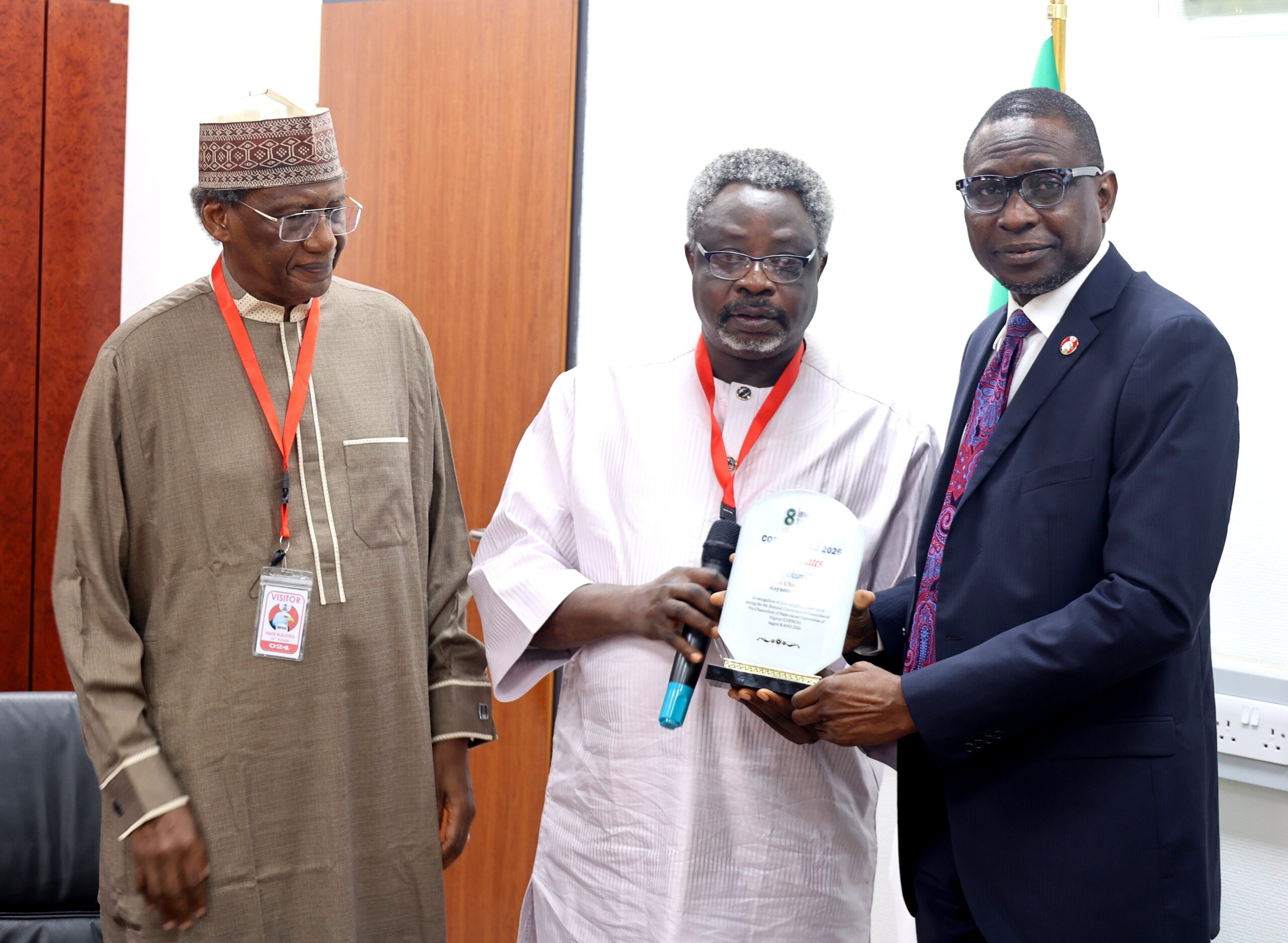
The Committee of Pro-Chancellors of State-Owned Universities in Nigeria (COPSUN) has commended the Executive Chairman of the Economic and Financial Crimes Commission (EFCC), Mr Ola Olukoyede, for his support for the Nigerian Education Loan Fund (NELFUND) and efforts to boost the education sector.
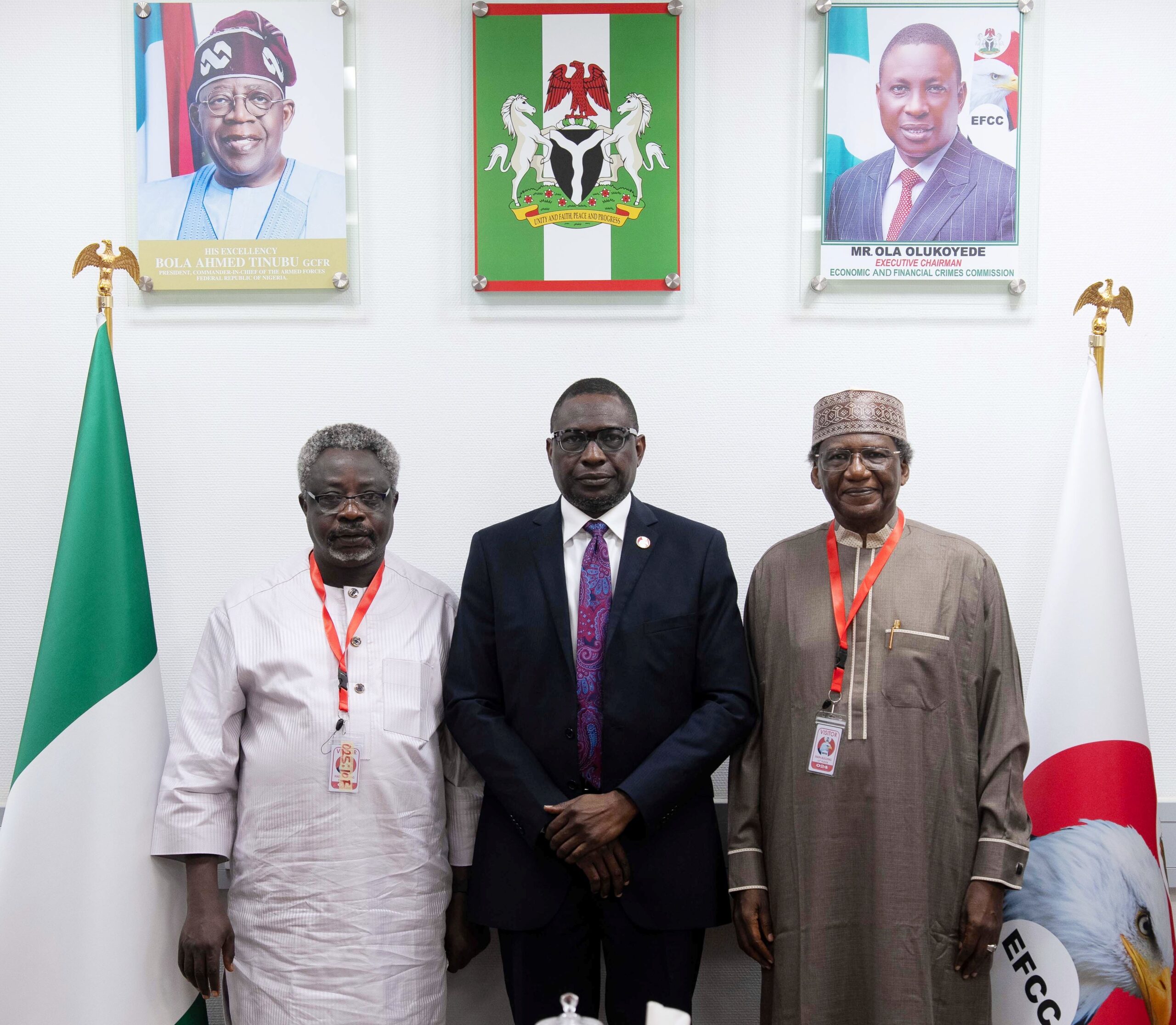
The Chairman of COPSUN, Prof. Ayodeji Omole, gave the commendation in Abuja on Thursday, September 17, 2026, when he led a delegation of the committee on a courtesy visit to the EFCC’s Corporate Headquarters.
Omole said the committee appreciated Olukoyede’s role in supporting NELFUND, noting that the scheme had helped prevent many students from dropping out of school.
He urged Olukoyede to sustain his support for the scheme while also calling for stronger collaboration between the EFCC and state-owned universities. 
The COPSUN Chairman said, “We appreciate the EFCC Chairman for the role he has played in NELFUND. As university policymakers, we know what NELFUND has done in the lives of some students who ordinarily would have dropped out of school as a result of financial constraints. We continue to encourage the Executive Chairman and his team to support the scheme.” 
He proposed that the Commission establish institutes in universities where some of its activities could be domiciled, stressing that such collaboration would promote knowledge-sharing and research.
Omole added that the EFCC could leverage the expertise of university lecturers in research and other areas, while the partnership could also provide an avenue to educate students on the dangers of corruption.
“We appeal to the Commission to collaborate with our universities. The Executive Chairman cannot fight corruption alone. The Commission needs the support of our lecturers and experts in the universities in areas such as research, among others. The opportunities will also be used to train our students on the dangers of corruption and cybercrime,” he said.
Olukoyede, in his response, thanked the lecturers for their dedication and commitment to upholding standards in state-owned universities.
He stressed the importance of education to national development, noting that depriving a country of a functional education system would undermine its progress and leadership.
Olukoyede said, “When you take the educational sector from a nation, it cannot be developed, and there will be no good leadership, as education gives knowledge.
“We need to discourage the younger ones from doing the wrong things and let them know the consequences. We need to encourage them to channel their skills to add value to themselves. That is what motivated us to develop a Cyber Research Academy. With time, we will incorporate the universities into this structure. The idea is to develop the skills of our younger ones in the areas of ICT and research.”
In August 2026, President Bola Tinubu directed that additional recovered funds from the Commission be diverted to NELFUND to sustain its growing funding obligations.



Alleged $6b Mambilla Power Contract: Tinubu Hails EFCC for FG’s Victory at Arbitration Tribunal

EFCC Hands Over Recovered N140m to Loan Firm in Lagos

COPSUN Applauds EFCC on NELFUND
Nigerian nurses stage seven‑day warning strike over pay, staffing

Dangote Refinery to deploy 4,000 gas‑powered trucks for distribution

Nigeria approves plan to refinance ₦4tn power-sector debt
-
Health1 year ago
Nigerian nurses stage seven‑day warning strike over pay, staffing
-
Energy1 year ago
Dangote Refinery to deploy 4,000 gas‑powered trucks for distribution
-
Economy1 year ago
Nigeria approves plan to refinance ₦4tn power-sector debt
-
 Education1 year ago
JAMB sets 2025/26 university cut‑off at 150, bars under‑16
-
 Entertainment1 year ago
Sean Kingston sentenced to 3½ years in prison over $1 million fraud
-
 Crime & Justice7 months ago
BREAKING: Two Chinese Directors Jailed 46 Years Each Over ₦3.4bn, $2.5m Crypto Fraud in Lagos
-

 Business7 months ago
Nigeria Revenue Service Collects ₦28.3trn in 2025, Sets ₦40.7trn Target for 2026
-

 Crime & Justice8 months ago
Police Arrest 24-Year-Old Over ₦48.5m Romance Fraud in Lagos