
Judiciary
Court Orders Arrest of PDP Factional Chairman, Turaki


Justice Kekemeke of an Abuja High Court on Thursday issued a bench warrant for the arrest of the factional National Chairman of the Peoples Democratic Party (PDP), Tanimu Turaki, SAN.
The judge issued the arrest warrant after Turaki failed to attend court for his arraignment on a charge filed against him by the Inspector-General of Police (IGP) for allegedly giving false information to the police.
At Thursday’s proceedings, the prosecution counsel, Usman Rabiu, informed the court that the matter was slated for Turaki to take his plea.
Rabiu noted that the defendant was absent in court despite being duly served with the charge and a hearing notice informing him of the day’s proceedings.
He relied on the provisions of Section 396(2) of the Administration of Criminal Justice Act (ACJA), 2015, urging the court to issue a warrant of arrest to compel the defendant’s appearance for arraignment.
Rabiu also faulted the defence counsel, Abdulaziz Ibrahim, SAN, for referring to a motion filed on behalf of the defendant seeking to quash the charge.
He argued that the defence could only challenge the validity of the charge after the defendant’s plea had been taken.
In response, Ibrahim urged the court to grant him five more days to file written addresses to demonstrate that the defendant’s presence was not required until the motion was determined.
In his ruling, Justice Kekemeke held that despite being aware of the proceedings—having been served with both the charge and the hearing notice—it was wrong for Turaki to fail to appear in court without any explanation.
The judge noted that the defence counsel did not deny that his client was served but failed to provide any reason for his absence.
He further held that under Section 396(2) of the ACJA, 2015, where a defendant who is aware of a pending charge deliberately stays away from court, the appropriate order is a bench warrant to ensure the defendant’s appearance.
Justice Kekemeke also ruled that the motion seeking to quash the charge was premature and could only be entertained after the defendant had taken his plea.
He subsequently ordered that a bench warrant be issued against Turaki to compel his attendance in court to answer the charge.
The case was adjourned until April 22 for Turaki’s arraignment.
Judiciary
BREAKING: Court Jails Chinese Nationals, Sentences Them to 50 Years for Illegal Export of Nigeria’s Lithium, Copper Minerals

Justice Akintayo Aluko of the Federal High Court, Lagos, has convicted and sentenced two Chinese nationals, Zhang Hong Lin and Gao Pei Hai, to 25 years’ imprisonment each for conspiring to illegally export Nigeria’s mineral resources.
The judge convicted the two defendants on all five counts preferred against them and sentenced each of them to 25 years’ imprisonment on Counts 1 to 5, with an option of a ₦10 million fine on each count.
Counsel to the Economic and Financial Crimes Commission (EFCC), H. U. Kofarnaisa, had arraigned the two defendants on Friday on a five-count charge.
Justice Aluko further ordered that the sentences should commence from the date of their arrest.
He also ordered the forfeiture of all the mineral resources involved in the case to the Federal Government.
The two convicts were arraigned alongside Gao Pei Yu, who remains at large, on a five-count charge bordering on conspiracy, unlawful possession, and the attempted exportation of strategic mineral resources without lawful authority.
According to the charge filed before the Federal High Court on May 28, 2025, the defendants conspired in Lagos to defraud the Federal Government of revenue accruing from the country’s solid mineral resources by attempting to export mica products, copper-bearing minerals, and lithium-bearing minerals without the approval of the appropriate authorities.
The prosecution alleged that the offences contravened Section 1(8)(a) of the Miscellaneous Offences Act, 1983.
The remaining counts alleged that, on May 9, 2025, the defendants unlawfully possessed various mineral resources intended for export without lawful authority, contrary to Section 8(b) of the Miscellaneous Offences Act, 1983.
The minerals listed in the charge included muscovite and lepidolite, both mica minerals; spodumene and petalite, which are lithium-bearing ores; as well as anhydrite, quartz, magnesite, bornite, and cuprite, which are associated with copper-bearing mineral resources.
After reviewing the evidence, Justice Aluko found that the prosecution had proved its case beyond reasonable doubt against the first and second defendants.
He consequently convicted them on all five counts, imposed the custodial sentences and fine options, and ordered the forfeiture of the seized mineral resources to the Federal Government.
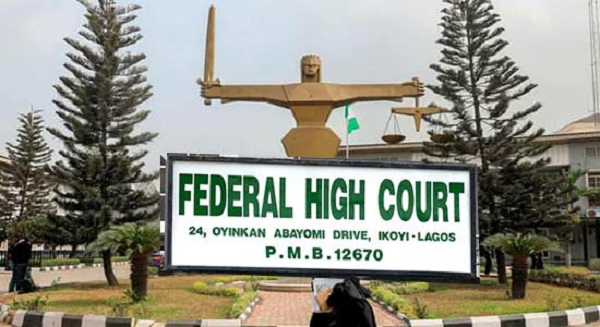
Justice Akintayo Aluko of the Federal High Court, sitting in Ikoyi, Lagos, on Thursday, July 30, 2026, convicted and sentenced Sunmonu Olasunkanmi Thaoban to four years’ imprisonment for money laundering.
Sunmonu was arraigned by the Lagos Zonal Directorate 1 of the EFCC on a two-count charge bordering on money laundering.
One of the counts reads: “That you, Sunmonu Thaoban Olasunkanmi, sometime in 2023, in Lagos and within the jurisdiction of this Honourable Court, whilst acting as a middleman, indirectly disguised the origin of the sum of ₦16,000,000 (Sixteen Million Naira), being illicit gains accrued from your unlawful act, by converting same to a black G-Wagon Jeep, 2018 model, with chassis number 1C4HJWEGJL893461, which vehicle forms part of the proceeds of your unlawful activity, and you thereby committed an offence contrary to Section 18(2)(a) and punishable under Section 18(3) of the Money Laundering (Prevention and Prohibition) Act, 2022.”
The defendant pleaded guilty to both counts.
Following his guilty plea, the prosecution counsel, H. U. Kofarnaisa, reviewed the facts of the case and urged the court to convict and sentence him accordingly.
Justice Aluko found Sunmonu guilty and sentenced him to four years’ imprisonment, with an option of a ₦1.8 million fine.
The court also ordered the forfeiture of the convict’s black G-Wagon Jeep and mobile device to the Federal Government of Nigeria.
In a related development, the court also convicted and sentenced four Bureau de Change (BDC) operators to 12 months’ imprisonment each for engaging in illegal foreign exchange transactions.
The convicts—Umar Muhammad Lamido, Yusuf Musa Yusuf, Abdulmuhimin Mahmud, and Muhammed Musa—were prosecuted by the Lagos Zonal Directorate 1 of the Economic and Financial Crimes Commission (EFCC), Ikoyi, on separate one-count charges bordering on illegal foreign exchange operations.
One of the charges against Abdulmuhimin Mahmud reads: “That you, Abdulmumin Mahmud, on the 23rd of July, 2026, in Lagos within the jurisdiction of this Honourable Court, engaged in a foreign exchange transaction other than through the official foreign exchange market and you thereby committed an offence contrary to Section 11(1)(a) of the National Economic Intelligence Committee Establishment (Etc.) Act, 1994, and punishable under Section 11(2) of the same Act.”
The defendants pleaded guilty to their respective charges.
Following their guilty pleas, the prosecution counsel, H. U. Kofarnaisa, reviewed the facts of the cases and urged the court to convict and sentence them accordingly.
Justice Aluko convicted the four defendants and sentenced each of them to 12 months’ imprisonment, with an option of a ₦100,000 fine.
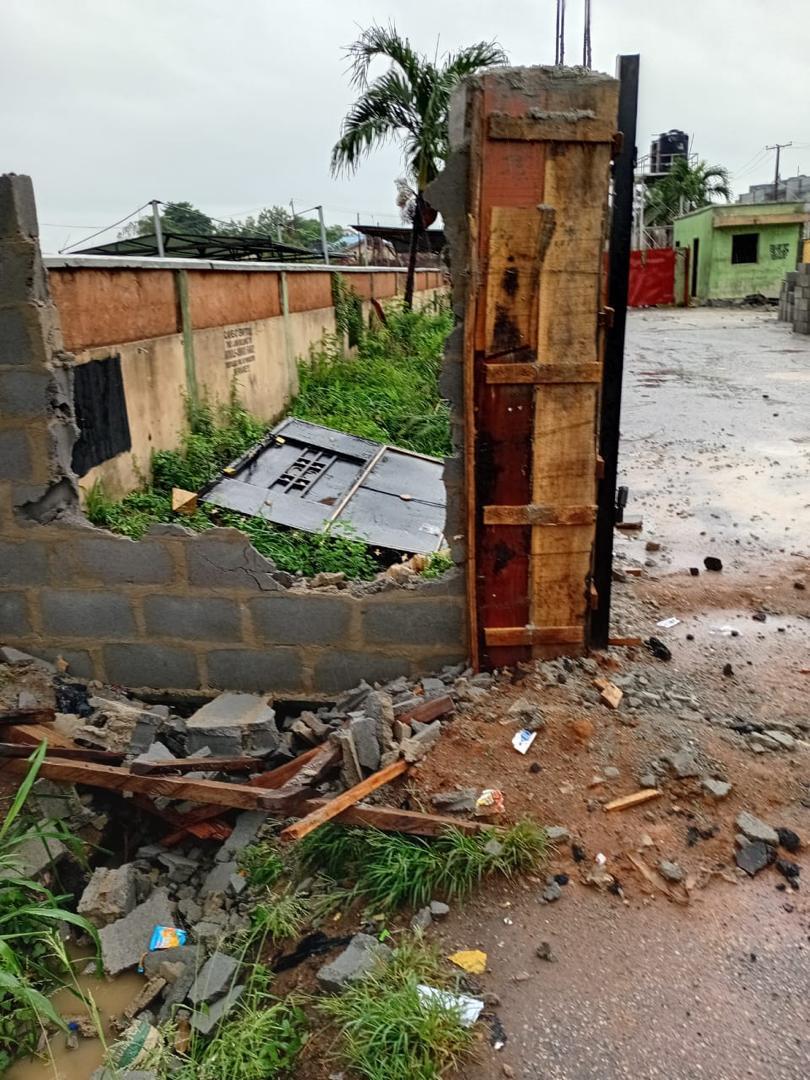
The Akinole-Oshiun Family has rejected the Ogun-Oshun River Basin Development Authority’s (OORBDA) claim to an 8,000-square-metre parcel of land along Lateef Jakande Road, Agidingbi, Ikeja, Lagos, insisting that the property has already been vested in the family by judgments of the High Court, the Court of Appeal, and the Supreme Court.
The family made the assertion in a rejoinder dated July 31, 2026, in response to OORBDA’s public disclaimer published on Page 12 of The Punch newspaper of July 29, 2026, in which the authority claimed ownership of the property known as “AY Homes Luxury Court.”
Signed by the Head of the Family, Chief Isiaka Lamina Akiti Akinole, and the Family Secretary, Hon. Fatai Abayomi Gbadebo Oshiun, the rejoinder described OORBDA’s publication as “erroneous” and “misleading,” saying it was issued to set the record straight and prevent what it described as falsehood from gaining public acceptance.
According to the family, the disputed property forms part of about 398 acres of land in and around Agidingbi, which it said had been conclusively declared its property through judgments of the High Court of Lagos State, the Court of Appeal, and the Supreme Court.
The family cited the decisions in Suit No. ID/216/77L, Appeal Nos. CA/L/517M/99, CA/L/649M/06, and CA/L/776/2014, as well as the Supreme Court judgment in SC/173/2009, which it said affirmed its legal and beneficial ownership of the land.
It further stated that, following the judgments, it obtained a writ of possession, which was executed by the Deputy Sheriff of the High Court of Lagos State in April 2019 in the presence of officers of the Nigeria Police Force, after which a Form “O” certifying the execution was issued.
The family also recalled that the execution of the writ prompted the Lagos State House of Assembly’s Committee on Rules and Business to conduct a public hearing on a petition over alleged illegal allocations of land covered by the Supreme Court judgment.
According to the rejoinder, officials of OORBDA participated in the hearing alongside other stakeholders, after which the Assembly resolved that the Lagos State Government should comply with the court judgments by recognising the family as the lawful owner of the 398-acre land and granting it unhindered access to the property.
The family further claimed that the Lagos State Government subsequently recognised its ownership by issuing land allocation documents, survey plans, building permits, and planning approvals covering plots within the Alausa Central Business District and along Lateef Jakande Road, including the disputed property.
It argued that OORBDA’s disclaimer was contemptuous of the subsisting judgments of superior courts and inconsistent with the state’s recognition of the family’s title.
The family also dismissed the Certificate of Occupancy displayed by OORBDA in its publication, contending that it could not supersede valid court judgments affirming the family’s ownership.
Urging members of the public, subscribers, consultants, agents, and other stakeholders to disregard OORBDA’s disclaimer, the family described the publication as self-serving, misleading, and capable of causing confusion and disrupting public peace in Agidingbi and its environs.
The rejoinder marks the latest development in the ownership dispute over the prime Agidingbi property. OORBDA had earlier warned the public against dealing with the land, maintaining that it belongs to the authority.
Efforts to obtain OORBDA’s response to the family’s rejoinder were unsuccessful as of the time this report was filed.



BREAKING: Court Jails Chinese Nationals, Sentences Them to 50 Years for Illegal Export of Nigeria’s Lithium, Copper Minerals

Court Jails Yahoo Boys’ Middleman, Four Men for Money Laundering, Illegal Forex Trading

Agidingbi Land Row: Family Accuses OORBDA of Defying Supreme Court Judgment
Nigerian nurses stage seven‑day warning strike over pay, staffing

Dangote Refinery to deploy 4,000 gas‑powered trucks for distribution

Sean Kingston sentenced to 3½ years in prison over $1 million fraud
-
Health1 year ago
Nigerian nurses stage seven‑day warning strike over pay, staffing
-
Energy12 months ago
Dangote Refinery to deploy 4,000 gas‑powered trucks for distribution
-
Entertainment12 months ago
Sean Kingston sentenced to 3½ years in prison over $1 million fraud
-
 Education1 year ago
JAMB sets 2025/26 university cut‑off at 150, bars under‑16
-
 Economy12 months ago
Nigeria approves plan to refinance ₦4tn power-sector debt
-

 Crime & Justice6 months ago
BREAKING: Two Chinese Directors Jailed 46 Years Each Over ₦3.4bn, $2.5m Crypto Fraud in Lagos
-

 Business6 months ago
Nigeria Revenue Service Collects ₦28.3trn in 2025, Sets ₦40.7trn Target for 2026
-

 Crime & Justice6 months ago
Police Arrest 24-Year-Old Over ₦48.5m Romance Fraud in Lagos