
Economy
Nigeria’s Inflation Rate Drops to 15.10%

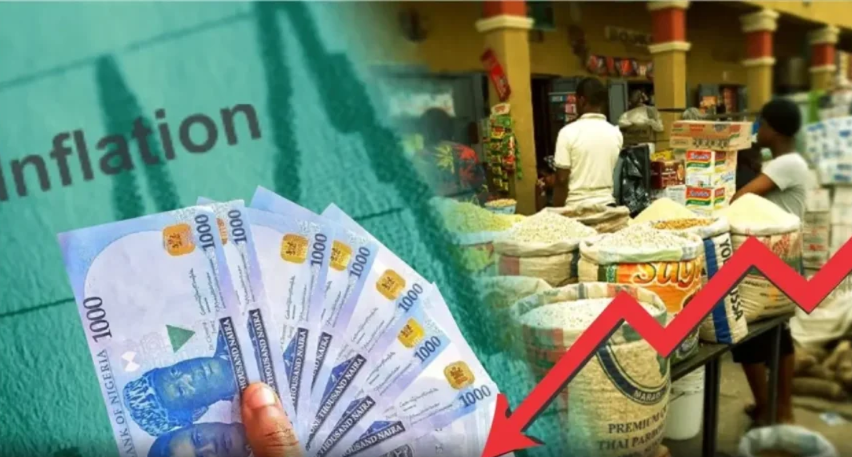
Nigeria’s headline inflation eased slightly to 15.10 per cent in January 2026, down from 15.15 per cent in December 2025, the National Bureau of Statistics (NBS) said on Monday.
At its previous release, the NBS adopted a revamped methodology, which it said better reflects real-world prices.
The latest data comes ahead of the Monetary Policy Committee meeting of the Central Bank of Nigeria (CBN), scheduled to be held between February 23 and 24, 2026.
The statistics office noted in its report that January’s headline inflation rate declined by 0.05 percentage points compared to December 2025.
On a year-on-year basis, inflation fell by 12.51 percentage points from the 27.61 per cent recorded in the corresponding period last year.
Month-on-month, headline inflation stood at 2.88 per cent, compared to 0.54 per cent in December 2025, indicating a faster rise in average price levels relative to the previous month.
Food inflation, which accounts for the largest share of household spending, recorded a sharp decline in January.
On a year-on-year basis, food inflation dropped to 8.89 per cent, down 20.73 percentage points from 29.63 per cent in January 2025.
Month-on-month, food inflation rose to 6.02 per cent, compared to 0.36 per cent in December 2025.
The NBS attributed the reduction to falling prices of key food items, including water yam, eggs, green peas, groundnut oil, soya beans, palm oil, maize, guinea corn, beans, beef, melon (egusi), cassava tubers, and white cowpeas, among others.
The 12-month average food inflation rate eased to 20.29 per cent in January 2026, down from 38.47 per cent a year earlier.
Core inflation, which excludes volatile agricultural produce and energy, stood at 17.72 per cent on a year-on-year basis in January 2026, down from 25.27 per cent in January 2025.
Month-on-month, core inflation increased to 1.69 per cent, compared to 0.58 per cent in December 2025.
The 12-month average core inflation rate eased to 22.84 per cent from 27.24 per cent recorded in January 2025.
Urban inflation fell to 15.36 per cent year-on-year during the period under review, down from 29.45 per cent in January 2025, while month-on-month urban inflation stood at 2.72 per cent.
The 12-month average urban inflation rate, however, rose to 22.30 per cent.
In rural areas, inflation stood at 14.44 per cent year-on-year, down from 25.04 per cent a year earlier.
Month-on-month, rural inflation rose to 3.29 per cent, while the 12-month average declined to 21.03 per cent from 30.79 per cent in January 2025.


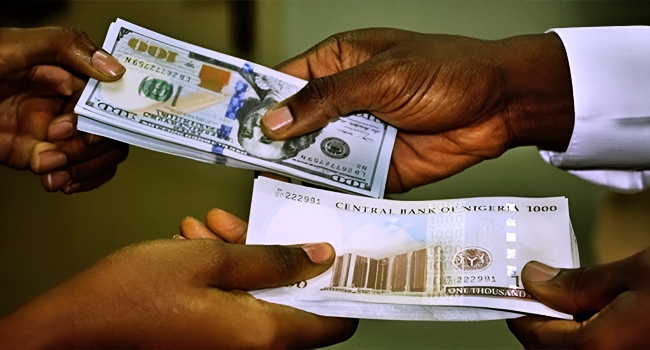
The naira on Friday strengthened to close at ₦1,363.5 per dollar at the official foreign exchange market.
The development followed a sharp depreciation at the start of the week, according to data tracked on the Central Bank of Nigeria’s (CBN) website.
The currency fell to ₦1,425 per dollar on Monday, down from ₦1,398 per dollar recorded the previous Friday.
Monday’s drop marked its weakest closing level since January 12, 2026, when it last traded at the same rate.
By Tuesday, the naira appreciated to ₦1,390.5 per dollar. Further gains were recorded on Wednesday, when the currency traded at ₦1,373.5 per dollar.
The recovery continued on Thursday, with the naira strengthening to ₦1,370 per dollar.
The currency gained more than ₦60 within four trading days after the early-week slide, extending the recovery on Friday to close at ₦1,363.5 per dollar.
The Central Bank of Nigeria said the country’s improving external reserve position could help cushion the naira against prolonged pressure.
According to the apex bank, Nigeria’s net foreign exchange reserves rose to $34.80 billion at the end of 2025, reflecting improved external liquidity.
The governor of the apex bank, Olayemi Cardoso, said ongoing monetary and foreign exchange reforms are aimed at strengthening market confidence and improving liquidity.
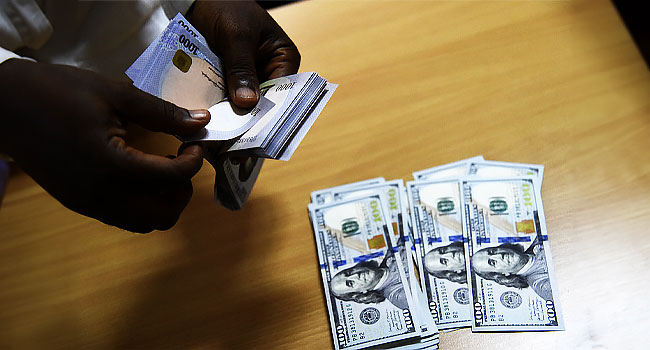
The foreign exchange (FX) market witnessed increased demand during Thursday’s trading session, driven by risk-off sentiment among Foreign Portfolio Investors (FPIs).
The heightened demand tilted the market toward the bid side, exerting upward pressure on rates. As a result, benchmark rates weakened across the board, shedding ₦3.24 to settle at ₦1,341.35/$.
The official window recorded increased dollar demand during the session, largely attributed to risk-off sentiment among FPIs.
The stronger demand tilted the market toward the bid side, exerting additional pressure on the naira across official benchmarks.
-
NFEM VWAP: Fell by ₦3.24 to close at ₦1,341.35/$.
-
CBN Closing Rate: Declined by ₦6.00, ending the day at ₦1,346.00/$.
Throughout the session, intraday trades fluctuated between a high of ₦1,350.00 and a low of ₦1,332.00.
Market analysts suggest that the naira’s near-term direction will continue to be influenced by prevailing supply-and-demand dynamics, as the apex bank maintains efforts to stabilise the foreign exchange market.



EFCC Hands Over $225,895, ₦62.79m Recovered Funds to Foreign Victims

Naira Rebounds To ₦1,363.5/$

Lagos Residents Protest Unreliable Power Supply, Demand Immediate Action

Sean Kingston sentenced to 3½ years in prison over $1 million fraud
Nigerian nurses stage seven‑day warning strike over pay, staffing

Nigeria approves plan to refinance ₦4tn power-sector debt
-
Entertainment7 months ago
Sean Kingston sentenced to 3½ years in prison over $1 million fraud
-
Health8 months ago
Nigerian nurses stage seven‑day warning strike over pay, staffing
-
Economy7 months ago
Nigeria approves plan to refinance ₦4tn power-sector debt
-
 Energy7 months ago
Dangote Refinery to deploy 4,000 gas‑powered trucks for distribution
-
 Education8 months ago
JAMB sets 2025/26 university cut‑off at 150, bars under‑16
-

 Crime & Justice1 month ago
BREAKING: Two Chinese Directors Jailed 46 Years Each Over ₦3.4bn, $2.5m Crypto Fraud in Lagos
-
 Crime & Justice1 month ago
EFCC Arraigns One for ₦20m Fraud in Maiduguri
-

 EFCC1 month ago
EFCC Arraigns Ex-BSIEC Chairman, 10 Others Over Alleged ₦1.1bn Election Funds Fraud