
EFCC
Embrace Anti-Corruption Crusade, Olukoyede Charges Youths

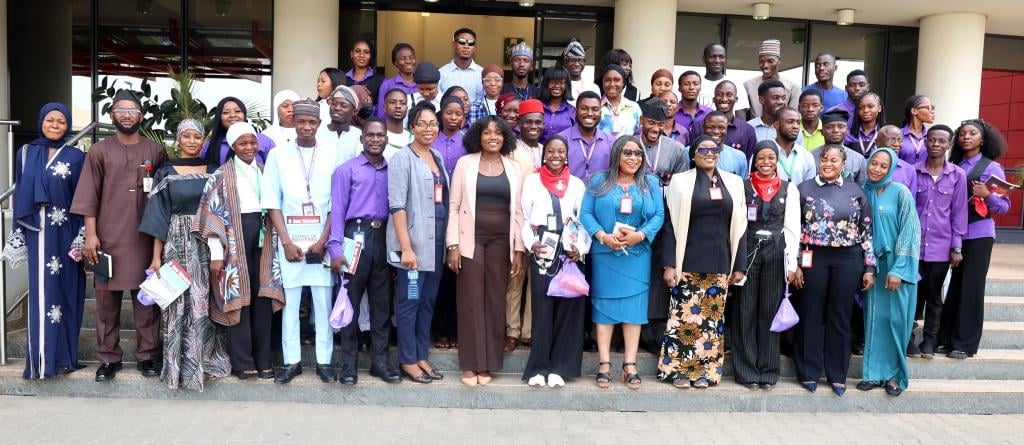
The Executive Chairman of the Economic and Financial Crimes Commission (EFCC), Ola Olukoyede, has charged youths across the country to join the Commission’s anti-corruption crusade, noting that the future of the nation largely depends on the younger generation’s commitment to integrity, transparency, and accountability.
He gave the charge recently when students of Federal Polytechnic, Nasarawa State, visited the Commission on a study tour at the EFCC’s Corporate Headquarters in Jabi, Abuja.
Olukoyede, who was represented by Deputy Commander of the EFCC (DCE) Nwanyinma Okeanu, underscored the strategic role of young people in shaping the nation’s destiny.
“The country’s future depends on you. You must therefore join the EFCC in cleansing the nation of all forms of economic and financial crimes for a better tomorrow,” he said.
He urged the students to contribute their quota to national development by upholding integrity and resisting negative influences.
“You need to do your part in developing this nation. Avoid bad company, focus on your studies, and be good ambassadors of your parents, your institution, your community, and the nation at large. Any country whose youth population is involved in fraud cannot have an assured future. Join the EFCC in making Nigeria great,” he added.
The EFCC boss further admonished the students to stay away from cybercrime and other fraudulent practices, noting that short-term gains from criminal activities often lead to long-term consequences, including reputational damage and imprisonment.
On her part, the Head of Enlightenment and Re-Orientation Unit of the Commission, Assistant Commander of the EFCC (ACE II) Aisha Mohammed, emphasized the importance of youth participation in the anti-corruption fight. She enlightened the students on the tripartite mandate of the EFCC: prevention, investigation, and prosecution of economic and financial crimes.
She noted that the Commission has strengthened its preventive frameworks through the establishment of Integrity Clubs and Zero Tolerance Clubs in primary, secondary, and tertiary institutions across the country, as well as sustained collaboration with critical stakeholders.
“You are the future of this country. If you get it right, Nigeria will get it right. Be content. Don’t allow anyone to pressure you into living beyond your means. Always cut your coat according to your cloth,” she said.
In a presentation on cybersecurity, Inspector of the EFCC, Kayode Eniola, educated the students on the nature and consequences of cybercrime. She described cybercrime as criminal activity perpetrated through digital communication tools and internet-enabled platforms.
She identified phishing, hacking, and online romance scams as common forms of cybercrime.
“Hacking involves unauthorized access to another person’s system or network,” she explained, adding that victims of cybercrime often suffer financial losses, privacy breaches, and reputational damage.
She further advised the students to adopt preventive measures such as using strong passwords, updating their software regularly, avoiding suspicious links, and logging out of shared devices after use.
The visit featured an interactive session during which students asked questions about the Commission’s operations, as well as a quiz competition designed to assess their understanding of the lectures. Two students emerged as winners and were presented with souvenirs.
In her closing remarks, Chioma Obasi, a student of Federal Polytechnic, Nasarawa State, expressed appreciation to the EFCC for the warm reception and the insights gained during the visit. She described the engagement as enlightening and impactful, noting that the interaction strengthened the bond between her institution and the Commission.
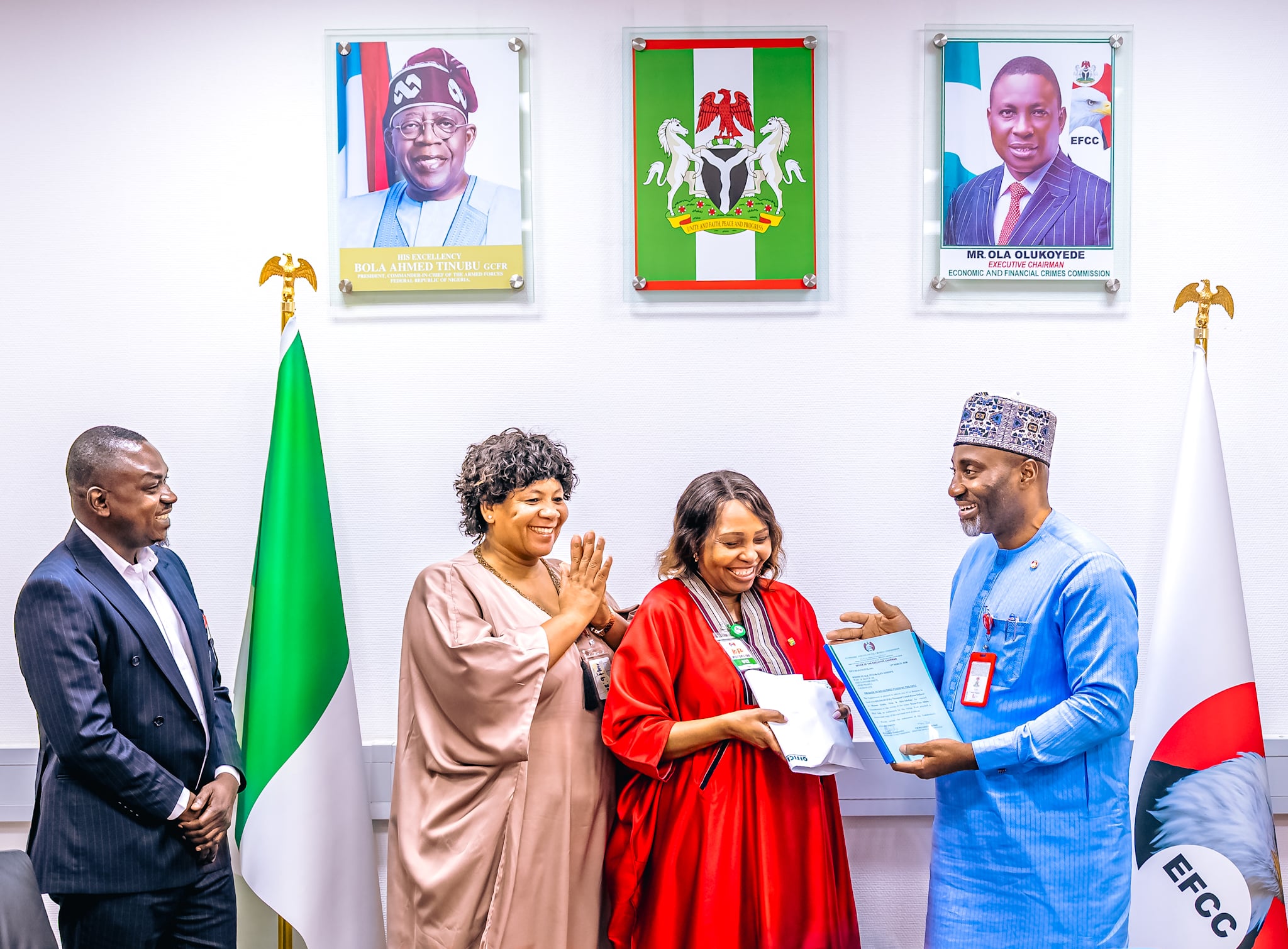
The Economic and Financial Crimes Commission (EFCC), on Friday, March 13, 2026, handed over a total sum of $225,895 (Two Hundred and Twenty-Five Thousand, Eight Hundred and Ninety-Five United States Dollars) and ₦62,790,000 (Sixty-Two Million, Seven Hundred and Ninety Thousand Naira) to foreign victims of fraud from the United States and South Africa.
The handover ceremony was presided over by the Secretary to the Commission, Mohammed Hammajoda, and featured representatives of the victims’ nations, including the Assistant Law Enforcement Attaché of the Federal Bureau of Investigation (FBI), Mike Fukuda, and the Acting High Commissioner of South Africa to Nigeria, Lindi Mminele.
Commenting on the handover, Hammajoda noted that corruption remains a global menace that requires collective efforts to combat.
“Corruption is like a cancer that eats into every fabric of our lives. It is cross-border in nature; therefore, we must join hands collectively to defeat it. Corruption has no borders, and if we do not fight it together, it will consume us all,” he said.
He added that the EFCC remains committed to ensuring that recovered proceeds of crime are returned to their rightful owners.
“From our end at the EFCC, we are doing our best. Whatever we recover, we return to the victims, whether individuals, corporate organisations, governments or international victims. We also expect the same gesture from our sister agencies and collaborators across the world,” he said.
Speaking further on collaboration, restitution and asset recovery, Hammajoda urged the Commission’s international partners in the United States, Europe, Asia, South Africa and other parts of the world to respond promptly to requests for cooperation.
“Whatever is due to Nigeria, we expect to receive it just as we make recoveries available to you. Whether you are in America, Europe, Asia or Africa, we expect the same cooperation,” he said.
During the ceremony, Fukuda received $7,440 on behalf of American victims of fraud: Drago Boskovic, Anh Ngoc Nguyen, and three others, while Holly Ngo received $175,895 and ₦62,790,000.
Similarly, the Acting High Commissioner of South Africa, Mminele, alongside the victim’s lawyer, Elisha Sunday, received $50,000 on behalf of Ennis-Flint Africa Limited, a South African company.
Speaking on behalf of the victims, Mminele expressed appreciation to the EFCC for its efforts in recovering and restituting the funds.
“I would like to express my gratitude for the good work the EFCC has been doing. South Africa has witnessed that what the Commission is doing is real, as the victim company has experienced and seen the results of the work done,” she said.
She added that the South African High Commission values its longstanding relationship with the EFCC and looks forward to continued cooperation.
Also speaking, the lawyer to the South African victim company, Elisha Sunday, commended the Commission for its relentless efforts in combating economic and financial crimes.
“The best thing that ever happened to this country is the EFCC because of the good work it is doing. I say this not because I am here, but because I have seen the dedication of the staff of the Commission. Their efforts are helping to restore confidence that people can still do business with Nigerians,” he said.
He also praised the Commission’s role in strengthening Nigeria’s reputation in the global financial system.
On his part, Fukuda commended the EFCC for its commitment to ensuring justice for victims of fraud.
“I have seen the effort the EFCC has made in securing restitution for victims, and it is inspiring to me and my organisation. I want to reaffirm our readiness to continue working with you. Your organisation is truly a world-class agency, and we are honoured to collaborate with you,” he said on behalf of the FBI and the United States Department of Justice.
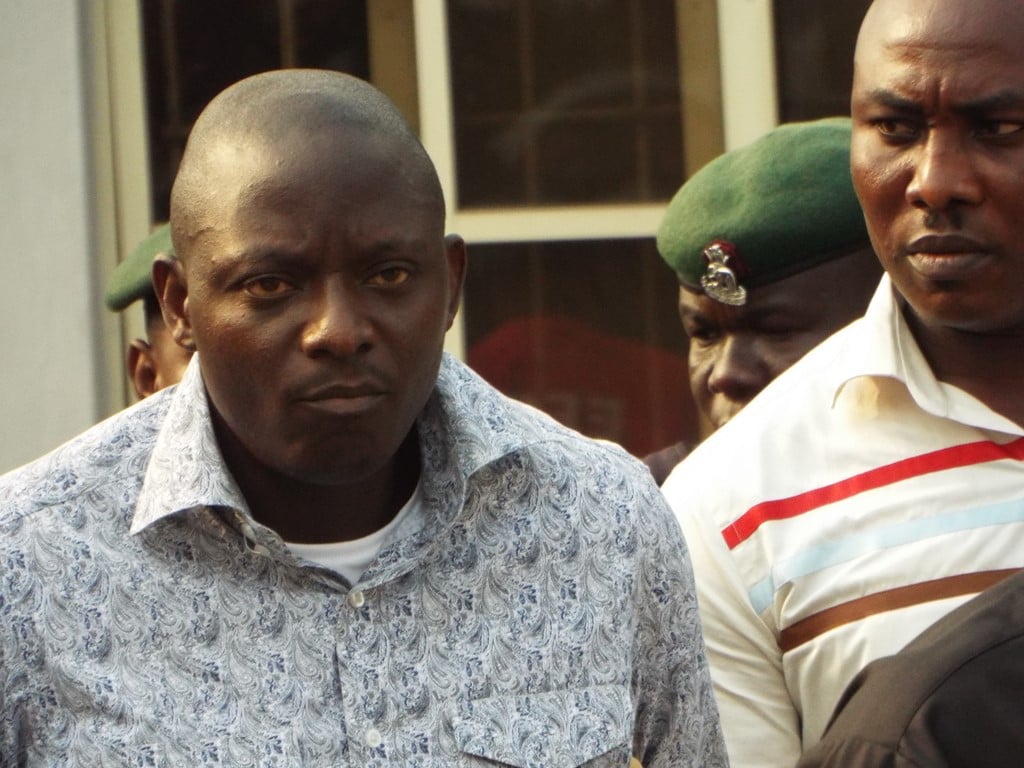
A prosecution witness in the ongoing fraud trial involving former Director-General of the Nigerian Maritime Administration and Safety Agency (NIMASA), Patrick Ziakede Akpobolokemi, on Thursday told the court that he personally delivered $15 million in cash to the former agency boss.
The witness, Captain Ezekiel Bala-Agaba, a former Executive Director of Maritime Safety, Shipping Development, and Marine Operations at NIMASA, testified before Justice Ayokunle Faji of the Federal High Court in Lagos.
Agaba, who appeared as the 15th prosecution witness, told the court that funds meant for pipeline surveillance were withdrawn from NIMASA’s accounts, converted into dollars, and handed over to Akpobolokemi.
According to him, the money was taken to a Bureau de Change, which converted it into $15 million, before the cash was delivered to the NIMASA office on Burma Road, Apapa, Lagos.
He said he subsequently took the money to the office of the then Director-General.
“The money was sent to a Bureau de Change, which later brought the dollar equivalent to our office at Burma Road, Apapa, Lagos. I asked my Personal Assistant, Ekene Nwakuche, to carry the bag and follow me to the Director-General’s office,” he told the court.
Agaba explained that he collected the bag from his aide before entering the office.
“When we got to the door of the Director-General’s office, I collected the bag from him and asked him to wait outside. I then personally delivered the sum of $15 million to the Director-General.”
The witness, who formerly served as Director of Maritime Security and Safety, was initially a defendant in the case but later opted to testify for the prosecution.
While being led in evidence by prosecuting counsel Barr. Suleiman Suleiman, Agaba explained the chain of command within NIMASA and how financial approvals were processed in the agency.
According to him, the Director-General is the overall head of the agency and issues instructions to directors, who then implement policies in line with the NIMASA Act.
He told the court that he chaired the agency’s Intelligence Committee, which was responsible for certain security-related operations.
“As chairman of the committee, I oversaw its activities and reported directly to the Director-General, Dr. Patrick Akpobolokemi,” he said.
During the proceedings, the witness was also shown a document containing a letter from Access Bank to the Economic and Financial Crimes Commission (EFCC) detailing transactions in NIMASA’s accounts between 2013 and 2015.
When asked how much money he took to the former Director-General, Agaba replied: “$15 million.”
Counsel Collins Ogbonna represented Akpobolokemi, the first defendant in the case, while Tokunbo Ajibulu appeared for the second defendant, Captain Warredi Enisuoh.
After listening to the testimony, Justice Faji adjourned the matter until April 22 and 23 for continuation of trial.
The EFCC had, in December 2015, arraigned Akpobolokemi and seven others before the court on a 30-count charge bordering on conspiracy, fraudulent conversion of funds, and money laundering.
Those charged alongside the former NIMASA boss include Ezekiel Agaba, Warredi Enisuoh, Governor Juan, Ugo Frederick, and Timi Alari, as well as Alkenzo Limited and Penniel Engineering Services Limited.
The anti-graft agency alleged that the defendants conspired to divert funds running into over ₦1.15 billion under the guise of providing security intelligence in Nigeria’s maritime domain.
According to the EFCC, the NIMASA Intelligence Committee allegedly received ₦1,153,000,000 between December 2013 and July 2015.
Investigations further revealed that several companies contracted to execute the intelligence operations were either unregistered or lacked the capacity to perform the services, while some were allegedly linked to the defendants.
The prosecution also alleged that the defendants nominated or owned many of the companies used to execute the contracts.
One of the charges stated that Akpobolokemi and the other defendants conspired to commit offences punishable under the Money Laundering (Prohibition) Act, 2012.
The Executive Chairman of the Economic and Financial Crimes Commission (EFCC), Mr. Ola Olukoyede, has charged students across the country to make integrity their foundation, stressing that with such a foundation, their future prospects for success will be enhanced.
He gave the charge in Abuja on Monday, March 9, 2026, while addressing students of J.K. People’s Comprehensive Academy, Mararaba, Nasarawa State, who were on a study tour of the EFCC’s Corporate Headquarters.

Olukoyede, who spoke through the EFCC’s Head of Media and Publicity and spokesperson for the Commission, Deputy Commander of the EFCC (DCE) Dele Oyewale, noted that students who embrace integrity, accountability, and transparency will emerge as leaders in their generation.
“Your foundation is important. No superstructure can stand on a foundation of corruption. At this stage of your education, you have every opportunity to choose integrity. You cannot be wrong with integrity, and you cannot be right with corruption,” he said.
The EFCC boss further encouraged the students to aim high, broaden their vision and aspirations, and positively influence their environment.
On her part, the Head of the Enlightenment and Re-Orientation Unit of the Commission, Assistant Commander of the EFCC (ACE II) Aisha Mohammed, pointed out that prevention, investigation, and prosecution are the EFCC’s three-pronged approach to fighting corruption, economic, and financial crimes.
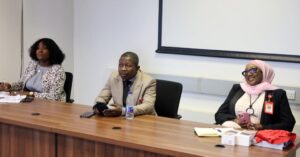
She highlighted television and radio sensitisation programmes, the establishment of Integrity and Zero Tolerance Clubs in schools across the country, and sustained collaboration with critical stakeholders as part of the Commission’s preventive efforts.
She charged the students to always tread the path of ethical behaviour as leaders of tomorrow.
“You are the future of this country. If you get it right, Nigeria will get it right. Be content. Don’t allow anyone to pressure you into living beyond your means,” she said.
In a presentation on cybersecurity, Inspector of the EFCC, Kayode Eniola, educated the students on the nature and consequences of cybercrime, describing it as criminal activities perpetrated through digital communication tools and internet-enabled platforms.
She identified phishing, hacking, and online romance scams as common forms of cybercrime, adding that victims often suffer financial losses, privacy breaches, and reputational damage.
She further advised the students to adopt preventive measures against cybercrime, such as using strong passwords, updating their software regularly, avoiding suspicious links, and logging out of shared devices after use.
In his remarks, Okoro Chijioke, a teacher at the school, expressed gratitude to the EFCC for the insightful engagement, describing it as “an unforgettable experience and one of the best so far.”
The event featured a question-and-answer session as well as a quiz competition in which the students’ understanding of the lectures was assessed. Two students who emerged winners were presented with gifts and souvenirs.



EFCC Hands Over $225,895, ₦62.79m Recovered Funds to Foreign Victims

Naira Rebounds To ₦1,363.5/$

Lagos Residents Protest Unreliable Power Supply, Demand Immediate Action
Sean Kingston sentenced to 3½ years in prison over $1 million fraud
Nigerian nurses stage seven‑day warning strike over pay, staffing

Nigeria approves plan to refinance ₦4tn power-sector debt
-
Entertainment7 months ago
Sean Kingston sentenced to 3½ years in prison over $1 million fraud
-
Health8 months ago
Nigerian nurses stage seven‑day warning strike over pay, staffing
-
Economy7 months ago
Nigeria approves plan to refinance ₦4tn power-sector debt
-
 Energy7 months ago
Dangote Refinery to deploy 4,000 gas‑powered trucks for distribution
-
 Education8 months ago
JAMB sets 2025/26 university cut‑off at 150, bars under‑16
-
 Crime & Justice1 month ago
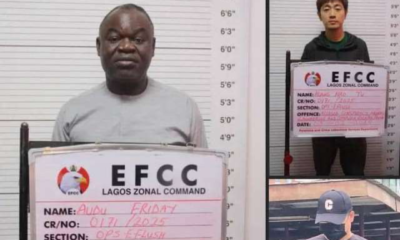
BREAKING: Two Chinese Directors Jailed 46 Years Each Over ₦3.4bn, $2.5m Crypto Fraud in Lagos
-
 Crime & Justice1 month ago
EFCC Arraigns One for ₦20m Fraud in Maiduguri
-
 EFCC1 month ago
EFCC Arraigns Ex-BSIEC Chairman, 10 Others Over Alleged ₦1.1bn Election Funds Fraud