
Judiciary
Court Freezes FDGS Energy Assets Over $7.9m, ₦399m Keystone Bank Debt

The Federal High Court sitting in Lagos has granted sweeping interim orders freezing the assets and operations of FDGS Energy Group of Companies Limited over an alleged indebtedness of $7,999,405.19 and ₦399,893,550.44 to Keystone Bank Limited.
Justice A. Lewis-Allagoa made the orders following an ex parte application filed by Mofesomo Tayo-Oyetibo, SAN, on behalf of the Plaintiffs/Applicants, who also moved the motion before the court.
The suit, marked FHC/L/CS/2567/2025, lists FDGS Energy Group of Companies Limited (in receivership) and its Receiver/Manager, Mr. Paul Mgbeoma, as Plaintiffs/Applicants, while Chijioke Arinze Onyeagba and Tijjani Ahmad Aliyu, identified as current directors of the company, are named as Defendants.
In a ruling delivered on January 20, 2026, the court granted an interim injunction restraining the Defendants, their agents, or privies from interfering with the Receiver/Manager in the discharge of his statutory functions over the company’s assets.
The court restrained the Defendants from entering into or remaining in possession of the company’s assets and offices now under receivership; collecting proceeds, income, or receivables due to the company; removing, dissipating, selling, leasing, or otherwise dealing with the company’s assets; and accessing any funds standing to the credit of the company in any financial institution up to the amount allegedly owed to Keystone Bank.
Justice Lewis-Allagoa also ordered all banks and financial institutions served with the order to file, within seven days, affidavits disclosing sums standing to the credit of the company, along with relevant account statements.
In addition, the court directed the Inspector-General of Police, the Commissioner of Police for Lagos State, and other law enforcement agencies, including Interpol units of the Nigeria Police Force, to assist the Receiver/Manager in enforcing the orders and maintaining law and order in relation to the company’s assets.
The matter was adjourned to February 16, 2026, for the hearing of the Motion on Notice.
According to the affidavit filed in support of the ex parte motion by Akeem Oloyede, a Unit Head in Keystone Bank’s Specialised Assets Division, the bank granted FDGS Energy multiple loan facilities beginning in June 2021.
The facilities, initially totaling $3.85 million, were reportedly granted to finance the construction and acquisition of marine vessels, including a 23-metre fast crew boat and a 56-metre barge.
The loans were restructured on several occasions between 2021 and 2024 at the company’s request. Despite the restructuring, the bank alleged that the company failed to meet its repayment obligations.
As of August 8, 2025, the outstanding indebtedness under one of the facilities had risen to $7,999,405.19, while a second facility stood at ₦399,893,550.44.
The bank subsequently issued demand letters in May, June, and August 2025. Following continued default, it appointed Mr. Paul Mgbeoma as Receiver/Manager on October 14, 2025, pursuant to a Deed of All Assets Debenture executed in July 2021 and registered with the Corporate Affairs Commission.
Court documents show that the receivership covers all fixed and floating assets of the company, including properties located at Ibasa-Imore (Snake Island), Satellite Town, Apapa, and Victoria Island, Lagos. Also covered are three vessels mortgaged to the bank, namely MV Blufin 1 (Official No. SR 4039), MV Safari (Official No. SR 4026), and Dangana Z (Official No. 4429).
The vessels were secured under separate Deeds of Vessel Mortgage and registered with the Nigerian Maritime Administration and Safety Agency and the Corporate Affairs Commission.
The security package also includes a Deed of All Assets Debenture charging the company’s undertaking, goodwill, bank accounts, receivables, shares, and other present and future assets in favour of the bank.
In the affidavit, the Plaintiffs/Applicants alleged that the Defendants were making surreptitious moves to alienate or dispose of charged assets, which could frustrate the Receiver/Manager’s ability to realise the security and recover the debt.
They argued that delaying the application to allow service of a Motion on Notice could result in irreparable damage, as the assets might be dissipated before the court could intervene.
The court granted leave for substituted service of court processes by delivery to an adult person or by pasting the documents at Plot 1676, Kaita Gardens, Oladele Olashore Street, Victoria Island, Lagos, said to be the Defendants’ last known business address.
The interim orders are to remain in force pending the hearing and determination of the Motion on Notice for interlocutory injunction.
At the next adjourned date, the court is expected to consider whether to make the injunctive orders subsist pending the final determination of the substantive suit.
The case underscores the increasing recourse by financial institutions to receivership proceedings under the Companies and Allied Matters Act 2020 to enforce security over distressed corporate borrowers, particularly in capital-intensive sectors such as oil and gas and marine logistics.
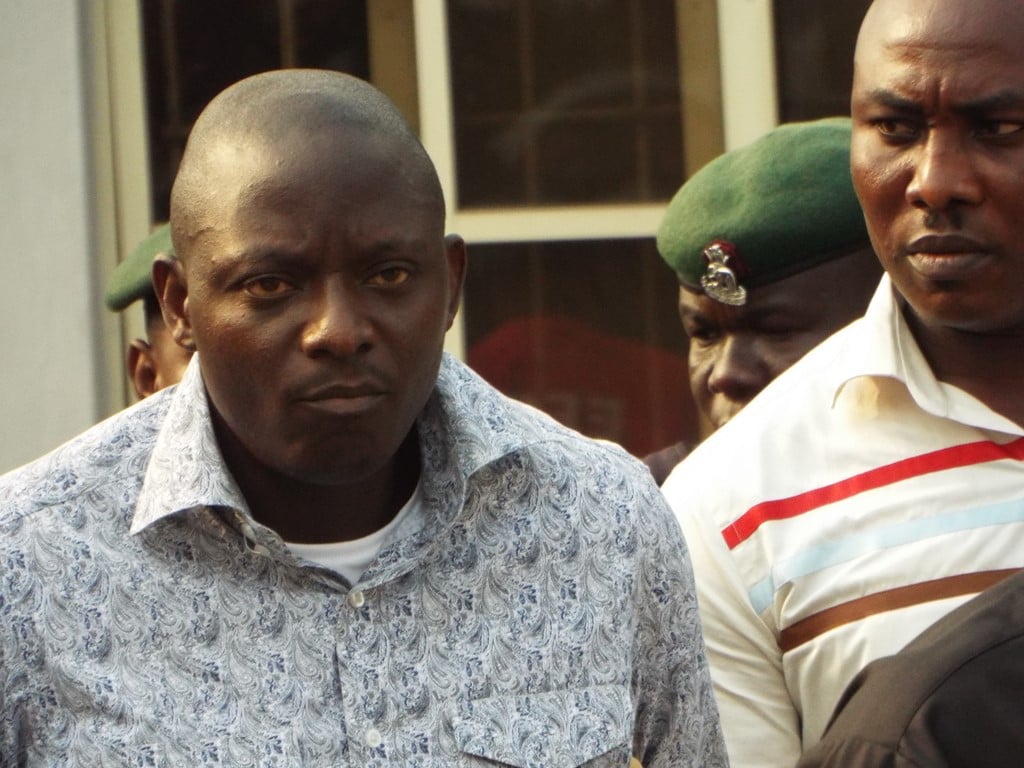
A prosecution witness in the ongoing fraud trial involving former Director-General of the Nigerian Maritime Administration and Safety Agency (NIMASA), Patrick Ziakede Akpobolokemi, on Thursday told the court that he personally delivered $15 million in cash to the former agency boss.
The witness, Captain Ezekiel Bala-Agaba, a former Executive Director of Maritime Safety, Shipping Development, and Marine Operations at NIMASA, testified before Justice Ayokunle Faji of the Federal High Court in Lagos.
Agaba, who appeared as the 15th prosecution witness, told the court that funds meant for pipeline surveillance were withdrawn from NIMASA’s accounts, converted into dollars, and handed over to Akpobolokemi.
According to him, the money was taken to a Bureau de Change, which converted it into $15 million, before the cash was delivered to the NIMASA office on Burma Road, Apapa, Lagos.
He said he subsequently took the money to the office of the then Director-General.
“The money was sent to a Bureau de Change, which later brought the dollar equivalent to our office at Burma Road, Apapa, Lagos. I asked my Personal Assistant, Ekene Nwakuche, to carry the bag and follow me to the Director-General’s office,” he told the court.
Agaba explained that he collected the bag from his aide before entering the office.
“When we got to the door of the Director-General’s office, I collected the bag from him and asked him to wait outside. I then personally delivered the sum of $15 million to the Director-General.”
The witness, who formerly served as Director of Maritime Security and Safety, was initially a defendant in the case but later opted to testify for the prosecution.
While being led in evidence by prosecuting counsel Barr. Suleiman Suleiman, Agaba explained the chain of command within NIMASA and how financial approvals were processed in the agency.
According to him, the Director-General is the overall head of the agency and issues instructions to directors, who then implement policies in line with the NIMASA Act.
He told the court that he chaired the agency’s Intelligence Committee, which was responsible for certain security-related operations.
“As chairman of the committee, I oversaw its activities and reported directly to the Director-General, Dr. Patrick Akpobolokemi,” he said.
During the proceedings, the witness was also shown a document containing a letter from Access Bank to the Economic and Financial Crimes Commission (EFCC) detailing transactions in NIMASA’s accounts between 2013 and 2015.
When asked how much money he took to the former Director-General, Agaba replied: “$15 million.”
Counsel Collins Ogbonna represented Akpobolokemi, the first defendant in the case, while Tokunbo Ajibulu appeared for the second defendant, Captain Warredi Enisuoh.
After listening to the testimony, Justice Faji adjourned the matter until April 22 and 23 for continuation of trial.
The EFCC had, in December 2015, arraigned Akpobolokemi and seven others before the court on a 30-count charge bordering on conspiracy, fraudulent conversion of funds, and money laundering.
Those charged alongside the former NIMASA boss include Ezekiel Agaba, Warredi Enisuoh, Governor Juan, Ugo Frederick, and Timi Alari, as well as Alkenzo Limited and Penniel Engineering Services Limited.
The anti-graft agency alleged that the defendants conspired to divert funds running into over ₦1.15 billion under the guise of providing security intelligence in Nigeria’s maritime domain.
According to the EFCC, the NIMASA Intelligence Committee allegedly received ₦1,153,000,000 between December 2013 and July 2015.
Investigations further revealed that several companies contracted to execute the intelligence operations were either unregistered or lacked the capacity to perform the services, while some were allegedly linked to the defendants.
The prosecution also alleged that the defendants nominated or owned many of the companies used to execute the contracts.
One of the charges stated that Akpobolokemi and the other defendants conspired to commit offences punishable under the Money Laundering (Prohibition) Act, 2012.
Judiciary
Former Jigawa Gov Sule Lamido, Sons, Family Firms for Fresh Arraignment in Alleged ₦1.35bn Fraud April 1
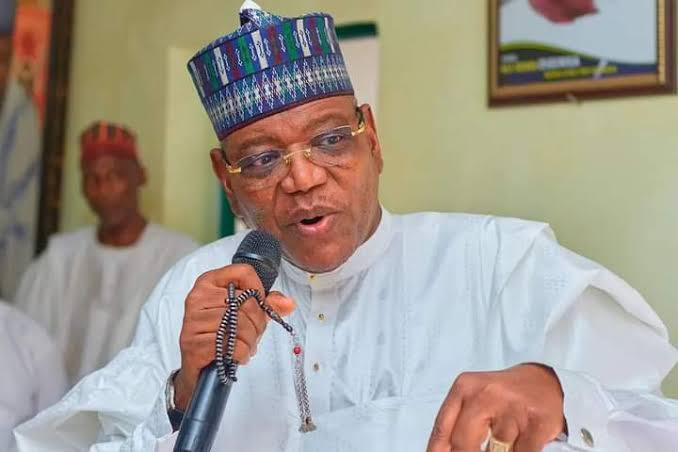
Justice Peter Lifu of the Federal High Court sitting in Abuja has fixed April 1, 2026, for the fresh arraignment of former Governor of Jigawa State, Sule Lamido, over ₦1.35 billion corruption charges preferred against him by the Economic and Financial Crimes Commission (EFCC).
Lamido is to be arraigned alongside his two sons, Aminu Lamido and Mustapha Lamido, who allegedly committed the fraud with their father through fictitious contract awards.
Justice Lifu fixed the new date on Friday following the absence of the former governor and his sons in court to take their plea.
Although the fresh arraignment was scheduled to hold on Friday, their counsel, Mr. Joe Agi, SAN, apologised for their absence, explaining that information about the trial was received on Thursday evening.
He said the former governor and his sons reside in Kano and could not make it to court due to the distance and the short notice of the hearing.
The senior lawyer thereafter undertook to produce the accused persons on the next adjourned date to face their trial.
However, counsel to the EFCC, Mr. Chile Okoroma, SAN, said he was surprised that the three defendants were not in court, having been served with the hearing notice.
Okoroma added that the EFCC had written a letter to the Chief Judge of the Federal High Court, Justice John Tsoho, requesting that the initial trial judge, Justice Ijeoma Ojukwu, who had been transferred to Calabar, be brought back to Abuja for the continuation of the trial.
Justice Lifu noted that the issue raised in the EFCC’s letter was an administrative matter to be determined by the Chief Judge but proceeded to fix April 1 for the arraignment.
The EFCC had, in 2015, charged Lamido, his two sons, and their companies before the Federal High Court in Abuja on 27 counts of money laundering involving ₦1.35 billion, allegedly siphoned from the state in a money laundering scheme.
According to the anti-graft agency, Lamido and his co-defendants allegedly committed the offences during his tenure as governor of the state.
The commission alleged that he abused his office between 2007 and 2015 to launder funds received as kickbacks from state government contracts.
Apart from the Lamidos, other defendants in the case are their companies, Bamaina Holdings Ltd and Speeds International Ltd.
After the EFCC had called more than 16 witnesses and closed its case, the defendants filed a no-case submission, arguing that the prosecution had not presented sufficient evidence to require them to open their defence.
However, the trial judge, Justice Ijeoma Ojukwu, dismissed the submission and ordered them to enter their defence in November 2022.
Lamido subsequently appealed the ruling, and in July 2023, the Court of Appeal upheld the no-case submission and ruled that the Federal High Court in Abuja lacked territorial jurisdiction to hear the case.
The appellate court held that the trial should have been conducted in Jigawa State, where the alleged offences occurred.
However, in August 2023, the EFCC proceeded to the Supreme Court, asking it to overturn the Court of Appeal’s decision.
The Supreme Court, on January 16, 2026, set aside the decision of the Court of Appeal that discharged Sule Lamido and his sons, Mustapha and Aminu, of the money laundering charges.
A five-member panel of the apex court delivered a unanimous judgment read by Justice Abubakar Umar, holding that the defendants had a case to answer.
The Supreme Court subsequently ordered that the matter be returned to the Federal High Court for the continuation of trial.
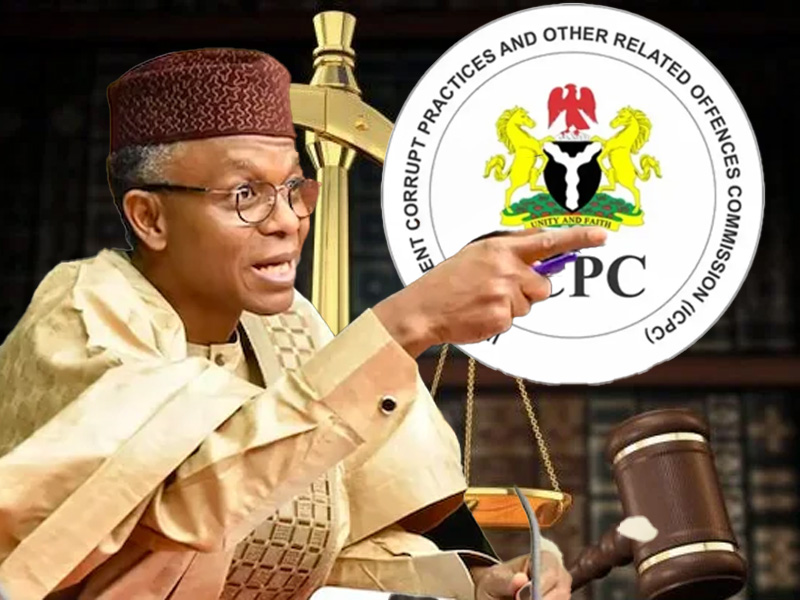
The Federal High Court in Abuja on Wednesday adjourned a fundamental rights enforcement suit filed by former Kaduna State governor, Nasir El-Rufai, against the Independent Corrupt Practices and Other Related Offences Commission (ICPC) and four others until March 25.
Justice Joyce Abdulmalik postponed the hearing to enable all parties involved in the case to properly regularise their court processes.
El-Rufai is seeking ₦1 billion in damages from the ICPC, the Chief Magistrate of the Magistrate’s Court of the Federal Capital Territory (FCT), the Inspector-General of Police (IGP), and the Attorney-General of the Federation (AGF), listed as the 1st to 4th respondents respectively.
When the matter was called, counsel to El-Rufai, Ubong Akpan, informed the court that the case had been scheduled for hearing. However, he explained that the applicant had only recently filed a response to the ICPC’s counter-affidavit and was yet to reply to the one filed by the police.
Counsel to the ICPC, Abdulsufiano Abubakar, and police lawyer, Ezekiel Rimamsomte, confirmed Akpan’s statement.
Following the submissions, Justice Abdulmalik adjourned the matter until March 25 for hearing. The court also ordered that hearing notices be issued and served on the 2nd respondent (Chief Magistrate) and the 4th respondent (AGF), who were not represented during the proceedings.
El-Rufai, in an originating motion marked FHC/ABJ/CS/345/2026, filed on February 20 by his counsel Oluwole Iyamu (SAN), is seeking seven reliefs from the court.
The former governor asked the court to declare that the invasion and search of his residence at House 12, Mambilla Street, Aso Drive, Abuja, on February 19 at about 2:00 p.m. by ICPC operatives and police officers constituted a gross violation of his fundamental rights.
According to him, the action breached his rights to dignity of the human person, personal liberty, fair hearing, and privacy, as guaranteed under Sections 34, 35, 36, and 37 of the 1999 Constitution.
He also urged the court to rule that any evidence obtained through the search warrant used during the operation should be declared inadmissible in any legal proceedings, arguing that it was secured in violation of constitutional safeguards.
El-Rufai further asked the court to restrain the respondents and their agents from relying on or tendering any materials seized during the search in any investigation or prosecution against him.
In addition, he requested an order compelling the ICPC and the IGP to return all items allegedly seized from his residence, along with a detailed inventory.
He also asked the court to award ₦1 billion in general, exemplary, and aggravated damages for the alleged violation of his rights.
However, the ICPC, in its counter-affidavit, maintained that it acted lawfully.
The anti-graft agency stated that it received a petition against El-Rufai and subsequently initiated an investigation which led to the search of his residence.
According to the commission, its operatives executed the search based on a valid warrant issued on February 18, which was carried out the following day between 1:37 p.m. and 3:56 p.m. at the Asokoro residence.
The ICPC added that its officials were accompanied by officers of the Nigeria Police Force, and that the operation was witnessed by El-Rufai’s wife, Hadiza El-Rufai, and his son, Mohammed El-Rufai.
The commission therefore urged the court to dismiss the suit.



EFCC Hands Over $225,895, ₦62.79m Recovered Funds to Foreign Victims

Naira Rebounds To ₦1,363.5/$

Lagos Residents Protest Unreliable Power Supply, Demand Immediate Action
Sean Kingston sentenced to 3½ years in prison over $1 million fraud
Nigerian nurses stage seven‑day warning strike over pay, staffing

Nigeria approves plan to refinance ₦4tn power-sector debt
-
Entertainment7 months ago
Sean Kingston sentenced to 3½ years in prison over $1 million fraud
-
Health8 months ago
Nigerian nurses stage seven‑day warning strike over pay, staffing
-
Economy7 months ago
Nigeria approves plan to refinance ₦4tn power-sector debt
-
 Energy7 months ago
Dangote Refinery to deploy 4,000 gas‑powered trucks for distribution
-
 Education8 months ago
JAMB sets 2025/26 university cut‑off at 150, bars under‑16
-
 Crime & Justice1 month ago
BREAKING: Two Chinese Directors Jailed 46 Years Each Over ₦3.4bn, $2.5m Crypto Fraud in Lagos
-
 Crime & Justice1 month ago
EFCC Arraigns One for ₦20m Fraud in Maiduguri
-
 EFCC1 month ago
EFCC Arraigns Ex-BSIEC Chairman, 10 Others Over Alleged ₦1.1bn Election Funds Fraud