Connect with us

News

FG Orders Immediate Suspension of NAFDAC’s Enforcement of Sachet Alcohol Ban

Published

on

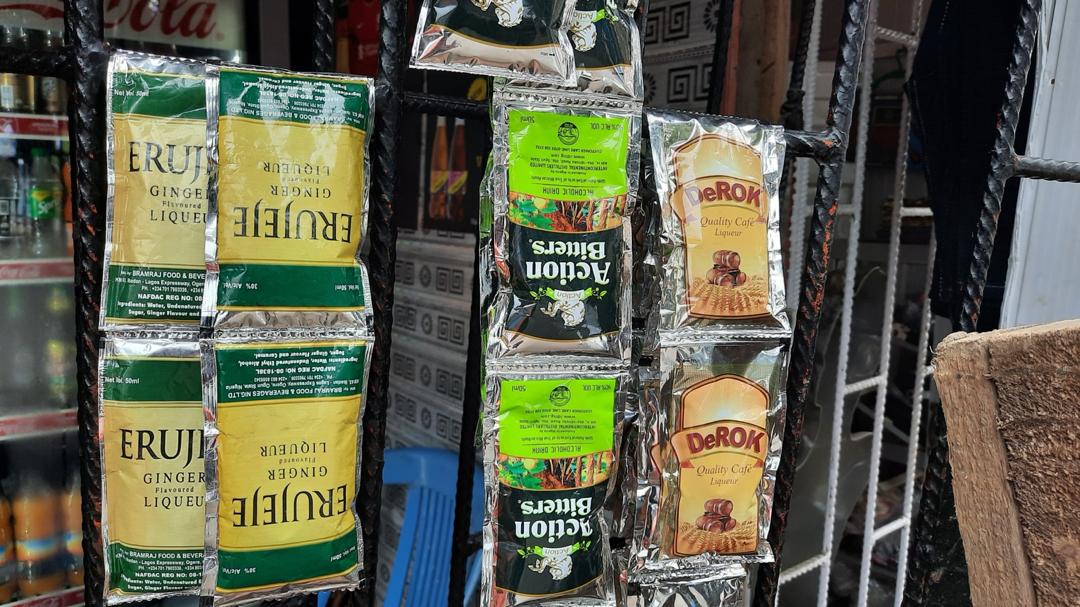
The Federal Government has directed the National Agency for Food and Drug Administration and Control (NAFDAC) to immediately suspend all enforcement actions relating to the ban on sachet alcohol and 200ml PET bottle products.

The directive followed a joint intervention by the Office of the Secretary to the Government of the Federation (OSGF) and the Office of the National Security Adviser (ONSA), which raised concerns about potential economic instability and emerging security risks.

In a statement signed by Terrence Kuanum, Special Adviser on Public Affairs to the SGF, the government warned that continued enforcement — particularly in the absence of a fully implemented National Alcohol Policy — could destabilise communities, worsen unemployment, and create avoidable security challenges.

While confirming that the National Alcohol Policy has been approved by the Federal Ministry of Health under the direction of President Bola Tinubu, the statement instructed NAFDAC to refrain from sealing factories or warehouses, or enforcing what it described as a “de facto ban” until the policy is fully operationalised.

“The continued sealing of warehouses and de facto banning of sachet alcohol products is already creating economic disruptions and poses a growing security threat, particularly given the impact on employment, supply chains, and informal distribution networks across the country,” the statement noted.

The decision was also influenced by correspondence from the House of Representatives Committee on Food and Drugs Administration and Control, dated November 13, 2025. The letter, signed by Deputy Chairman Uchenna Harris Okonkwo, referenced existing National Assembly resolutions cautioning against the implementation of the proposed ban without broader consultations.

Reaffirming a prior suspension issued in December 2025, the Federal Government stressed the need to carefully review legislative, public health, and economic considerations before reaching a final decision.

“Accordingly, all actions, decisions, or enforcement measures relating to the ongoing ban on sachet alcohol are to be suspended pending final consultations and implementation of the National Alcohol Policy, as well as the issuance of a definitive directive,” the statement concluded.

Continue Reading
Click to comment

Leave a Reply

Your email address will not be published. Required fields are marked *

News

Lagos Residents Protest Unreliable Power Supply, Demand Immediate Action

Published

on

Residents of Lagos on Friday took to the streets to express their frustration over persistent electricity outages, condemning the state’s power supply as “epileptic” and unsustainable for daily life and business activities.

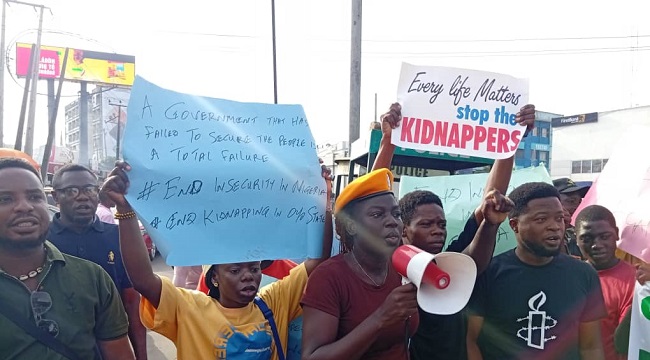
A video circulating on social media showed dozens of mainly young protesters marching through the Fadeyi area, holding placards and chanting for a consistent electricity supply.

The demonstrators criticised what they described as the collapse of the nation’s power sector, stressing that erratic electricity is undermining livelihoods and making life increasingly difficult across Lagos.

Placards displayed messages such as “No More Estimated Billing,” “No More Epileptic Power Supply,” “No Light, No Life, No Nation,” and “You’re Destroying Businesses; Give Us Regular Light.”

One protester declared, “We are not asking for too much. Give us light!”

Local business owners also highlighted the severe impact of inconsistent power supply on their operations, noting that reliance on fuel-powered generators has significantly increased operating costs.

A shop owner at the protest lamented: “We cannot continue like this. Every day we spend money on fuel because there is no electricity. Many small businesses are closing because they cannot cope.”

The demonstration underscores growing public dissatisfaction with electricity supply in Lagos, as residents call on authorities and power operators to ensure a stable and reliable power supply.

Continue Reading

News

Tinubu Mourns Former Super Eagles Coach Festus Onigbinde

Published

on

President Bola Ahmed Tinubu has expressed deep sorrow over the death of former Super Eagles head coach, Festus Adegboye Onigbinde, who passed away on Monday at the age of 88.

In a statement issued on Tuesday by his Special Adviser on Information and Strategy, Bayo Onanuga, the President extended his condolences to the late coach’s family, associates, and the entire Nigerian football community.

Tinubu also sympathised with the Nigeria Football Federation (NFF), the National Sports Commission, professional colleagues, and football fans across the country over the loss of the respected football administrator.

The President described Onigbinde as a trailblazer whose contributions significantly advanced the growth and development of football in Nigeria.

He noted that the late coach made history as the first indigenous coach of the Super Eagles in 1982, praising his leadership and dedication to the sport.

“Chief Onigbinde distinguished himself as the first indigenous coach of the Super Eagles in 1982,” the statement said.

Tinubu further highlighted Onigbinde’s role in guiding Nigeria to the final of the 1984 Africa Cup of Nations, describing the achievement as a landmark moment in the country’s football history.

The President also commended the late Modakeke High Chief for his commitment to grassroots football and his efforts to strengthen football administration in Nigeria.

He said Onigbinde would be remembered for his discipline, integrity, foresight, and passion for the game.

Tinubu prayed for the repose of the late football icon and asked God to grant comfort to his family and loved ones during this difficult time.

Continue Reading

News

Again, Dangote Refinery Hikes Petrol To ₦1,175/Litre, Diesel To ₦1,620/Litre — Report

Published

on

Dangote Petroleum Refinery has revised its ex-depot prices, increasing the gantry price of Premium Motor Spirit (PMS), also known as petrol, to ₦1,175 per litre, while Automotive Gas Oil (AGO), commonly known as diesel, has been raised to ₦1,620 per litre.

The latest revision marks the fourth consecutive price review in less than two weeks amid global market volatility, according to a report by Petroleumprice.ng.

Quoting industry sources, the report noted that the new pricing template has been communicated to marketers, following earlier adjustments this month.

Under the revised structure, the ₦1,175 per litre petrol price reflects a significant jump from the previous ₦995 per litre, while diesel has surged sharply from its prior ₦1,430 per litre level, underlining the continued upward trend in domestic fuel pricing.

The increases coincide with a sharp rise in international crude oil benchmarks as of 1:00 pm WAT: Brent crude at $102.8 (+10.91%) and WTI crude at $101.0 (+11.08%), driven by the Middle East energy crisis.

The development is likely to have a ripple effect across Nigeria’s downstream petroleum market, as depot operators and fuel marketers adjust supply costs in response to the revised prices announced by the country’s largest refining facility.

The refinery had yet to issue an official statement on the development as of the time of filing this report.

Oil prices surged by 30 per cent on Monday on fears over supply disruptions in the Middle East, as the US-Israeli war against Iran continued into a second week with no sign of easing.

Concerns that the conflict could drag on intensified after US President Donald Trump said only the “unconditional surrender” of Iran would end the war.

He added over the weekend that the spike in prices was a “small price to pay” to eliminate Iran’s nuclear threat, reiterating the White House’s insistence that the rise is temporary.

Since the beginning of the war, WTI has risen by more than 75 per cent, while Brent has increased by over 60 per cent.

Attacks on oilfields were reported in southern Iraq and in the northern autonomous Kurdistan region, forcing a US-run oilfield to cease production. Meanwhile, the United Arab Emirates and Kuwait have begun reducing output.

This comes as maritime traffic in the Strait of Hormuz — through which about one-fifth of global crude oil and gas supplies pass — has been halted since the war began on February 28.

Continue Reading

Trending

Copyright © 2025 JaraJournal.