
News
FG, States to Share Electricity Subsidy Burden in 2026 Budget

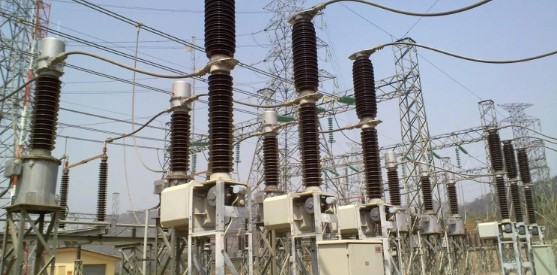
President Bola Ahmed Tinubu has directed all government ministries, departments, and agencies (MDAs) to apply existing laws to ensure a more practical and transparent sharing of electricity subsidy costs among the federal, state, and local governments.
Beginning with preparations for the 2026 budget, the President aims to ensure that the heavy burden of electricity subsidies is no longer borne solely by the Federal Government.
This directive was disclosed on Monday in Abuja by Tanimu Yakubu, Director-General of the Budget Office of the Federation.
Speaking during a training session for government officials, Yakubu explained that if any tier of government chooses to reduce electricity tariffs for its residents, that level of government must clearly outline how the intervention will be funded.
The objective, he said, is to ensure that subsidy costs are properly tracked and financed so they do not become “hidden debts” that undermine the power sector.
Yakubu described the policy shift as a move toward fairness, stating:
“It also means that if any tier of government chooses affordability interventions, the funding responsibilities must be clear, agreed, and enforceable. This is not punishment; it is alignment.”
He further explained that when every level of government bears its fair share of the cost, there will be stronger incentives to improve efficiency in the power market. He noted that the Federal Government will no longer be regarded as the sole entity responsible for absorbing the cost of artificially low electricity tariffs.
“In 2026, we will stop pretending that this bill can be left to the Federal Government alone, especially where the policy choice or political benefit is shared across tiers of government,” Yakubu added.
BusinessDay reports that electricity subsidy payments will be financed through the Power Consumer Assistance Fund (PCAF).
The PCAF is a government-supported funding mechanism designed to reduce electricity costs for economically disadvantaged and vulnerable households, making power more affordable amid rising tariff rates. The fund aims to expand energy access and strengthen the electricity sector through targeted assistance programmes rather than broad-based subsidies.
More than 18 states have established operational electricity regulatory agencies, while others are in the process of doing so.
The states include Lagos, Ondo, Osun, Ekiti, Edo, Delta, Bayelsa, Akwa Ibom, Cross River, Abia, Anambra, Imo, Kogi, Niger, Nasarawa, Plateau, Gombe, and Jigawa.
Beyond electricity, the President also issued directives on public project planning. He cautioned that a long list of uncompleted projects represents a “map of disappointment.”
For the 2026 budget cycle, all projects must be implementation-ready, with completed designs and clear financing and execution plans.
“A long list of projects is not a development strategy. It is often a map of disappointment. What citizens feel is delivery — completed roads, reliable power, functional schools, and working hospitals,” Yakubu quoted the President as saying.
To prevent a deeper debt burden, the President has also ordered a review of the rules guiding public expenditure. Yakubu told officials that MDAs must now justify every kobo requested, clearly stating how the spending aligns with fiscal rules, sustainability goals, and measurable outcomes for Nigerians.
“You will not only be asked what you want to spend. You will be asked how it fits the fiscal rules, how it affects sustainability, and what measurable results it will deliver,” he said.
The new approach means that the 2026 budget will prioritise completing a smaller number of high-impact projects rather than initiating numerous projects that risk abandonment.
Under the new framework, every funding request must demonstrate realism, alignment with national priorities, and value for money.
News
BREAKING: NAICOM Cancels Universal Insurance Plc’s Registration, Appoints Receiver/Provisional Liquidator

The National Insurance Commission (NAICOM) has cancelled the certificate of registration of Universal Insurance Plc and appointed a receiver/provisional liquidator to commence the process of winding up the affairs of the insurance company.
The cancellation, which took effect on August 14, 2026, followed the company’s failure to meet the prescribed Minimum Capital Requirement (MCR) applicable to its category of licence within the stipulated compliance period.
In a notice dated August 13, 2026, and addressed to the Chairman of the Board of Directors of Universal Insurance Plc, NAICOM said the cancellation was effected pursuant to the powers conferred on the Commission by the Nigerian Insurance Industry Reform Act (NIIRA) 2025.
The Commission consequently appointed Ogbonna Chukwumerije, a Partner at Pinheiro LP, as Receiver/Provisional Liquidator of the company.
According to the appointment letter dated August 14, 2026, Chukwumerije is required to immediately trace, recover, secure and take over the assets of Universal Insurance Plc.
He is also mandated to collate and settle the liabilities of the company in accordance with the provisions of NIIRA 2025, liaise with NAICOM on information available to the Commission, and submit periodic reports on the progress of the process.
NAICOM said the appointment was subject to the receiver signing a Deed of Appointment and complying with the terms of engagement and extant rules governing receivership and liquidation.
In a separate public notice signed by Chukwumerije and dated August 18, 2026, the receiver formally notified banks, financial institutions, policyholders, creditors, debtors, customers and members of the public of the company’s receivership.
The notice said the receiver had been appointed following the cancellation of Universal Insurance’s licence by NAICOM on account of its failure to meet the applicable Minimum Capital Requirement.
Chukwumerije said that, pursuant to NIIRA 2025 and the terms of his appointment, he was empowered to take over the management and control of Universal Insurance Plc.
He was also authorised to trace, recover, secure and take possession of all assets belonging to the company, as well as take necessary steps for their preservation, protection and realisation.
The receiver is further required to collate, verify and settle the company’s liabilities in accordance with NIIRA 2025, other applicable laws and NAICOM directives.
He is also to liaise with NAICOM on matters relating to the liquidation and winding-up of the company’s affairs and submit periodic reports to the Commission on the progress and administration of the liquidation process.
The development has also triggered restrictions on dealings with the company’s accounts and affairs.
In the public notice, banks, financial institutions, policyholders, creditors, debtors, agents, customers and members of the public were directed to exercise caution and not honour, process, recognise or act upon any instruction, mandate, request, payment direction, withdrawal instruction, transfer instruction or other communication purportedly issued on behalf of Universal Insurance Plc.
Such instructions, the receiver said, would only be recognised where they were issued by him or by a person expressly authorised in writing by him.
The receiver further directed all persons and institutions dealing with the company’s assets, funds, records, policies, claims, liabilities or affairs to verify the authority of anyone purporting to act for or on behalf of Universal Insurance during the liquidation process.
He said only instructions bearing his official seal and stamp as a Legal Practitioner and Receiver/Provisional Liquidator, or instructions issued by persons duly authorised by him in writing, would be recognised in connection with the affairs and liquidation of the company.
The public notice also warned individuals and institutions against acting on instructions purportedly emanating from Universal Insurance Plc, its former officers, directors, employees, agents or representatives unless such instructions had been duly authorised by the receiver.
It further required anyone in possession, custody or control of any asset, fund, document, book, record, policy, claim or other property belonging to or relating to the company to cooperate fully with the receiver and comply with all lawful requests and directives issued in furtherance of the liquidation.
According to the receiver, the notice would take immediate effect and remain in force throughout the liquidation process, subject to any further directive or notice issued by NAICOM or the Receiver/Provisional Liquidator.
He said the receivership process was being conducted with the objective of safeguarding the company’s assets and ensuring that valid claims were properly identified, assessed and dealt with in accordance with applicable laws and regulations.
The documents did not disclose the total value of Universal Insurance’s outstanding liabilities, the number of policyholders affected or the value of assets to be recovered.
The development is expected to trigger a process of identifying the company’s assets and liabilities and determining the status of outstanding obligations to policyholders, creditors and other stakeholders.
Universal Insurance Plc’s licence cancellation comes against the backdrop of NAICOM’s enforcement of the minimum capital requirements applicable to insurance companies under the current regulatory framework.
The receiver’s appointment formally transfers responsibility for managing the company’s affairs and dealing with its assets and liabilities to the appointed receiver, subject to the provisions of NIIRA 2025 and the oversight of NAICOM.
The Commission’s appointment letter was signed by Olusegun Ayo Omosehin, Commissioner for Insurance/Chief Executive Officer of NAICOM.
The receiver’s public notice was dated August 18, 2026.
Judiciary
Kasunmu’s Death Elevates Folake Solanke as Most Senior Living SAN, BOSAN Vice-Chair – Pinheiro
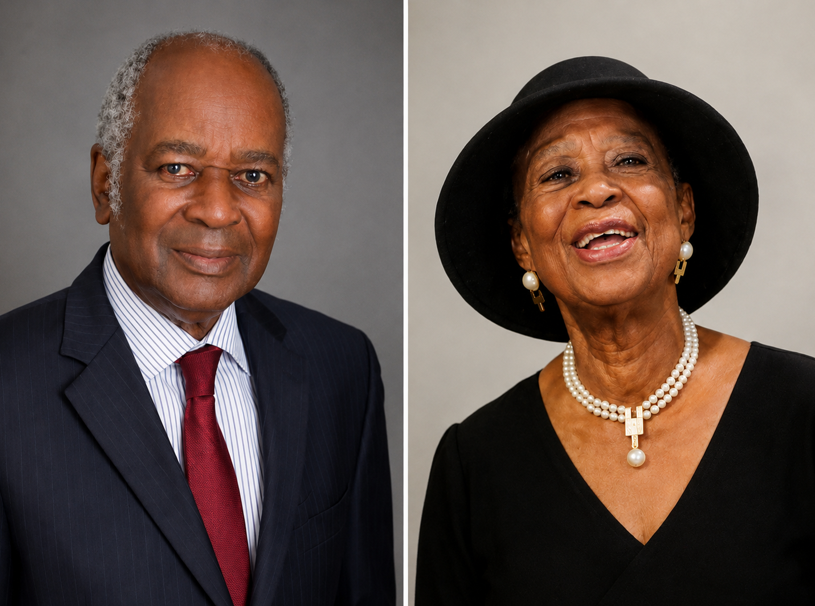
The death of renowned legal scholar and advocate, Professor Alfred Bandele Kasunmu, SAN, has altered the hierarchy of seniority within Nigeria’s legal profession, with Chief Folake Solanke, SAN, emerging as the most senior living Senior Advocate of Nigeria.
Kasunmu, who died at the age of 92, was, until his death, the most senior living Senior Advocate of Nigeria and, by virtue of that distinction, the statutory Vice-Chairman of the Body of Senior Advocates of Nigeria (BOSAN).
According to a tribute by Chief Kemi Pinheiro, OFR, SAN, LLD, FCIArb., the position now falls to Solanke, herself one of the most distinguished figures in the Nigerian Bar.
Pinheiro described Kasunmu’s position as a measure of the exceptional stature he attained within the legal profession over several decades.
“With his passing, that distinction and position now fall on Chief Folake Solanke, SAN, herself a towering figure of the Nigerian Bar,” Pinheiro stated.
He described Kasunmu as a “living institution of the Nigerian Bar”, whose name commanded respect in the courtroom, the academy, and the administration of justice.
Kasunmu’s legal career spanned advocacy, academia, and public service. He was a formidable advocate, distinguished scholar, former Attorney-General and Commissioner for Justice of Lagos State, and Professor of Law at Obafemi Awolowo University and the University of Lagos.
Beyond his professional titles, Pinheiro described him as “a lawyer’s lawyer” and “a gentleman through and through”, stressing that his influence extended far beyond the courtroom.
He said Kasunmu was renowned for his formidable command of the law, intellectual rigour, and celebrated photographic memory, while his commitment to mentoring generations of Nigerian lawyers and judges remained one of his most enduring legacies.
Recalling his courtroom encounters with the late legal giant, Pinheiro said Kasunmu’s advocacy was characterised by precision, penetrating questions, and an ability to dismantle an opponent’s case without losing his wit or composure.
He particularly recalled the case Dioudonne Donnie Ngnoumen v. Texaco Overseas, in which Kasunmu represented the opposing side and conducted what Pinheiro described as a devastating cross-examination.
“There was theatre in his advocacy; there was intellect in every question; there was purpose behind every pause,” Pinheiro said.
He, however, noted that the Kasunmu he remembered most was not merely the formidable advocate he encountered in court, but the friend who stood beside him during a difficult period of his career.
Pinheiro said Kasunmu’s passing represented a major loss to the Nigerian Bar, academia, and the administration of justice.
“Today, the Bar has lost one of its finest forensic minds; the academy has lost a distinguished teacher; the legal profession has lost one of its great repositories of knowledge and experience,” he said.
He added that Kasunmu’s ultimate legacy would not be measured merely by the titles he accumulated, but by the lives he strengthened and the generations of lawyers he influenced.
Kasunmu, he said, might have taken his “final bow”, but his contributions to the legal profession would endure.
News
BREAKING: NAICOM Revokes Nigeria Reinsurance Corporation’s Licence, Appoints Muiz Banire as Receiver/Provisional Liquidator

The National Insurance Commission (NAICOM) has revoked the operating licence of Nigeria Reinsurance Corporation over its failure to meet the statutory Minimum Capital Requirement (MCR) and appointed Senior Advocate of Nigeria, Dr. Muiz Banire, SAN, OON, as Receiver/Provisional Liquidator to oversee the winding-up of the company’s affairs.
The appointment took effect on August 3, 2026, following the cancellation of the corporation’s certificate of registration by the insurance regulator.
In a public notice dated August 4, 2026, Banire stated that he was appointed by NAICOM, in the exercise of its statutory powers, to take charge of the receivership and liquidation of Nigeria Reinsurance Corporation (RR-002).
According to the notice, the company’s licence was revoked after it failed to comply with the prescribed Minimum Capital Requirement applicable to its category of licence within the stipulated compliance period, in accordance with the Nigerian Insurance Industry Reform Act (NIIRA), 2025, and other extant laws, regulations, and guidelines.
Banire stated that his appointment empowers him to immediately trace, recover, secure, and take possession of all assets belonging to the company; collate and settle its liabilities in accordance with the NIIRA 2025; liaise with NAICOM on matters relating to the liquidation; and submit periodic reports to the Commission.
He also directed banks, financial institutions, insurance policyholders, creditors, and members of the public not to honour any instruction relating to the company except those issued by him or by persons expressly authorised by him.
As part of the liquidation process, Banire announced that all bank accounts belonging to Nigeria Reinsurance Corporation had been frozen with immediate effect pending further directives from his office.
He warned that any transaction carried out without his authorisation would be at the risk of the parties involved.
“Members of the general public, banks, and financial institutions in Nigeria are hereby informed that no financial transactions should be conducted pursuant to any instruction from anyone except those that I issue as the Receiver/Provisional Liquidator,” the notice stated.
According to him, only instructions bearing his official seal and stamp as a legal practitioner, or those issued by persons duly authorised by him, will be recognised throughout the liquidation process.
The regulatory action marks a significant enforcement measure by NAICOM and underscores the Commission’s resolve to ensure that insurance and reinsurance companies operating in Nigeria comply with statutory capital requirements designed to protect policyholders and strengthen the financial stability of the industry.
The liquidation process is expected to involve the recovery and realisation of the company’s assets, the verification and settlement of valid claims and liabilities, and the orderly winding-up of its affairs in accordance with the provisions of the law.
The public notice serves as formal notification to policyholders, creditors, banks, and other stakeholders that all dealings concerning Nigeria Reinsurance Corporation must henceforth be channelled through the Receiver/Provisional Liquidator until the liquidation process is concluded.



Alleged $6b Mambilla Power Contract: Tinubu Hails EFCC for FG’s Victory at Arbitration Tribunal

EFCC Hands Over Recovered N140m to Loan Firm in Lagos

COPSUN Applauds EFCC on NELFUND
Nigerian nurses stage seven‑day warning strike over pay, staffing

Dangote Refinery to deploy 4,000 gas‑powered trucks for distribution

Nigeria approves plan to refinance ₦4tn power-sector debt
-
Health1 year ago
Nigerian nurses stage seven‑day warning strike over pay, staffing
-
Energy1 year ago
Dangote Refinery to deploy 4,000 gas‑powered trucks for distribution
-
Economy1 year ago
Nigeria approves plan to refinance ₦4tn power-sector debt
-
 Education1 year ago
JAMB sets 2025/26 university cut‑off at 150, bars under‑16
-
 Entertainment1 year ago
Sean Kingston sentenced to 3½ years in prison over $1 million fraud
-
 Crime & Justice7 months ago
BREAKING: Two Chinese Directors Jailed 46 Years Each Over ₦3.4bn, $2.5m Crypto Fraud in Lagos
-

 Business7 months ago
Nigeria Revenue Service Collects ₦28.3trn in 2025, Sets ₦40.7trn Target for 2026
-

 Crime & Justice8 months ago
Police Arrest 24-Year-Old Over ₦48.5m Romance Fraud in Lagos